Blog

  • How India began owning its reform agenda

    How India began owning its reform agenda


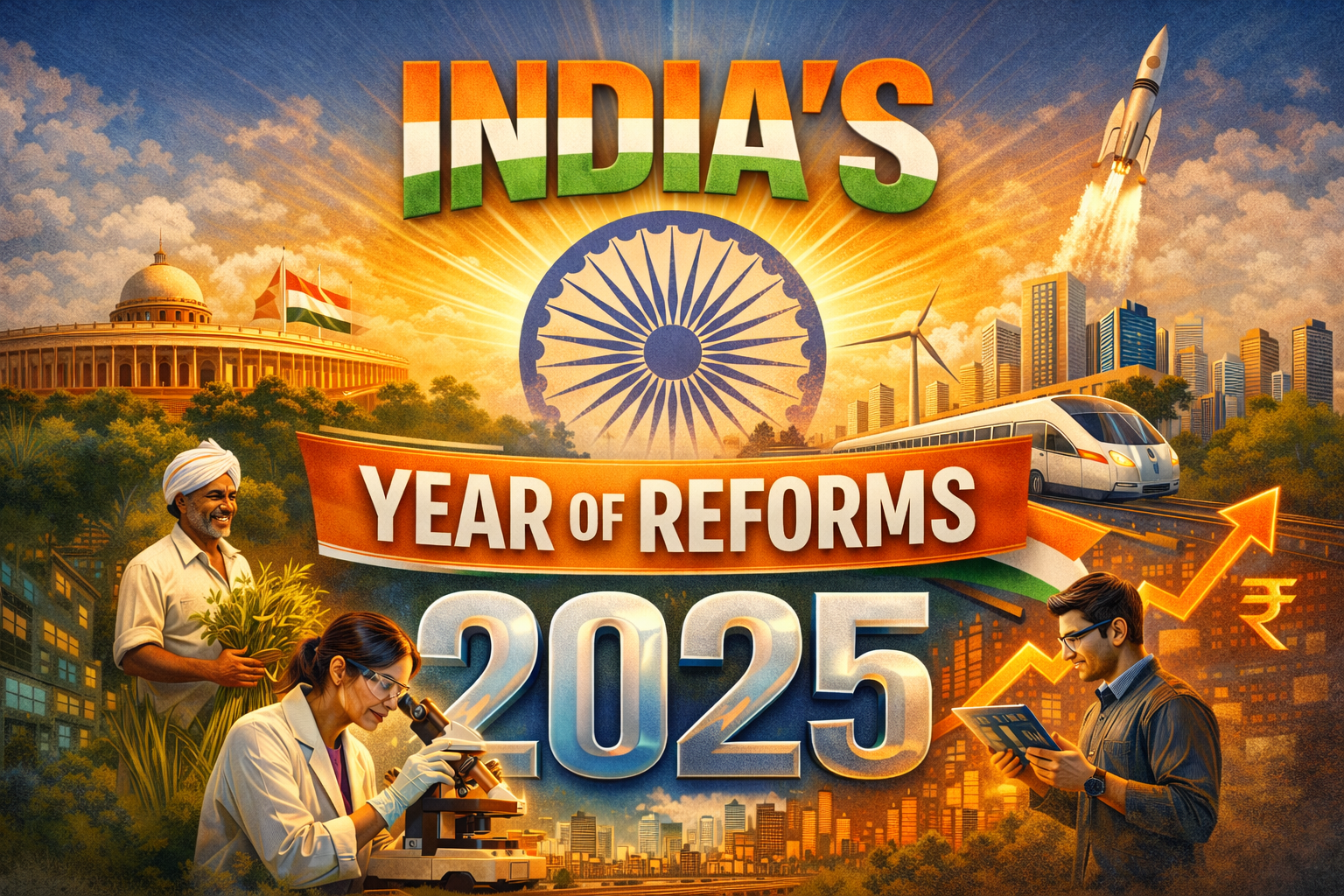
    This article has been published with:What made 2025 different was not one dramatic announcement, but the way a series of interconnected reforms reshaped everyday economic life. Taxation, labour, energy, investment, and digital governance were not treated as isolated silos but as part of one system that ultimately affected how Indians earn, save, spend, work and power their homes.

    What made 2025 different was not one dramatic announcement, but the way a series of interconnected reforms reshaped everyday economic life. Taxation, labour, energy, investment, and digital governance were not treated as isolated silos but as part of one system that ultimately affected how Indians earn, save, spend, work and power their homes.

    The most visible impact has been felt by the middle class.

    When Finance Minister Nirmala Sitharaman told a public gathering that the government would press ahead with deeper reforms, including a full overhaul of the customs duty structure, she wasn’t announcing just another policy tweak. She was signalling something more fundamental — that India’s reform strategy had moved from stealth to conviction.

    Prime Minister Modi described 2025 as a ‘defining phase’ in India’s reform journey and urged investors to ‘keep trusting India and investing in our people.’ The phrase matters. This was not the language of crisis management or emergency repair. It was the language of long-term restructuring of a government increasingly willing to own its reform agenda openly rather than disguise it as technical housekeeping.

    The new income tax framework delivered tangible relief, with salaried individuals effectively seeing breathing room of up to ₹12.75 lakh in annual income through exemptions and slabs. This was not symbolic; it showed up directly on salary slips, in household budgets, and in consumption patterns. More disposable income meant better household savings, stronger demand for goods and services, and rising confidence.

    In economic terms, this was growth driven by confidence, not compulsion. The middle class was no longer treated merely as a tax base but repositioned as the engine of demand.

    GST 2.0 continued this simplification logic. Rationalised slabs and clearer structures reduced disputes, increased predictability, and made consumer goods more affordable. The shift was from complexity to clarity and from opacity to trust.

    Since 2014, around 25 crore Indians have moved out of poverty, forming what policymakers now call the “new middle class.” 2025 arguably marked the moment when policy finally began speaking directly to them.

    For decades, labour reform in India was the political equivalent of a live wire — everyone agreed it needed fixing, but no one wanted to touch it. Successive governments avoided it because the costs were immediate, visible and politically painful, while the benefits were long-term. That political logic quietly changed this year.

    Labour reform is where the government crossed its political Rubicon. Twenty-nine outdated labour laws were replaced with simplified codes. Gig and platform workers were formally recognised. Employers were offered a “one nation, one compliance” framework.

    This wasn’t merely about making life easier for businesses. It sent a signal that India wants growth, but not jobless growth.

    Manufacturing responded. Quarter after quarter, it grew steadily. Capacity utilisation rose. Logistics improved. Policy stability reduced risk. India began looking more like a manufacturing base, and the credit goes to structural conditions finally aligning.

    Perhaps the most underrated reform of 2025 was the recent nuclear energy liberalisation. The opening up of atomic energy, including through the SHANTI Bill, was not cosmetic. It was about future-proofing India’s energy security. India cannot industrialise, urbanise, and digitise while burning coal indefinitely. Clean, stable base-load power is not a climate luxury; it is an economic necessity.

    This reform recognised that energy security is national security.

    Beneath the headline reforms sits an equally important transformation — India’s digital public infrastructure. Jan Dhan, Aadhaar, and DBT linkages have quietly rewired the state’s delivery capacity. Welfare now flows directly. Leakages have reduced. Administrative friction has fallen.

    This is not ideological reform; it is an operational one, and arguably more powerful than any speech.

    For all its achievements, 2025 still cannot be considered a complete miracle year, as challenges still persist.

    The manufacturing sector has not translated into a larger share of overall GDP. Urban air quality remains dire. Smart cities still don’t feel very smart. Private  investment remains cautious. Real wages have not quite surged. Employment growth has lagged behind output growth.

    Most importantly, the government continues to avoid the most politically explosive reforms, such as land acquisition and agriculture. The farm laws collapse remains a reminder that structural reform still collides with social reality. Conviction exists, but it is selective.

    Now, the governing mantra has been pragmatic: deliver public goods, incentivise participation, reduce political friction, invite private players, and avoid direct confrontation. It has produced stability and steady growth, but perhaps at the cost of deeper transformation.

    So, has India pivoted from stealth to conviction? Yes, but within boundaries.

    The state now openly owns its reform agenda. It is less defensive about being pro-business. It is more confident about structural change. It is more willing to talk about productivity. However, it remains cautious about reforms that provoke social rupture.

    This is not necessarily a flaw. It may be India’s version of reform realism.

    Now the real question is whether India is ready to extend that conviction to the reforms it still fears, and whether political courage can eventually match economic ambition. That will decide whether this was a chapter — or the beginning of a longer story.

  • Inside Trump’s Board of power                                                     

    Inside Trump’s Board of power                                                     

    This article has been published with : Inside Trump’s ‘board of power’

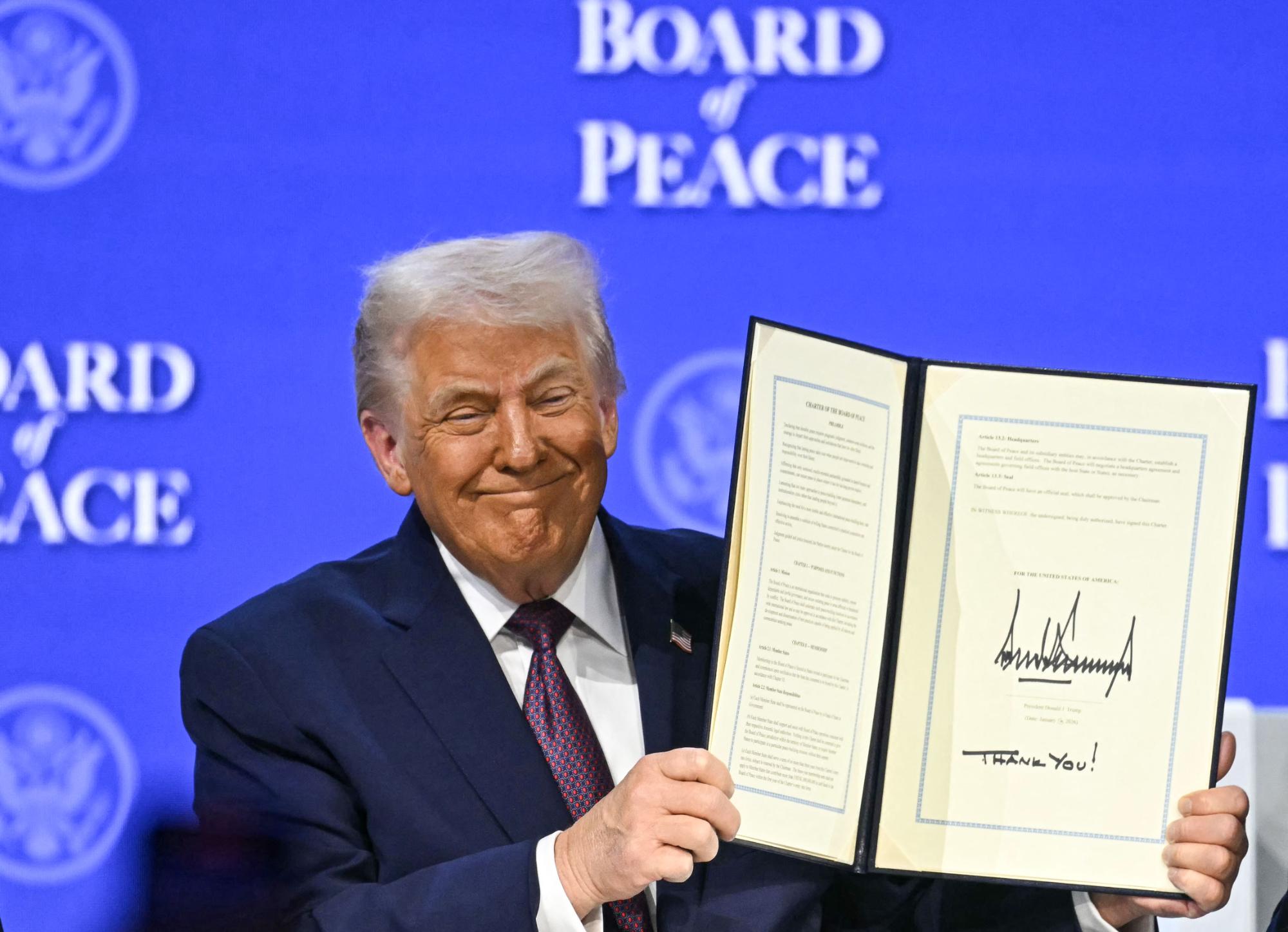
    The Board of Peace (BoP) is best understood not as a genuine multilateral initiative, but as a quasi-international body personally engineered by Donald Trump. While the United States initially sought UN backing for post-war plans in Gaza, the BoP’s final structure was unilaterally altered, hollowing out any claim to collective legitimacy.

    Crucially, the Board does not even explicitly mention Gaza, the very crisis it claims to address.

    This is not a small omission. Gaza was the moral and political justification for the initiative. Removing it from the formal mandate points toward a shift from humanitarian responsibility.

    Organisationally, the BoP departs sharply from accepted international norms. Trump has appointed himself chairman, while the executive board reportedly includes family members and close associates. More troubling is who is not represented: there is no Palestinian political leadership on the Board. 

    At best, a handful of Palestinian “technical experts” are included without any democratic mandate, and without recognition of the Palestinian people’s right to decide their own future.

    Perhaps the most disturbing inclusion is that of Benjamin Netanyahu, even as he faces serious allegations of committing acts of genocide.

    A peace forum that sidelines the victims while offering a seat at the table to those accused of grave crimes sends a clear message that ‘power speaks louder than justice’.

    Trump has defended the Board of Peace as an alternative to the United Nations, arguing that the UN is fractured, slow and ineffective. Many would agree that the UN has its flaws, but frustration with multilateralism does not justify abandoning it altogether.

    Creating a parallel international structure based on personal authority is not reform, it is replacement by force of influence.

    This move also fits a broader pattern. The US withdrawal from the World Health Organisation weakened global public health coordination. His great ‘MAGA’ ambitions now seem to undermine public health as well.

    Additionally, his disregard for the Paris agreement which jeopardises collective climate action. In each case, institutions were dismissed as unfair or inconvenient.

    Well, the Board of Peace follows the same logic; when global rules limit power, build a new table and decide who gets a seat.

    For Palestine, this is more than bad diplomacy, it is a betrayal of the very principles meant to protect stateless and occupied people. Decisions about governance, security and reconstruction are being shifted away from international law into a US-controlled forum where accountability at its helm remains absolutely vague.

    This brings us to India now. As India was among the 22 countries invited to join the Board of Peace, yet New Delhi chose not to attend the launch. That hesitation was not diplomatic indifference it was prudence.

    One immediate red flag is that Pakistan has already joined the Board, complicating India’s strategic position in a forum shaped largely by US preferences.

    India, with its diplomatic tradition rooted in strategic autonomy, non-alignment and respect for international law, has little to gain from joining such an ad-hoc and personalised initiative.

    A board tied so closely to one political figure’s authority and preferences lacks durability and credibility. It could easily lose relevance once Trump exist the political stage.

    Importantly, staying out does not mean disengagement. India has consistently supported Palestine through humanitarian aid, medical assistance, engagement with UNRWA, and quiet diplomacy via its office in Ramallah.

    India has previously resisted U.S.-led unilateral ventures. In 2003, the Vajpayee government declined Washington’s request to send Indian troops to Iraq, reaffirming that peacekeeping must be conducted only under the UN framework.

    Supporting Trump’s Board of Peace, would weaken India’s moral standing. Rather than endorsing it, New Delhi should press for its integration into the UN Department of Peace Operations ensuring a multilateral oversight, and accountability, in which Gaza is included.

  • Iran’s reckoning, world’s calculations

    Iran’s reckoning, world’s calculations

    This article has been published with: Iran’s reckoning, world’s calculations

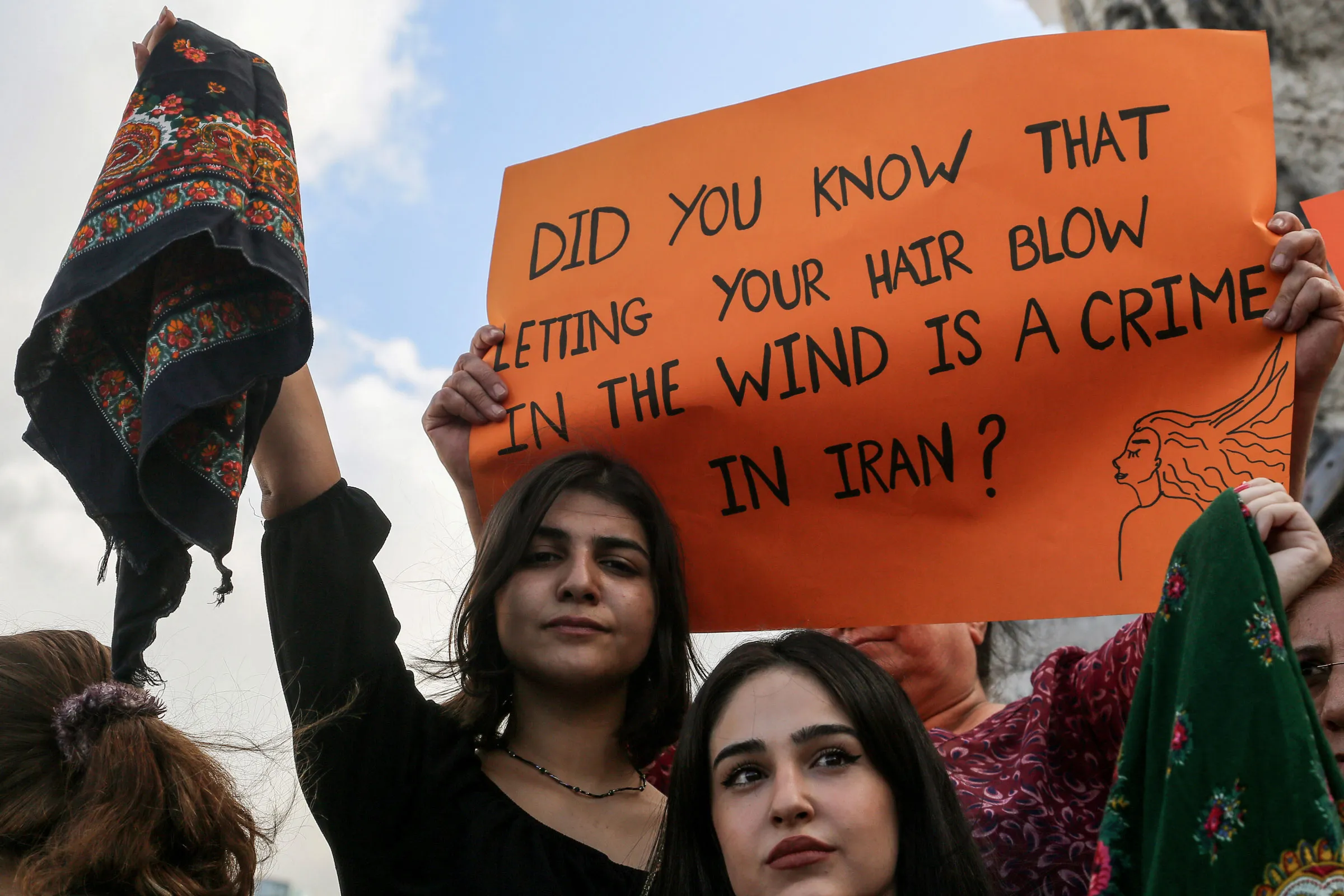
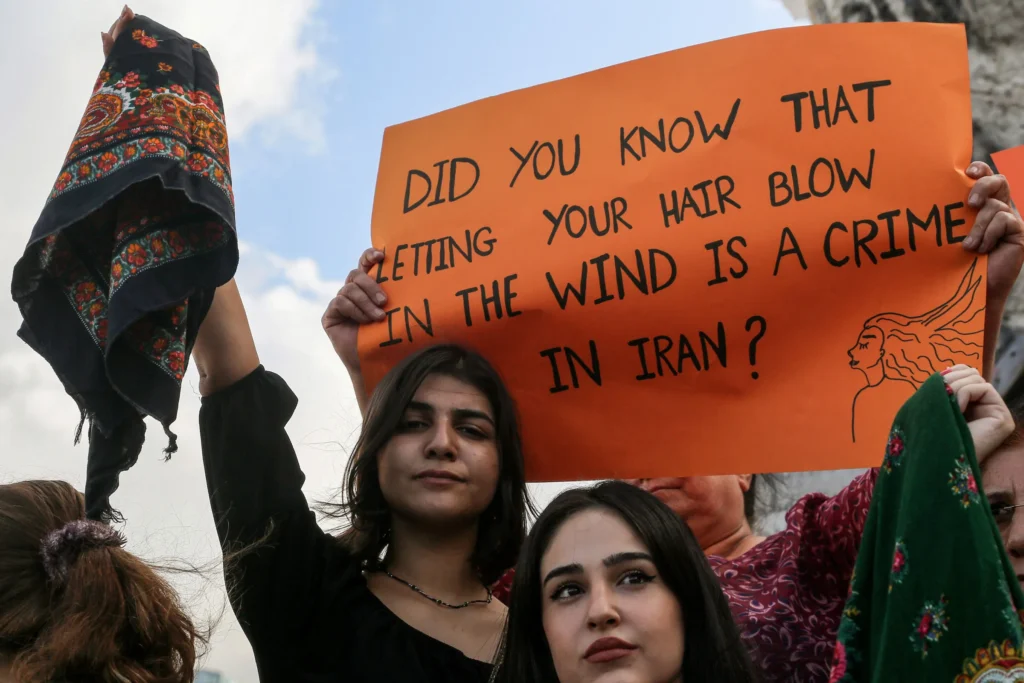
    Iran is in the middle of the most serious political unrest it has seen since 1979, and it is increasingly hard to pretend that this is just another wave of protest that the system can absorb. Across Tehran, Shiraz and dozens of other cities, crowds that once protested economics are now openly challenging the Supreme leader and the ideological foundations of the theocratic state.

    The Iranian government’s response has been brutal. Mass arrests, live ammunition, nationwide internet shutdowns and reports of death sentences are part of a crackdown that human rights groups say has killed thousands and detained tens of thousands more.

    It is repression that only highlights a deeper fracture, between a sovereign that fears dissent and a society that feels unheard.

    But Iran’s crisis is no longer contained within its borders. The world is watching and calculating.

    The United States and Israel are watching Iran’s instability as a strategic opening. President Donald Trump’s talk of ‘regime change’ and warnings of military intervention may play well domestically, but they are reckless in this context. They risk turning a domestic political reckoning into an international confrontation and handing Iranian hardliners the narrative they depend on: the nation is under siege and dissent equals betrayal.

    This does not protect protesters, it exposes them.

    Trump slapping a 25 per cent tariff on countries trading with Iran signals pressure not just on Tehran but on the global partners that sustain its economy. That move drew swift criticism from China, which threatened retaliatory measures, picturing how Iran’s fate is entangled with broader Sino-American rivalry.

    Within the US itself, calls for harsher action are emerging from influential quarters. Some US lawmakers have urged expansive military and cyber responses, framing Tehran’s crackdown as a threat to world order.

    Israeli officials have spoken in support of the protests, calling them a fight for freedom. But their interest is also strategic. For Israel, unrest in Iran weakens a major regional rival. Comments from Israeli intelligence officials about activity inside Iran suggest the protests are being seen as an opportunity, not just a moral cause.

    But Iran’s warnings to the US and Israel reflect this fear. Tehran knows that foreign involvement would change the nature of the crisis. A domestic protest movement would quickly turn into an international conflict. That shift would serve outside powers far more than it would help the people protesting on the streets.

    Other global players are no less invested, even if they are quieter.

    Both Russia and China have little interest in regime change and particularly in stability that weakens Western influence. For them, Iran is a strategic partner in energy, arms and diplomacy and also a useful counterweight to US power. They are likely to back the regime diplomatically, even as it bleeds legitimacy at home.

    Europe has denounced Iran’s violent crackdown. The United Kingdom has pledged expanded sanctions on Tehran’s financial, energy and transport sectors in response to killings and arrests. Yet, for European leaders, disruption in Iran could exacerbate migration pressures, threaten energy supply dynamics and deepen geopolitical rivalry with Russia.

    India’s stance has been quite cautious. The Ministry of External Affairs has urged Indian nationals to avoid travel to Iran and has informed that New Delhi is monitoring developments closely, but it has stopped short of overt criticism or strong support. That reflects India’s position as an energy partner and user of Iranian trade routes, particularly through Chabahar port.

    Delhi’s priority is stability that secures energy and connectivity, not instability that threatens supply chains or regional security.

    Iran’s unrest is not happening in a vacuum. Every major external actor is making moves shaped by strategic interests, not solidarity. What emerges is a familiar pattern. Iran’s internal crisis is being absorbed into the calculations of others.

    Even the memory of “Woman, Life, Freedom” protests remains fresh. That movement exposed both the depth of public anger and the limits of repression. The current unrest builds on that unfinished crisis. It is broader, more openly political and less willing to accept symbolic concessions.

    Iran now faces choices with lasting consequences. A violent crackdown may impose surface order but will deepen isolation and resentment. A collapse of authority risks instability and fragmentation. Foreign intervention would almost certainly escalate the crisis beyond Iran’s borders.

    None of these outcomes are desirable. All of them are plausible. What is no longer plausible is a return to the old normal.

    A society that no longer believes it is represented cannot be governed indefinitely through fear. A state that no longer listens eventually loses control over the story it tells about itself.

    Iran’s future is being shaped in this moment, not only by what happens on its streets, but by how its rulers respond and how external powers choose to use this moment, especially Trump.

  • Replacing MGNREGA: Was it necessary?

    Replacing MGNREGA: Was it necessary?

    If reform was genuinely the objective, the government could have introduced a MGNREGA 2.0 or strengthened the existing framework. Choosing instead to discard Gandhi’s name altogether points less to administrative necessity and more to a deliberate political statement, one that alters the scheme’s identity.

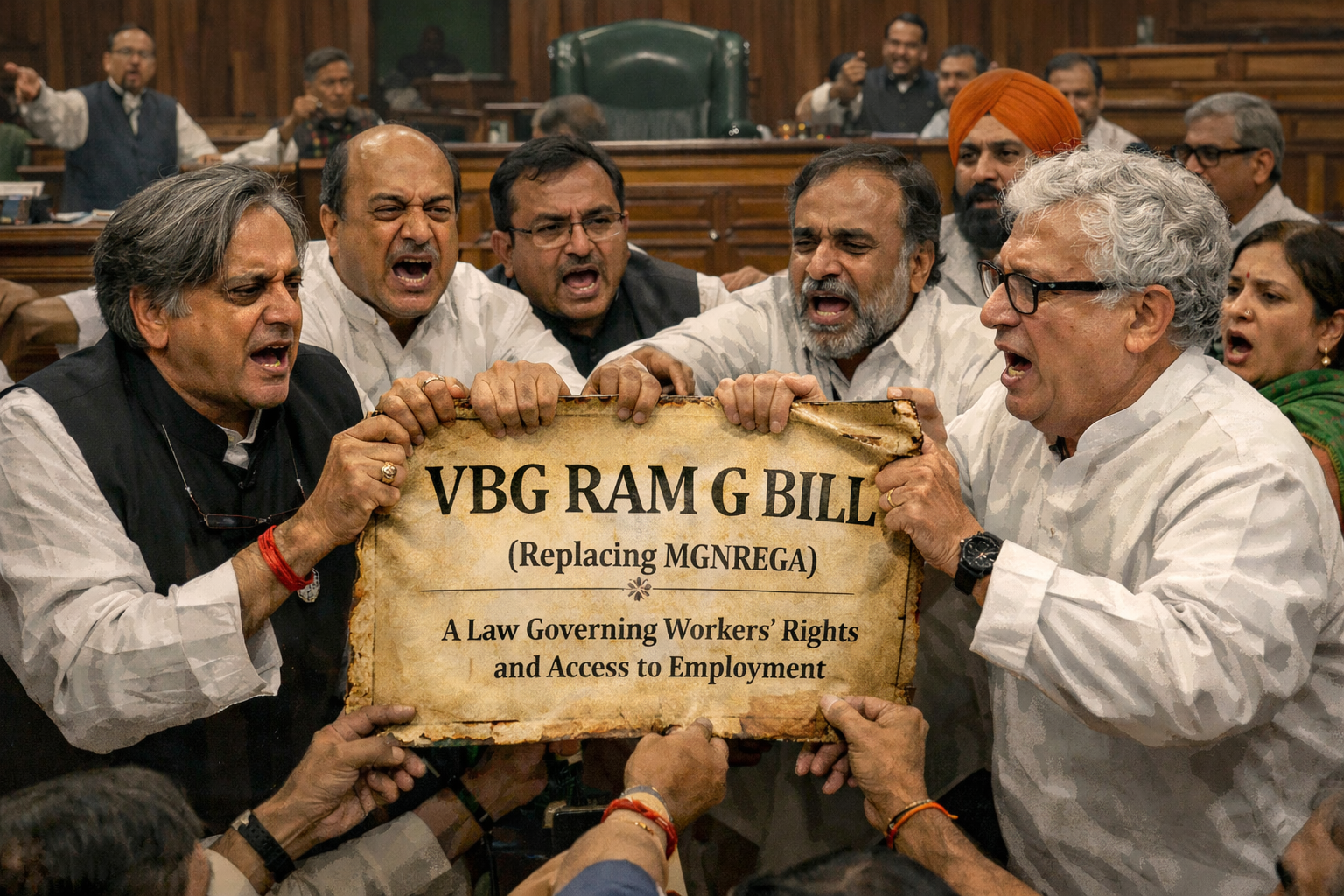
    On December 18, barely three days after it was circulated, Parliament passed the Viksit Bharat Guarantee For Rozgar and Ajeevika Mission (Gramin) or VB-G RAM G Bill, replacing the Mahatma Gandhi National Rural Employment Guarantee Act, 2005. The speed of the passage triggered protests from the Opposition and civil society, both of which accused the government of bypassing consultations on a law that affects millions of rural workers. But procedure aside, the larger issue is more basic: why did MGNREGA need to be replaced at all?

    Minister of Rural Development, Shivraj Singh Chouhan defended the Bill as a “more effective, corruption-free, development-oriented” employment guarantee. The government argues that rural India has changed dramatically since 2005. Poverty has declined, infrastructure has expanded, and digital governance has changed welfare- delivery. In this telling, MGNREGA’s demand-driven design belongs to another era.

    Some changes do sound reasonable. The Bill increases guaranteed workdays from 100 to 125, potentially raising household income by roughly 25 per cent. It introduced a sharper focus on building long-term assets in four sectors: water security, core rural infrastructure, livelihoods and climate-resilient projects. Farmers are expected to benefit from smoother labour availability, as states can pause public works for up to 60 days during sowing and harvest periods.

    The Bill also promises predictable employment through Viksit Gram Panchayat plans, secure electronic wage payments with Aadhaar verification and unemployment allowance if work is not provided. These changes are clearly designed to improve planning and asset creation.

    Between 2013-14 and 2025-26, women’s participation rose from 48 per cent to 56.7 per cent, Aadhaar-seeded workers increased from 7.6 million to 12.1 million, and e-payments rose from 37 per cent to near-universal coverage. Geo-tagged assets grew from zero to 64.4 million and individual assets tracked from 17.6 per cent to 62.9 per cent. Yet, serious issues persisted. Investigations in 19 districts of West Bengal found fake and misused funds; monitoring across 23 states uncovered missing or substandard work, machine substitutions for labour, and bypassed attendance.

    In 2024-25 alone, misappropriation reached nearly Rs 194 crore and only 7.6 per cent of households completed 100 days of work after the pandemic. Despite these challenges, MGNREGA’s demand-driven design remains its defining strength. It made employment a right rather than a favour. By guaranteeing wages and offering work on demand, it strengthened labour bargaining power and set a floor beneath rural wages. Its flexibility allowed it to act as a stabiliser during COVID-19, when it sustained rural consumption and prevented widespread distress. Fixing these operational gaps was possible without dismantling the programme’s core logic.

    But the Opposition’s criticism goes much deeper than this process.

    Shashi Tharoor and several other MPs argue that the Bill violates Article 348 of the Constitution by pushing a Hindi-dominant title for a law meant to apply uniformly across India. The sharper controversy, however, centred on the renaming itself. Opposition leaders pointed out that while Mahatma Gandhi used Ram Rajya to talk about value and good governance, but invoking “RAM” now brings ideology and religion into the picture.

    Well, if reform was genuinely the objective, the government could have introduced a MGNREGA 2.0 or strengthened the existing framework. Choosing instead to discard Gandhi’s name altogether points less to administrative necessity and more to a deliberate political statement, one that alters the scheme’s identity.

    There are also serious federal concerns. The revised funding model shifts part of the financial burden to states, which the Opposition describes as unfair and fiscally irresponsible. At a time when states are already stretched, this change weakens their ability to respond to genuine demand for employment.

    Central assurances of 60:40 cost-sharing (90:10 for North-eastern and Himalayan states, and 100 per cent funding for UTs without legislatures) do little to assuage worries about reduced flexibility or local planning authority.

    The Bill’s labour provisions are perhaps a departure from MGNREGA’s philosophy. The 60-day no-work provision is framed as a practical measure to ensure labour availability during peak agricultural seasons. But it is also a retreat from the principle of the state as an employer of last resort. Under MGNREGA, workers could demand work as a right. VB-G RAM G makes work conditional, planned and partially capped. While it promises higher workdays and better asset creation, it quietly treats worker’s bargaining power as a problem to be managed rather than a feature to be preserved.

    The broader question then is not about reform; rural employment policy can and should evolve. The question is why dismantle a programme that functioned effectively as a safety net for millions for rural households. MGNREGA’s flaws were real, but they could have been addressed through better monitoring, planning and digital tools. The government’s own statistics show improvements over the past decade.

    What VB G-RAM G introduces is more controlled. Until the government answers all questions clearly—why a replacement was necessary, why the open-ended demand-driven design could not be retained, and why Gandhi’s name was removed—these uneasy question around VB-G RAM G will persist. Not because reform is unwelcome, but because replacing a proven, rights-based safety net demands far stronger justification than what Parliament has received.

  • The Chimerica challenge for India                                                                                                   

    The Chimerica challenge for India                                                                                                   

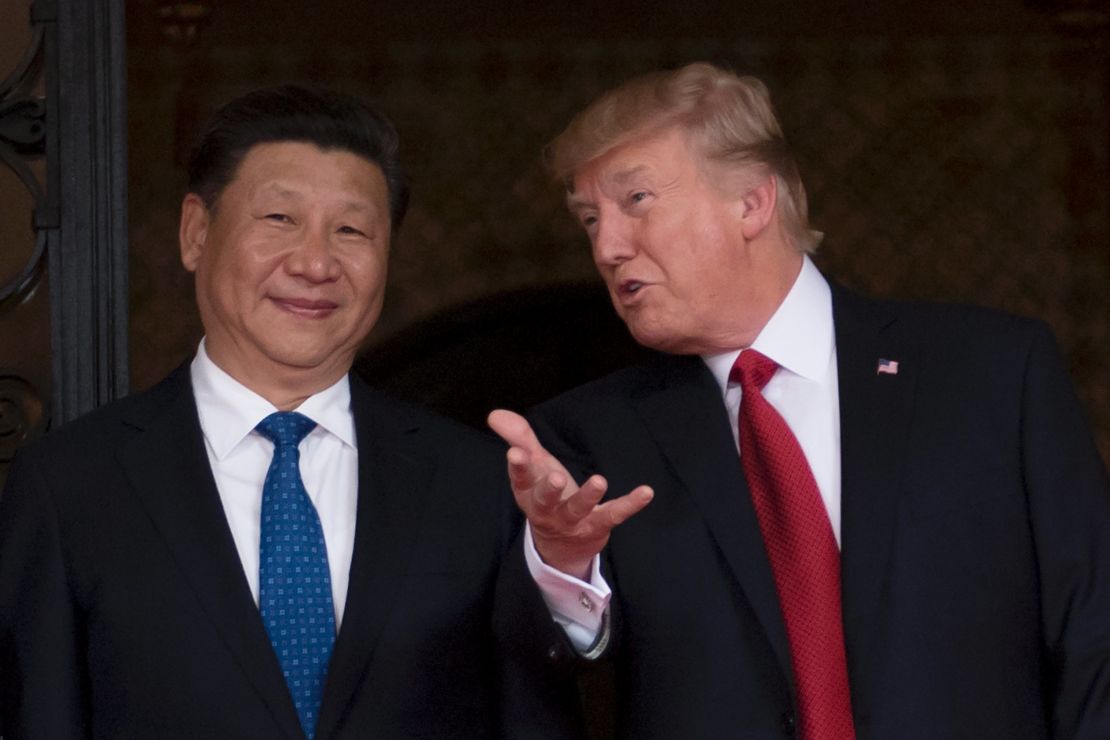
    A few weeks ago at the APEC Summit, a familiar but confusing scene returned to global politics. US President Donald Trump and Chinese President Xi Jinping, two leaders who are rewriting the rhythm of 21st century geopolitics, shared a moment that seemed to restore the idea of a “G-2” world. Both countries quietly acknowledged each other as the ultimate arbiters of power.

    It was the return of ‘Chimerica’- a term coined by historian Niall Ferguson in the late 2006 to describe the symbiotic economic relationship that had developed between the United States and China. It captured how the U.S and China became economically interdependent- America driving global consumption and China powering global production. This fusion, which gained momentum after China’s economic reforms and entry into global markets, sustained worldwide growth for decades. The U.S spent, China saved and both benefitted.

    Well, it may describe their interdependent relationship but now it is a more complicated coexistence.

    Just days before this diplomatic spectacle, Washington and New Delhi signed a new 10-year defence framework. The deal, covering cooperation across land, air, sea, space and cyber domains was presented as a major milestone in India-U.S ties. But beneath the optics lies a more sobering reality.

    The arrangement looks like a strategic partnership and more like a buyer-seller relationship. As Trump extends a hand to Beijing while selling arms to India, it becomes clear that U.S isn’t choosing between its tow Asian priorities. It is simply keeping both in play, an act of pure diplomatic dexterity.

    Today, Trump’s second presidency has revived the idea of Chimerica in a play with a harder edge. His approach toward Beijing is not one of warm cooperation but of “competitive coexistence.” His recent Asia tour spanning Japan, South Korea and ASEAN alongside his engagement with Xi, shows a shift from full confrontation to selective engagement. Washington is learning to live with China while limiting its rise.

    For Asian nations, this renewed Chimerica brings as much unease as opportunity. America’s approach seems to oscillate between tariffs and handshakes, sanctions and summits.

    Trump’s style may be unpredictable, but his method is consistent: deal with rivals from a position of strength, keep allies close but dependent and ensure that U.S remains the indispensable power in Asia.

    India’s position becomes uniquely delicate. The new 10-year defence agreement gives New Delhi access to advanced technologies and greater interoperability with U.S forces. Yet, India must ask- is it truly a co-author of this security architecture, or merely a consumer of it?

    A partnership built on purchases cannot define India’s long-term security ambitions. What New Delhi needs is capability-building, not dependency.

    Moreover, as the U.S juggles its engagement with both China and India. Washington’s larger strategy appears clear- contain Beijing without losing Beijing. The goal is to maintain competition without escalation. In that balance, India becomes both a partner and a pawn.

    This is where India’s own diplomacy must evolve. Instead of being trapped in the binary of the U.S-China contest, New Delhi should look outward and sideways. Europe, Japan Brazil and ASEAN are no longer passive spectators in global politics. Each of these actors hold growing influence whether in trade, technology, or the climate transition.

    Taking into account the recent developments, India must fast-track the India-EU free trade agreement and the Investment protection agreement, which is currently back on the negotiating table.

    Second, Tokyo’s long-term investments in projects like the Delhi-Mumbai Industrial Corridor and bullet train show enduring trust. Strengthening these while expanding joint R&D in clean energy and digital tech will make the partnership more strategic and self-reliant.

    With Brazil, collaboration through BRICS and shared global south priorities can jointly push for fairer economic order.

    And with ASEAN, India must revive its Act East policy by improving connectivity, trade links and maritime cooperation in the Indo-pacific. As ASEAN balances between the U.S and China, it values India’s neutrality and stability as well. Also, with Australia, India must secure critical minerals for its green industries and expand cooperation under the QUAD framework.

    Together, such engagements can ensure that India isn’t trapped in either U.S-China rivalry or a new reviving bond, it must by all means emerge as a third pole of stability with shaping, not following this new bipolar world.

    There is also a broader question: what does India’s strategic autonomy mean in this new order? It cannot simply mean staying non-aligned; it must be multi-aligned, engaging with all, dependent on none. That requires India to strengthen its indigenous defence production, invest in diplomacy that is both principled and pragmatic, and position itself as a bridge between the Global North and South.

    Trump’s transactional worldview also offers India both a warning and an opening. The warning being that alliances built on convenience can quickly turn into liabilities.  While the opening is that a power still exists between the two poles, and India can fill it not as a junior ally but a pole in it’s own right.

    Well, the return of Chimerica may once again define the global balance of power. But this time, India’s task is not to pick sides but to build its own.

  • The populist America needs today

    The populist America needs today

    This article has been published with: The populist America needs today


    It’s not every day that a Muslim of Indian origin becomes the mayor of the world’s richest city—New York. But today, Zohran Mamdani, born in Uganda to Indian parents, raised in Queens and long seen as an outsider in American politics, pulled off what many called impossible.

    In a city built by immigrants but ruled by elites, a man who once rapped about inequality and later worked as a tenant organiser fighting evictions now holds keys to the city hall.

    Mamdani’s victory isn’t just his own. It’s a mirror held up to America, a country still wrestling with what it means to be “American.”

    In a political landscape fractured by polarisation between the populist right and an exhausted liberal establishment, Mamdani has found resonance by talking about something both sides often forget, the cost of living. His promises of free bus rides, rent freezes, public grocery stores, and universal childcare sound almost utopian to his critics, but to many ordinary New Yorkers burdened by rent hikes and long commutes, they ring as necessary, even overdue.

    For nearly a decade, political populism in the United States has worn a single face that of Donald Trump. His “America first” rhetoric, nationalist nostalgia, and resentment-driven movement have defined one half of the nation’s mood. But Mamdani’s win represents a very different kind of populism—one built not on fear and exclusion, but on empathy and inclusion.

    Mamdani’s campaign wasn’t about identity politics, though identity was impossible to ignore. His very presence challenged the unspoken hierarchies of American powers. Yet, what propelled him wasn’t his biography, but his politics; one of survival.

    One tells his followers that they have been robbed by outsiders, the other tells his voters that they have been forgotten by insiders. It is a subtle but radical difference, the shift from populism as protectionism to populism as participation.

    That Mamdani openly identifies himself as a Democratic Socialist would have seemed unthinkable in the America of even a decade ago. Yet it reflects the slow transformation of political imagination among young voters who came at age through crisis like 9/11, 2008 financial crash and the pandemic each, chipping away at the myth that capitalism alone guarantees freedom.

    Mamdani has revived socialism not as an imported ideology, but as an American inheritance rooted in the labour struggles, anti-war movements, and civil rights campaigns that have long coexisted with capitalism’s glare.

    Still, his rise has unsettled many in the party. Centrists fear that his identity and socialist economics will be used by Trumpist to stoke old cultural divides ahead of the 2026 midterms. Yet the left within the party sees Mamdani what the Democrats have long lacked; moral clarity.

    He talks not about “unity” as a slogan but about justice as a material condition. His message of affordability and inclusion gives populism back its original democratic meaning.

    In that sense, Mamdani’s victory is less a footnote in New York’s political history than a window into America’s ideological future. It suggests that populism need not always carry the smell of nationalism. It can instead, be the language of a new social contract, one that redefines “the people” not by who they exclude, but by what they endure together.

    The MAGA movement made anger the grammar of American politics. Mamdani’s populism makes solidarity it’s syntax. Both claim to speak for “the forgotten,” but only one seeks to ensure that no one is forgotten again.

  • Act east, deliver east

    Act east, deliver east

    This article has been published with: Act east, deliver east


    In the soft-lit hills of Kuala Lumpur, Southeast Asia’s leaders gathered this October to take stock of an unsettled world. The 47th ASEAN Summit hosted by Malaysian Prime Minister Anwar Ibrahim, carried both promise and paradox of Asia’s regional diplomacy.

    Under the theme of “inclusivity and sustainability,” the three-day deliberation sought to reimagine Asia’s regional order, one that must now adapt to the slow erosion of multilateral trust.

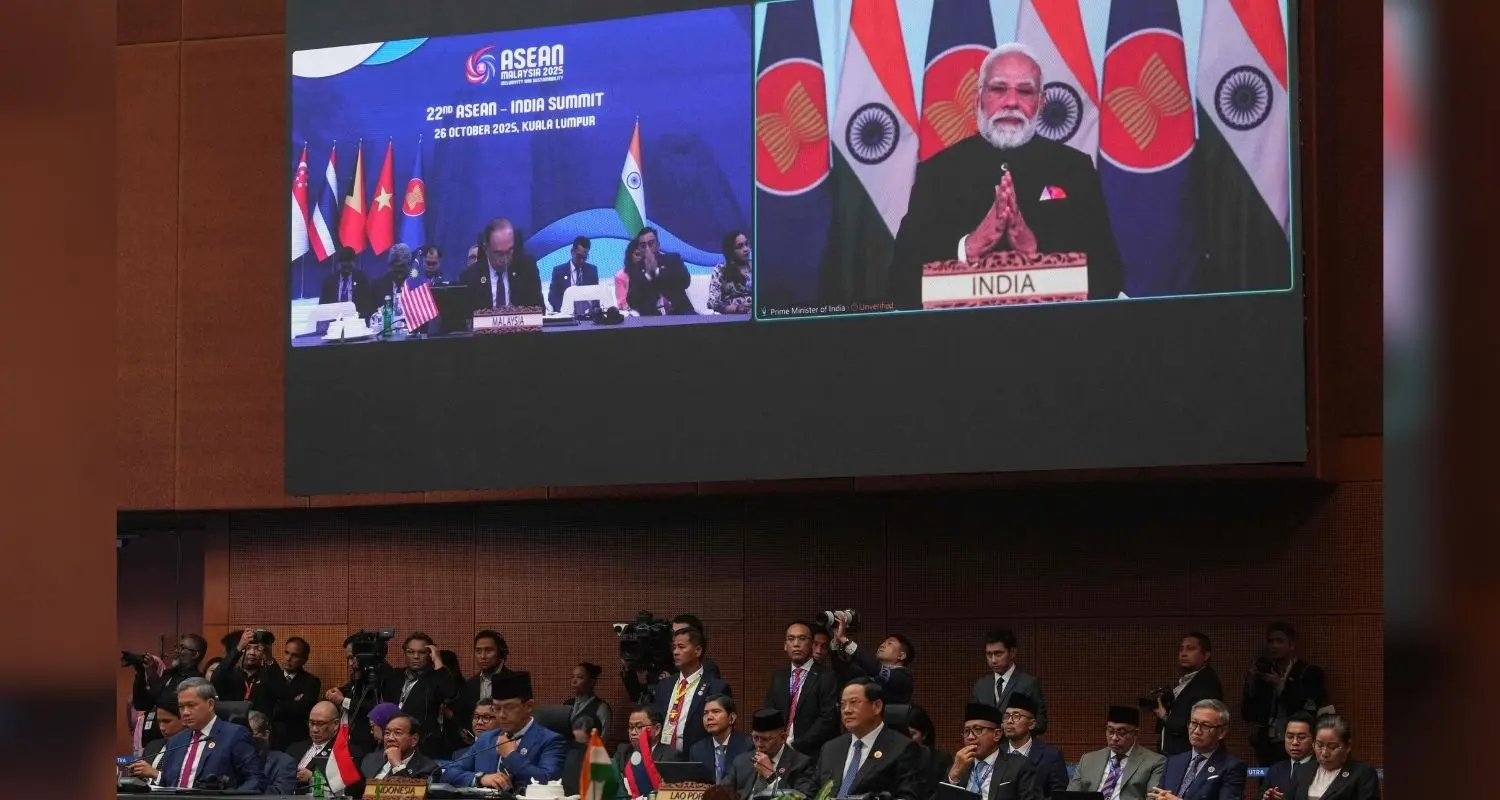
    Among the summit’s tangible outcomes, something became historic: Timor-Leste’s induction as ASEAN’s 11th member. The move was symbolic of ASEAN’s expanding horizons and the bloc’s continued relevance as a bridge across the Indo-pacific. Yet, amid the handshakes and declarations, the conversation in diplomatic circles revolved around the chair left empty by India’s Prime Minister Narendra Modi.

    Modi’s virtual participation at the summit sparked more speculation than his speech. His absence was read not as neglect but as a strategic signal, one that left many wondering whether India, which once championed the ‘Act East’ slogan is now content to act virtually.

    To his credit, Modi’s address did not lack substance. He described ASEAN as the ‘cultural capital of India,’ reiterating, during civilisational links that anchor India’s eastern outreach. He stressed that even in this “era of uncertainties,” the ASEAN-India Comprehensive Strategic Partnership continues to serve as a foundation for global stability.

    The declaration of 2026 as the ASEAN-India Year of Maritime Cooperation underlined Delhi’s growing investment in maritime security, counter-piracy operations, and cyber-resilience across shared waters. These are vital for India, given that nearly 80 per cent of its energy imports flow through ASEAN-controlled routes such as the Malacca Strait.

    There were other signs of progress, too. Both sides agreed to expediate the modernisation of the ASEAN-India Trade in Goods Agreement (AITIGA), a critical move as India’s trade deficit with ASEAN has widened alarmingly, from $9.6 billion in 2016-17 to $43.5 billion in 2022-23. The India-Myanmar-Thailand trilateral highway and Kaladan multi-modal transport project, long symbolic of India’s sluggish project diplomacy, reappeared in joint statements, this time with promises of renewed speed.

    Meanwhile, digital cooperation has emerged as a new frontier. India’s Unified Payments Interface (UPI) has drawn admiration across ASEAN for its accessibility and reliability. The first ASEAN-India Track 1 Cyber Policy Dialogue was also welcomed, setting up structured channels for tackling cyber threats, a sign that the partnership is finally venturing into 21st century domains rather than lingering on the 20th century rhetoric.

    Officially, the Ministry of External Affairs attributed PM Modi’s absence to scheduling conflicts, the Diwali season and Bihar elections.

    According to Professor Rajan Kumar of Jawaharlal Nehru University, the absence might reflect unease over stalled trade negotiations with the US, especially after President Trump’s 50 per cent tariff hike on Indian imports and Washington’s sanctions on Russian firms integral to India’s energy supply. In that context, a face-to face encounter might have been diplomatically uncomfortable.

    Still, India was far from absent. External Affairs Minister S. Jaishankar represented the country, holding substantive bilateral meetings with his Malaysian, Singaporean and Thai counterparts. Yet, the “empty chair” had its own symbolism.

    In the lexicon of geopolitics, “diplomacy of presence” matters, the sheer act of being there can shape discussions, perceptions, and hierarchies. An unoccupied seat can be louder than a statement.

    Well, India’s engagement with ASEAN remains one of the more consistent threads of its foreign policy. It aligns neatly with Delhi’s Act East Policy, seeking to turn India from a South Asian power into a broader Indo-Pacific actor. For ASEAN too, India offers something unique: a democratic counterweight in a region often defined by US-China contestation.

    Unlike Beijing or Washington, Delhi doesn’t seek to dominate ASEAN’s decision making. Its policy supports ASEAN centrality the idea that Southeast Asia, not external partners, should lead its regional agenda. That humility has given India quiet but durable credibility within ASEAN capitals.

    Yet, substance must keep peace with sentiment as well. India has been slow to deliver on infrastructure promises and trade facilitation. While projects like the Trilateral Highway remains unfinished, China’s belt and road initiative continues to reshape the region’s connectivity map.

    If India wants to be seen as a reliable partner rather than a distant admirer, execution must replace declarations.

    Economically, ASEAN represents India’s fourth-largest trading partner and a key pillar in its effort to diversify supply chains away from China. But to move from potential to power, India needs sustained investment, private sector push and trade predictability, not just rhetoric of friendship.

    The Kuala Lumpur summit reaffirmed that ASEAN-India relations are not faltering, they are evolving sometimes unevenly, but there does exist a strategic purpose.

    The shared agenda on digital finance, cybersecurity and maritime governance shows that cooperation is moving into newer, more pragmatic spaces.

    However, India’s challenge is one of consistency and presence. The Indo-Pacific is not shaped only in war rooms or treaties but through the quiet choreography of constant engagement.

    If India wants the 21st century to truly be the “India-ASEAN Century,” as PM Modi declared. The region is watching not just for India’s words, but for its willingness to show up consistently, credibly and confidently.
  • Why Gen Z protests are shaking the world

    Why Gen Z protests are shaking the world

    This article has been published with: Why Gen Z protests are shaking the world

    Unlike their predecessors, Gen Z is not content with gradual change. They have grown up in a digital world where progress is instantaneous and transparency is expected. Their protests are organised online, powered by memes, videos and digital solidarity. The internet is not just their stage; it is their weapon.


    For years, the world watched the protests erupted from Hong Kong to Cairo marking 2019 as the so-called “year of protest.” But in 2025, a different kind of uprising has taken shape. This time, it is much younger, sharper, and more connected.

    From Nepal to Indonesia, the Philippines to Morocco and Madagascar, a restless generation has taken to the streets, transforming frustration into defiance. Experts are calling it the wave of ‘Gen Z protests,’ and it may redefine how dissent looks in the modern age.

    The sparks that ignite these protests differ from one country to another, yet the underlying fire is the same: anger over poor governance, inequality, corruption and a future that feels increasingly out of reach. In Nepal, the outrage began with a government-imposed social media ban that was quickly reversed, but not before triggering a nationwide reckoning. For a generation raised online, the ban was not just an attack on communication but a silencing of identity and expression.

    It became the final straw in a long history of corruption, nepotism, and political failure. Prime Minister Oli’s resignation soon followed, exposing a deep disillusionment among young Nepalis who feel their democracy has been hijacked by the elite.

    In Indonesia and the Philippines, the frustration runs parallel over widening inequality, soaring youth unemployment, and an economy that no longer guarantees dignity. Many young people are working multiple low-paying jobs, watching the promise of education dissolve into a market that no longer rewards effort.

    A recent World Bank update highlights that one in seven people in China and Indonesia is unemployed, and that much of the region’s job creation has shifted from factories to unstable service work. The ladder that once lifted millions into the middle class has started to crack.

    In Morocco, protests have flared up around social justice reforms and the state of public services. The country’s youth are furious that billions of dollars are being pushed into hosting the 2030 FIFA World Cup while healthcare, education, and transport systems remain broken. To them, it is not just about sports, it is about misplaced priorities.

    The glittering stadiums are being built on the back of neglect. The government’s vision of progress feels hollow when water shortages, unemployment and social inequality persist.

    Across the Indian ocean, in Madagascar, young protesters are demanding something even more basic: electricity and clean water. The island nation faces an ironic dilemma, while political elites make grand promises of development, ordinary families continue to suffer from erratic power cuts and unreliable water supplies, often left in darkness and neglect.

    What unites these different uprisings is not just ideology, but exhaustion, a generation that feels cheated by those who claim to lead them.

    Well, it’s quite clear that this generation does not want symbolic reforms or slow-moving promises. They want results they are visible.

    Unlike their predecessors, Gen Z is not content with gradual change. They have grown up in a digital world where progress is instantaneous and transparency is expected. Their protests are organised online, powered by memes, videos and digital solidarity. The internet is not just their stage; it is their weapon.

    Every government scandal, every instance of elite privilege, every broken promise becomes public within seconds.

    Older generations often dismiss this as performative outrage, but it is much deeper than that. For Gen Z, activism is survival. They are fighting for jobs, dignity and relevance in systems that continue to exclude them. Their rebellion is not simply about demanding reforms; it is about reclaiming agency in societies that ignore them.

    In many ways Gen Z protests of 2025 are not just reactions to crisis; they are reflections of a larger global fatigue. The world has been living through years of economic uncertainty, climate anxiety and political stagnation. For young people who have inherited these challenges, protest is not a choice it has become a necessity.

    What is happening in these parts of the world is not chaos, it is clarity. These protests reveal a generation that refuses to wait, one that demands accountability now, not later.

    Governments can either listen or continue to pretend that stability is the same as peace. But the truth is clear: this generation is no longer asking for permission to change the world, it is already doing it.

  • India’s role in the new Gaza peace

    India’s role in the new Gaza peace

    The article has been published with: As the first phase of US president Donald Trump’s 20-point peace plan for Gaza gains traction, with both Hamas and Israel cautiously signing onto its initial framework, a new moment of reckoning arises not just for the region but for India, whose interests and ideals converge at the heart of Gaza’s fragile peace.


    As the first phase of US president Donald Trump’s 20-point peace plan for Gaza gains traction, with both Hamas and Israel cautiously signing onto its initial framework, a new moment of reckoning arises not just for the region but for India, whose interests and ideals converge at the heart of Gaza’s fragile peace.

    The plan, which emphasises large-scale international investment in water, energy, health, and infrastructure, has drawn careful support from the European Union and several Arab states, including Egypt, Qatar, Saudi Arabia, and the UAE.

    While many remain concerned over the absence of a clear timeline for Israel’s withdrawal, the momentum itself is significant. Prime Minister Modi welcomed the plan as “decisive progress” and a “significant step forward,” signaling India’s willingness to see stability return to Gaza after years of destruction and despair.

    For India, peace in Gaza is not an abstract moral issue but a question deeply linked to its historical diplomacy, energy security, and regional aspirations. New Delhi’s engagement with the Palestinian question predates its own independence.

    In 1947, Jawaharlal Nehru ensured India’s participation in the UN Special Committee on Palestine, where India defied the Western bloc to support a single federal state with Arab and Jewish provinces, a stance consistent with its postcolonial belief in coexistence and self-determination.

    In the following decades, India extended sustained financial support to the United Nations Relief and Works Agency for Palestine Refugees (UNRWA) and contributed troops to successive UN peacekeeping missions, including the UN Emergency Force in the Suez and Sinai, where Indian soldiers even lost their lives during the 1967 Arab-Israeli conflict.

    India’s solidarity with the Palestinian cause has never been merely symbolic. In 1988, it became one of the first non-Arab nations to recognise the State of Palestine, a step that many Western democracies only began contemplating decades later. Yet, the early 1990s marked a recalibration. When India established full diplomatic relations with Israel in 1992, it was not a repudiation of its commitment to Palestine but a response to the changing geopolitical order.

    The Madrid Peace Conference has brought new players to the table, and India, wary of being excluded from the evolving peace process, adjusted its strategy to engage with both sides. Since then, India has attended donor conferences, participated in UN committees on Palestinian rights, and provided development assistance and technical training to the Palestinian Authority (PA), while simultaneously building robust defence, agricultural, and technology partnerships with Israel.

    This dual approach, combining principled support for Palestinian sovereignty with pragmatic engagement with Israel, has been the defining feature of India’s Middle East policy for over three decades.

    India has repeatedly condemned terrorism in all its forms, including attacks on Israeli civilians, while also expressing concern when Israel’s military operations inflict civilian suffering in Gaza. Its response to the recent conflict, particularly after the airstrikes near Doha, was carefully worded but deliberate, reiterating the need to respect international humanitarian law and resume dialogue toward a two-state solution.

    At the heart of India’s interest in the new Gaza plan lies not just diplomacy but economics as well. With the Abraham Accords reshaping West Asia, India finds itself part of a new cooperative architecture that bridges both Israel and the Gulf.

    The India–Middle East–Europe Economic Corridor (IMEC), announced in 2023, exemplifies this shift, a project linking India’s ports to the Gulf, Israel, and onward to Europe through rail and maritime routes. Its success depends on regional stability.

    A peaceful Gaza, integrated into a broader framework of reconstruction and trade, directly serves India’s interests in securing energy supplies, ensuring uninterrupted trade flows, and maintaining safe conditions for over eight million Indians living and working in the Gulf region, whose remittances exceed $40 billion annually.

    Israel’s ambassador to India recently suggested that New Delhi should take an active role in Gaza’s reconstruction, citing India’s expertise in infrastructure, water management, and digital governance. Indian companies such as Larsen & Toubro and Tata Projects have already demonstrated their capacity to execute large-scale civil works across the Middle East.

    India’s engagement in the region would not only consolidate the nation’s image as a development partner but also reinforce its credentials as a responsible power capable of constructive mediation.

    Beyond economic calculations, India’s participation would resonate with its broader foreign policy doctrine, one that blends strategic autonomy with normative leadership. As a founding member of the Non-Aligned Movement, India has historically positioned itself as a bridge between the Global North and South.

    Today, that legacy continues through new minilateral groupings such as the I2U2 (India, Israel, UAE, United States), which promote cooperation in food, energy, and innovation. By constructively engaging in Gaza’s recovery while upholding Palestinian sovereignty, India can project itself as a moderating force that values peace without partisanship.

    However, the path ahead demands caution. Aligning too closely with the Israeli or American approach could alienate traditional Arab partners, especially those sensitive to Palestinian sovereignty.

    The challenge for India, therefore, is to sustain a credible middle course one that upholds humanitarian principles while remaining anchored in realpolitik.

    In Gaza’s fragile future, India’s role could go beyond financial assistance. Its record in peacekeeping, institution building, and capacity training makes it uniquely positioned to help restore basic governance, healthcare, and education systems.

    Indian NGOs and development agencies, working alongside UN bodies, could contribute to skill-building programmes that empower Palestinian youth and reduce dependence on aid.

    From Nehru’s moral idealism to Modi’s pragmatic outreach, India’s policy on Palestine and Israel has been marked by adaptation without abandonment. The new Gaza peace plan presents yet another test of that balance.

    Whether India chooses to remain a cautious observer or an active participant in reconstruction will reveal how it defines power in the twenty-first century.

  • Rethinking free speech through Sahyog

    Rethinking free speech through Sahyog

    This article has been published with: Rethinking free speech through Sahyog

    Sahyog can serve public good but only if backed by transparency, statutory clarity and judicial review. Otherwise, it will remain a contested experiment seen by some as shield against cybercrime and by others as a step toward state overreach.


    From the very beginning, India’s free speech story has been a push and pull between expansive liberty and cautious regulation. When the framers of India’s Constitution enshrined freedom of speech and expression in Article 19(1)(a), they understood that democracy thrives on debate, disagreement and dissent. Yet they built in caveats; Article 19(2) that permits the State to impose “reasonable restrictions” in the interests of sovereignty, public order, morality and security.

    In this regard, the Supreme Court has often stepped in. In Romesh Thappar v. State of Madras (1950), it struck down a ban on a political journal, declaring that freedom of speech lay “at the foundation of all democratic organisation.” In Shreya Singhal v. Union of India (2015), it famously scrapped Section 66A of the IT Act, holding that vague powers to police online speech violated constitutional guarantees.

    Time and again, the judiciary has stressed: restrictions must be narrowly tailored, reasoned and subject to oversight. Which brings us today to the Sahyog portal. Launched by the Union IT Ministry last year, it is a centralised digital platform through which government agencies and police can issue takedown requests to social media intermediaries. Officially designed to combat cybercrime and harmful online content, it allows authorities to flag and demand removal of posts directly.

    The controversy arises because critics argue that the portal bypasses the safeguards of Section 69A, operates in secrecy and risks enabling censorship.

    Yet, in a recent ruling, the Karnataka High Court took a different view: it upheld the government’s use of this digital tool, dismissing X Corporation’s plea that labelled the system “extra-legal censorship”, and instead described the portal as “an instrument of public good” and a “beacon of cooperation” against online harms, and that it is a cooperative mechanism to tackle cybercrime.

    Soon after, Elon Musk’s company declared it was “deeply concerned,” warning that Sahyog allows millions of officers to demand removals in secrecy, bypassing safeguards of Section 69A, infringing on constitutional rights.

    So, is this really censorship?

    Supporters say this is not an arbitrary censorship but enforcement. The internet is flooded with deepfakes, child exploitation material, hate campaigns and frauds. Harm spreads at the speed of a click, while legal blocking orders often take weeks. A centralised portal, they argue, makes cooperation efficient, protects victims swiftly and reflects the State’s duty to maintain public order.

    Seen in this light, Sahyog is a policing tool against criminal misuse not a muzzle on political dissent.

    The high court’s view fits this reasoning: challenging the portal is, in its words to ‘misunderstand its very purpose.’

    Yet critics, civil society, legal scholars and X see danger in how Sahyog operates. Unlike Section 69A, which requires reasoned, reviewable orders, Sahyog enables opaque takedown requests. No public record, no notice to users, no guaranteed oversight. This, they argue is ‘arbitrary censorship,’ not in its declared intent, but in its unchecked potential.

    The real threat is that an officer in one corner of the country could order content down in another, with the citizen left unaware of the grounds. Genuine dissent or inconvenient reporting may vanish under the same framework meant to remove harmful content. When removals happen without transparency, it often seems as silencing even if done unintentionally.

    Well, censorship is not always about intent, but also about a process. A system that removes content without reasoned orders, without notice, and without accountability resembles censorship in practice, even if born of noble objectives. Sahyog, as currently designed, can risks blurring that line.

    The government insists that “the Constitution wins.” Musk insists that free expression is under threat. The truth lies in neither extreme. Sahyog can serve public good but only if backed by transparency, statutory clarity and judicial review. Otherwise, it will remain a contested experiment seen by some as shield against cybercrime and by others as a step toward state overreach.

    India’s constitutional journey has always been about negotiating liberty and restraint. Whether Sahyog becomes a cooperative safeguard or a creeping censor will depend less on its technology, and more on how faithfully it is made to follow the spirit of Article 19.