Category: Opinion

  • London’s identity in question, are Indians at risk?                                                                      

    London’s identity in question, are Indians at risk?                                                                      

    This article has been published with: London’s identity in question, are Indians at risk?

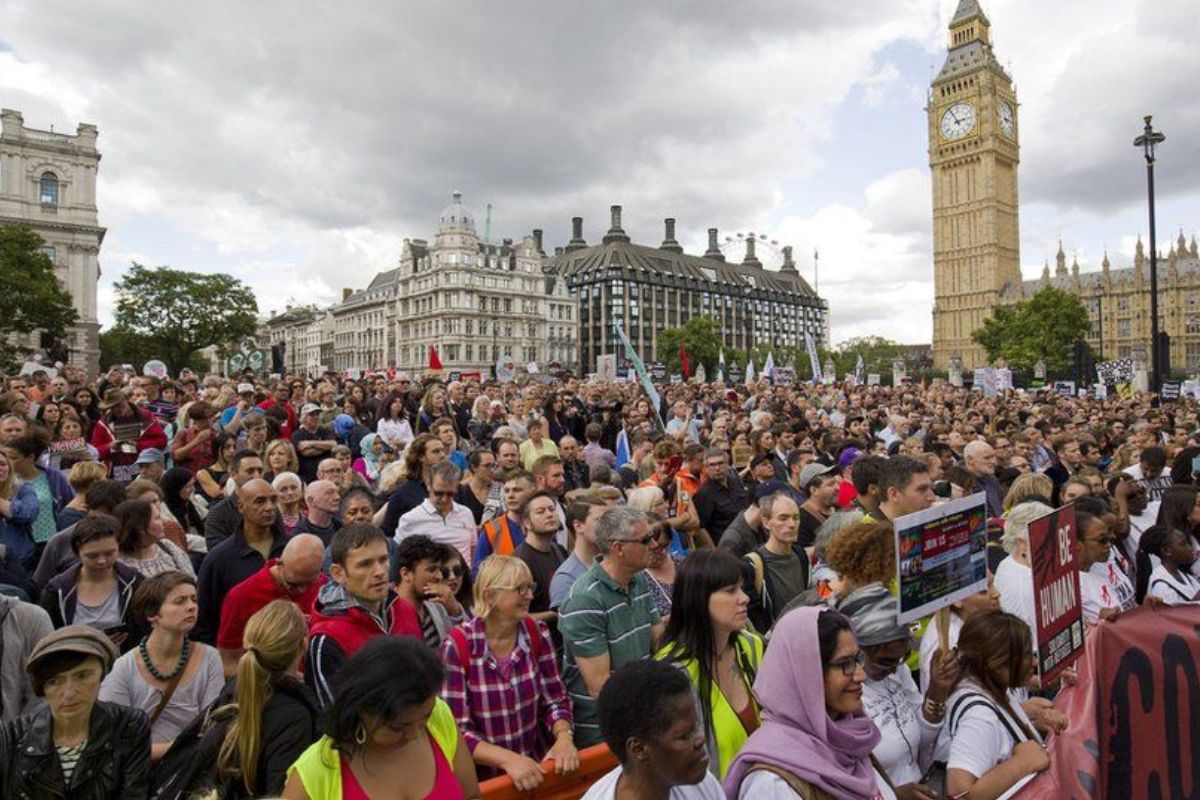
    On a September weekend, central London became a stage of tense spectacle. A tide of Union Jacks and St George’s crosses swept through the streets, led by far-right activist Tommy Robinson under the banner of “Unite the Kingdom.” More than 1,50,000 people reportedly participating, this was one of Britain’s largest anti-immigration demonstrations in recent years.

    What transpired was more than a protest. It was a reminder that immigration has become the flashpoint of our times, capable of mobilizing crowds, unsettling governments and shaping the future of millions including the large Indian diaspora. The question many are quietly asking now is: Should Indians be worried?

    Indians are the largest non-UK ethnic group in London, numbering over 6,50,000 in Greater London. British Indians own over 65,000 businesses in the UK, contributing to roughly £60 billion annually to tits economy. Almost 1 in 10 NHS doctors in the UK is of Indian origin. Whereas, Indian students make up one of the largest international student groups in the UK, with more than 1,40,000 Indian students enrolled in British universities in 2023-24, bringing billions in tuition and local spending.

    The rally was framed as a show of patriotism, but immigration was the central grievance. Placards blared “Send them home” and “Stop the boats.” The rhetoric was unmistakably hostile towards migrants, particularly Muslims, though the undertone extended to anyone perceived as an “outsider.” Violence erupted when protestors clashed with police, injuring 26 officers.

    London’s Muslim population is around 15%, heavily concentrated in boroughs like Newham, Tower Hamlets and Brent. Far-right activists portray this concentration as a “threat to British identity.”

    Debates around halal food in schools, mosque construction or visible symbols like the hijab are exploited by right-wing groups as evidence of cultural erosion. Wars in Afghanistan, Syria and more recently the Israel-Gaza conflict have fed into anti-Muslim sentiment with Muslims abroad often conflated with Muslims at home.

    Prime Minister Keir Starmer condemned the march as divisive, insisting Britain “will not surrender its flag to those who use it as a symbol of fear.” But the event’s scale, intensity and rapid spread across social media suggested something deeper: anti-immigration sentiment is no longer fringe. It is mainstreaming.

    Economic anxieties, housing shortages and stretched public services are easy scapegoats. Security concerns, often fuelled by sensationalist reporting, add another layer. But perhaps the most significant driver is political entrepreneurship, activists like Robinson know how to weaponise frustration into mobilisation. Online misinformation then turbocharges the anger, transforming digital discontent into street protests.

    London’s rally is part of a global pattern. Just last month, tens of thousands marched in Australia under the banner of “March for Australia,” while protests over asylum housing have surged in the United States. Across Europe, demonstration in Berlin, Warsaw, and Dublin echo similar themes. Migration politics is now transnational, and Britain’s far-right plugged into these global currents.

    For Indians, the implications are complicated. On the one hand, the Indian diaspora in the UK is one of the country’s most successful immigrant communities being economically stable, politically active and culturally visible. But success does not immunise against xenophobia.

    History has shown how quickly minorities can become collateral damage when anti-immigration rhetoric boils over.

    Indians may not be specific targets of Robinson’s campaign, but visibility itself is enough. Past attacks on Indian students in Australia and racist assaults on South Asian workers in the UK illustrates how quickly resentment can translate into violence.

    Beyond physical safety, social climate matters as well. Discrimination in jobs, housing, or even public spaces can intensify during such surges. For young students and workers without strong community support, this can be isolating.

    India has often had to step in when its nationals abroad face hostility. Advisories, consular interventions and public outcry in India can strain ties with the host nations.

    It is not alarmist to say that Indians should be cautious. But caution must not turn into a constant fear. After all, Britain is also a place where Indian-origin leaders hold office, where Bollywood films run in packed theatres and where Indian businesses thrive. Even its official national dish, chicken tikka masala, has Indian roots, a reminder of how deeply the community has shaped British life.

    The chants of “we want our country back” are not just about border control, they reflect an identity crisis in Western democracies struggling to balance globalisation with local anxieties. For Britain, this identity debate is especially charged post-Brexit. The promise of taking back control of borders was a defining feature of the Leave campaign, yet migration numbers remain high due to labour shortages.

    Far-right figures are now exploiting this perceived “failure” to whip up anger.

    Well, Indian in the UK and elsewhere should respond with awareness rather than fear by staying alert to their surroundings, keeping close to community networks and recognising when immigration becomes a political flashpoint. For students and young professionals, this means being prepared for shifts in visa rules or public mood that can arise during election seasons.

    At the same time, India’s diplomatic role will grow in importance. Protecting its citizens abroad must remain central to its foreign policy.

    Anti-immigration marches may chant “send them home,” but the truth is Indians have already made Britain their home. From students to entrepreneurs, they contribute to the economy, culture and public life. As long as they remain as asset, not a threat, to the society they live in they should not be worried, though they must remain watchful of shifting political winds.
  • Nepal’s double uprising: Revolt and exodus

    Nepal’s double uprising: Revolt and exodus

    This article has been published with Nepal’s double uprising: Revolt and exodus

    Nepal is today at an inflection point. The Himalayan republic, long accustomed to political instability has rarely faced a moment this stark: the biggest youth revolt in its history colliding with the largest exodus of its people abroad. The first is noisy, combustible and impossible to ignore. The second is quieter, but no less devastating. Both are rebellions, different in form but identical in essence, against a state that has failed to deliver.

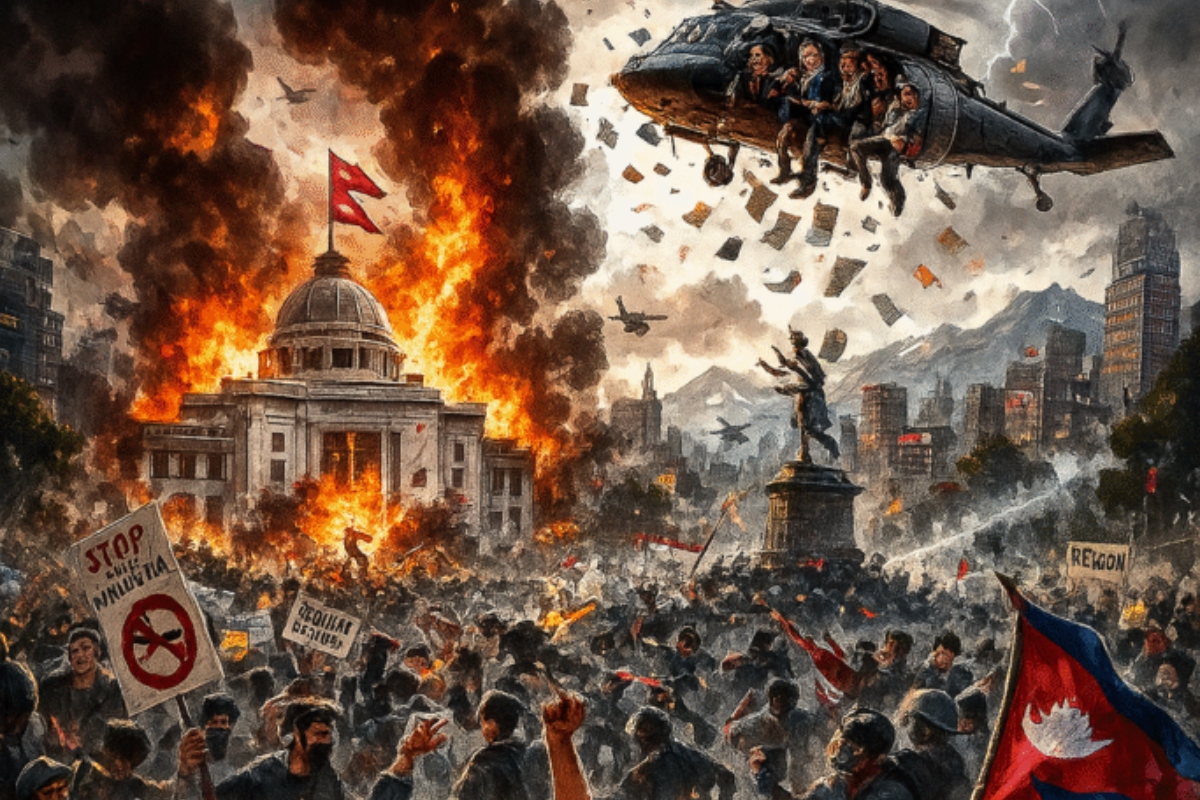
    The eruption of protests last month, triggered by a government ban on 26 social media platforms, was unlike anything Nepal has seen in decades. What began as an outrage over digital censorship spiralled into a generational uprising. Demonstrations spread across all 77 district capitals, claiming at least 19 lives in Kathmandu alone.

    Parliament and power centres burned, five former Prime Minister’s residences were vandalised, and Rajyalaxmi Chitrakar, wife of former PM Jhala Nath Khanal, died from severe burns after her house was torched. While Finance Minister Dhakal was stripped and paraded in public; Foreign Minister Deuba sustained injuries.

    This was not the palace intrigue of the past, nor the elite factional battles Nepalis have grown weary of. This was something more, a mass demand for accountable governance, credible constitutional reform and institutions that inspire trust. For Nepal’s Gen Z, the ban on TikTok or WhatsApp was merely the spark. The fire has been smouldering for years, fuelled by corruption, inequality and the absence of dignified work opportunities.

    A day after police opened fire on young demonstrators, Kathmandu was engulfed in flames. Prime Minister KP Sharma Oli resigned, and President Ram Chandra Paudel went into hiding under army protection.

    The ban on social media was hastily lifted, but the damage was already done. The youth of Nepal had issued their verdict: The system is broken and patience has run out.

    Yet, if the protest is a loud rebellion, migration is the quite one, perhaps even more telling. More than 4,00,000 Nepalis leave each year, an average of 10,000 departures a day. They hollow out the very demographic that should be building Nepal’s future, sustaining their families and the economy through remittances while abandoning the political order they no longer believe in.

    The absent, in effect, are financing a system they refuge to inhabit. World Bank report underlines this paradox—82 per cent of Nepal’s workforce remains trapped in informal employment, far above global and regional averages. For many, leaving is less of a choice than an act of survival.

    Nepal’s politics have long been a theatre of instability. Fourteen governments since 2008; none completing a full term. The Maoist insurgency of 1996 claimed 17,000 lives in its attempt to overthrow the monarchy. The 2008 abolition of the royal order was supposed to herald a people’s republic. The 2015 constitution was hailed as a landmark. And yet, KP Sharma Oli, a nationalist, populist, survivor, cycled in and out of office four times between 2015 and 2024 only to fall once again in 2025.

    The pattern is depressingly familiar, tactical manoeuvring among three dominant parties, the Nepali Congress, CPN-UML and the Maoist Centre at the expense of structural reform.

    Pushpa Kamal Dahal (Prachanda) continues his balancing act. Sher Bahadur Deuba struggles for relevance. Meanwhile, power circulates among the same aging elites, their children flaunting privilege on social media while ordinary citizens struggle with unemployment, rising costs, and climate vulnerability. The gap between rulers and ruled has become unbridgeable.

    For Gen Z, who have grown up on promises of democracy but experiences little of its substance, this political theatre has lost all legitimacy. “Nepobabies” trend online as shorthand for the dynastic impunity of Nepal’s political class. What matters to them is not ideology but the lived reality of jobs, dignity and opportunity, all of which are in short supply.

    This convergence of revolt and exodus is existential. A country that loses its youth either to martyrdom in the streets or to migration risks eroding its national security.

    The government’s use of excessive force did not just provoke fury; it confirmed suspicions that the system is corrupt, stagnant and unwilling to listen. The resignation of Oli only deepens the vacuum, inviting shifting alliances that promise more of the same paralysis.

    And here lies the danger, rebellion without reform hardens despair. If the protests fizzle into yet another cycle of unstable governments, while the exodus continues unabated, Nepal risks hollowing itself out.

    For India, Nepal’s turbulence is not a distant spectacle but a pressing concern. The movement of people and ideas across the border are too close to break. Instability in Nepal inevitably spills into Bihar, Uttar Pradesh, Sikkim and Uttarakhand. A large-scale exodus would intensify pressure that India is already struggling with, such as employment shortages, social friction and migration management.

    The fall of Oli bears uncomfortable parallels with Bangladesh last year, where the collapse of the Sheikh Hasina government left spaces for anti-India narratives to flourish. If New Delhi mishandles its engagement with Kathmandu, it risks a similar backlash. The stakes are stark, a neighbour either renewed or unravelled.

    India cannot dictate Nepal’s fate. But it can choose to engage wisely. That means listening not just to Kathmandu’s elites but to Nepal’s youth, who are demanding accountability, opportunity and dignity. It means demonstrating through aid, trade and people-to-people ties, that India hears Nepal’s young voices rather than ignoring them. And it means resisting the temptation to back shifting political alliances without regard for their democratic legitimacy.

    For Nepal, the way forward requires more than cosmetic changes. The constitution of 2015 must be reinvigorated with credible reforms that strengthen institutions and protect rights. Parties must rise above tactical rivalry and commit to structural transformation such as education reform, job creation, curbing corruption and making government transparent.

    For India, the imperative is to support Nepal’s democratic renewal, not its decay. This is not merely about geopolitics or China’s growing footprint in South Asia. It is about the recognition that when a Neighbour’s youth cry out in the streets or by leaving, it is a cry that reverberates across borders.

    Nepal today stands at a crossroads. If its leaders keep fighting among themselves while the youth either protest on the streets or leave the country, Nepal risks becoming a republic without a future. But if both the loud revolt and the quiet rebellion are taken seriously, the country still has a chance to rebuild itself.

    For India, the choice is just as clear, it can either watch a neighbour fall apart or engage in a way that gives Nepal’s youth a hope.

    The stakes are bigger than Nepal alone. Its repercussions will affect the neighbours too and they must act very carefully.

  • Saving the nation’s breadbasket

    Saving the nation’s breadbasket

    Securing Punjab means more than repairing breaches. It requires urgent investment in reinforced embankments, modern flood control systems, and groundwater recharge.


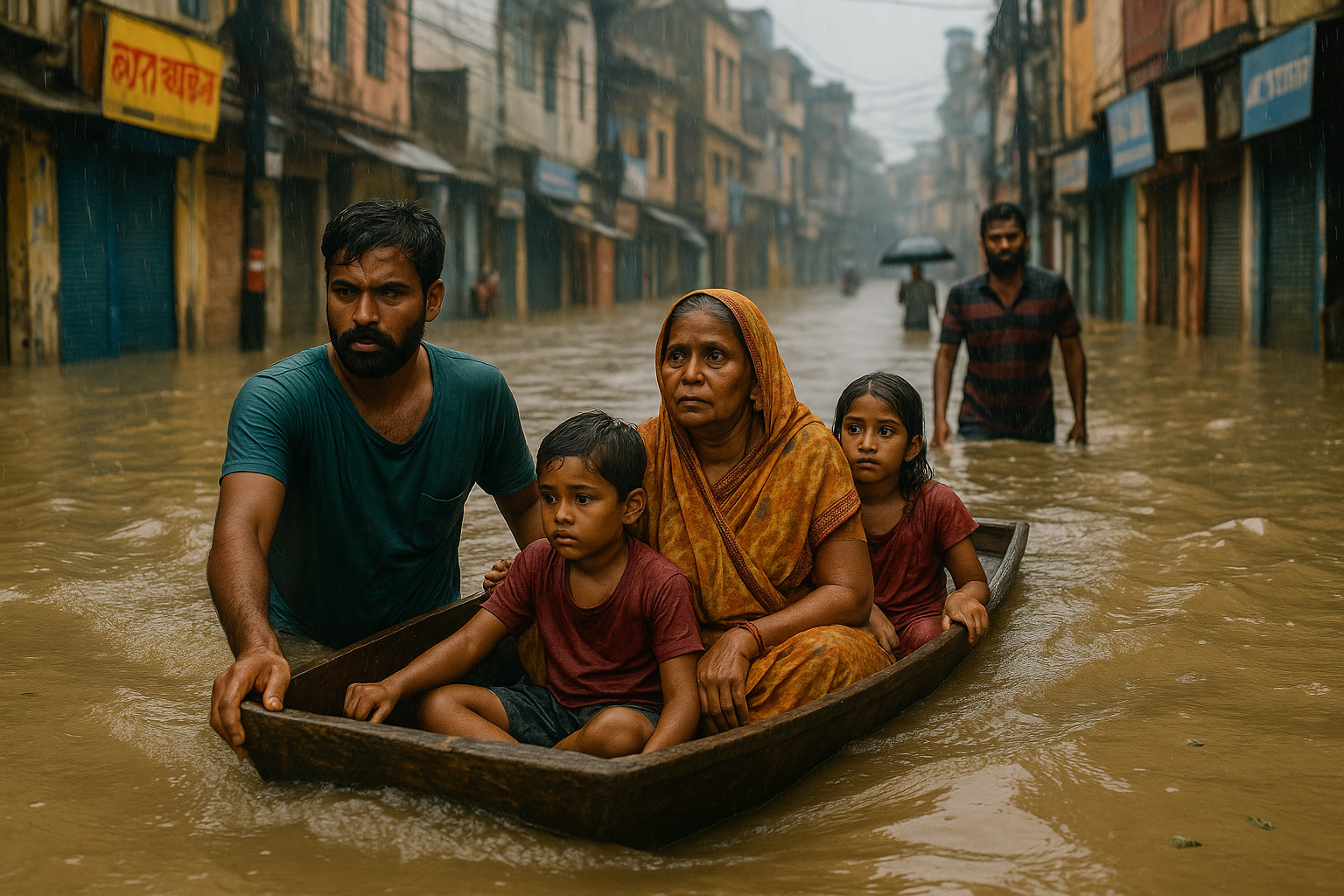
    Under relentless skies, Punjab fell once again, this time into despair with its fields submerged. Over 40 lives have been lost, many remain missing and more than 1,300 villages lie underwater. Crops across lakhs of acres have been destroyed, families displaced and the very land that feeds the nation has been drowned overnight.

    Many farmers voiced the same grief: “First, we fed the nation, and today our homes are drowning. Will anyone come to save us?”

    These are not mere statistics, but human voices that remind us why “securing Punjab” matters, it is about preserving the breadbasket of the nation.

    The tragedy came with terrifying speed. More than 20,000 acres of land under the “white gold” cultivation is adversely impacted by waterlogging. The Ravi, Sutlej, Beas, and Ghaggar swelled, and the 19t century Madhopar Barrage crumbled under the ferocity of floodwaters. The Ranjit Sagar and Pong dams crossed danger levels, and the Bhakra Dam remains perilously close to spilling over.

    Yet the tragedy wasn’t entirely unforeseen. According to IMD, in August the rainfall measured 253.7 mm, 74 per cent above normal and the highest in 25 years. Heavy monsoons combined with reservoir mismanagement and delayed preparations turned predictable risk into catastrophe.

    The flood preparedness meeting in Punjab was held quite late on June 5, only 17 days before the monsoon arrived on June 22.

    Chief Minister Bhagwant Mann’s message was unambiguous. In letters to the Prime Minister and public appeals, he emphasised that three lakh acres of paddy fields, ripe for harvest, lay submerged while compensation under SDRF—Rs 6,800 per acre—was woefully inadequate. He demanded at least Rs 50,000 per acre and pressed for Rs 60,000 crore in “stuck” Central funds to be released immediately.

    At the same time, Union Agriculture Minister Shivraj Singh Chouhan toured flood-ravaged districts and called it a “Jal Pralay.”

    “Loss is visible, the crop is completely damaged. Fields are inundated. In this hour of crisis, we are with farmers and will make every effort to bail them out,” he said. He singled out illegal sand mining as a critical weakness that eroded embankments, making Punjab more vulnerable to deluge, an issue environmentalist have long flagged.

    The Union Minister urged coordinated planning across short, medium and long-term strategies to rebuild, de-silt and safeguard future crops.

    Well, these statements make an alignment of concern. However, words alone won’t suffice for such a catastrophe. Relief without real reform is like pouring water into a sinking boat.

    Beyond immediate relief, however, lies the larger question of water security. The Indus Water Treaty, often praised as a model of transboundary cooperation, was designed in another era. It allocated 80 per cent of Indus basin waters to Pakistan, leaving India’s control over the eastern rivers—Sutlej, Beas and Ravi. While both banks of the Sutlej and Beas lie within India’s sovereignty, the Ravi presents a strategic vulnerability, only one bank lies in India, while the other runs through Pakistan.

    Pakistan has increasingly treated the Ravi as a matter of national security, reinforcing it with embankments, spurs and studs often executed by its military. This is not without precedent—the 1988 floods saw a similar scenario where Pakistan’s concrete structures diverted flows with devastating effect on the Indian side. While Pakistan’s economy may be dwarfed by India’s, its military-led flood control initiatives indicate a calculated effort to wield water as leverage. India cannot afford to ignore this.

    Securing Punjab, therefore, means more than repairing breaches. It requires urgent investment in reinforced embankments, modern flood control systems, and groundwater recharge. Former Punjab finance and planning minister Manpreet Singh Badal has long warned that Punjab’s over-dependence on groundwater is unsustainable; securing the state means replenishing aquifers alongside surface water management.

    At the same time, farmers who have lost their livelihoods, need support that goes well beyond symbolic relief. Those whose fields were submerged should receive free seeds and fertilisers, while others are provided with targeted subsidies. An additional installment under PM-Kisan could be directly transferred via Direct Benefit Transfer (DBT), ensuring faster assistance.

    Similarly, direct transfers aimed at repairing pumps, desilting fields, and strengthening social security would not only speed up recovery but also minimise bureaucratic delays. Housing losses should be carefully mapped and geotagged under PM Awas Yojana, and damaged schools must be made a priority under the National Education Mission.

    Schemes such as Flood Management and Border Areas Programme (FMBAP), the Dam Rehabilitation and Improvement Project (DRIP) and crop insurance under PM Fasal Bima Yojana exist, but their gaps are evident in Punjab’s villages. Too often, compensation arrives late, insurance claims are at times mired in red tape and embankments remain weak until the next breach.

    Punjab contributes over 35 per cent of rice and 60 per cent of wheat to India’s central pool. Its security is inseparable from the nation’s food security. Relief packages may rebuild homes, but resilience-building through infrastructure upgrades, treaty reforms, environmental regulation and farmer-first policies will determine whether Punjab continues to be India’s food bowl or slips into recurrent vulnerability.

    Simply put, securing farmers means securing Punjab, and securing the state means securing the food and future of India. The floods of 2025 must be a wake-up call to move beyond temporary relief and build a system where disasters do not translate into devastation.

  • India’s silent education revolution finds its voice                       

    India’s silent education revolution finds its voice                       

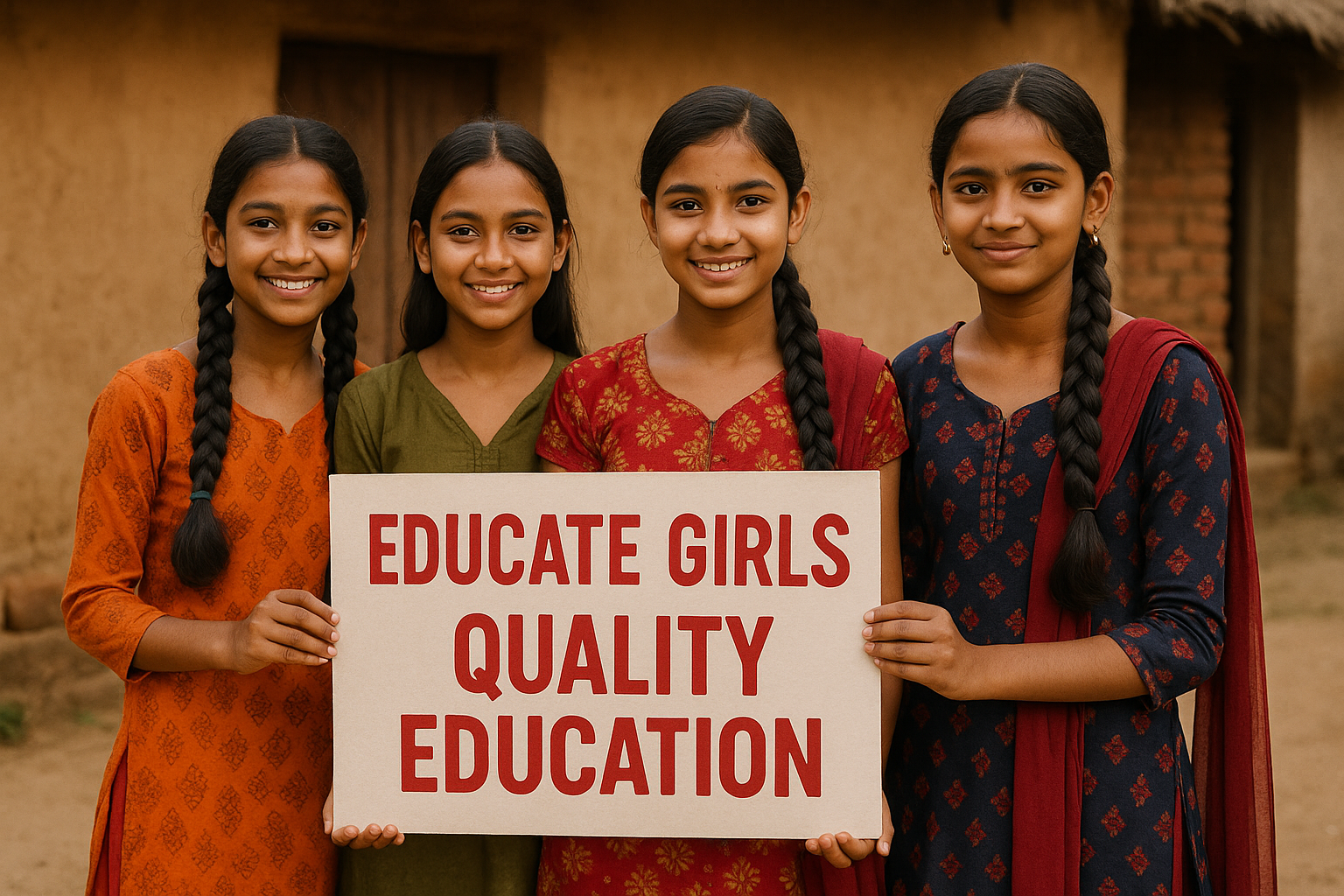
    Asia’s most prestigious public service honor, Ramon Magsaysay Award, has this year been conferred on “Educate Girls,” an Indian non-profit that has brought millions of out-of-school girls back into classrooms. The recognition stands both as celebration of achievement and as a symbol of aspiration.  

    For the first time, an Indian organisation and one dedicated solely to girl’s education has received this prestigious honour. The award not only highlights how far India has come in transforming the lives of millions of girls through education, but also serves as a reminder of the long journey that still lies ahead before this silent revolution reaches its full promise.

    From a time when literacy among girls was an exception, India now has near-universal enrolment at the primary level, gender parity in early schooling, and the foundations of a society that is increasingly recognising the right of every girl to study.

    India’s education system today is among the largest in the world, with 250 million children enrolled in schools. Yet many girls drop out due to poverty, patriarchy, household chores, early marriage, lack of nearby schools, and sometimes due to basic barriers such as absence of toilets. Addressing these last-mile challenges will decide whether India’s educational revolution matures into a lasting transformation.

    To deny a girl education is not just injustice, it is a self-inflicted wound.

    The organization “Educate Girls,” founded by Safeena Hussain, began with just 50 villages in Rajasthan and today, it operates in more than 30,000 villages, having mobilised over 1.4 million girls into schools.

    The organisation’s genius lies not just in advocacy, but in architecture as well. Team Balika, an army of 20,000 community volunteers works door-to-door, persuading families, negotiating with local authorities, and hand-holding children back into classrooms. This blending of grassroot energy with systemic reform has made the model durable and scalable. Hussain’s earlier recognition with the WISE Prize, and now the Magsaysay, underline that India’s innovation in education resonates across the globe. As “Educate Girl’s” chair Ujwal Thakur puts it, “This is not charity or welfare, but the most powerful investment in the nation’s future.”

    Well, this story of change is not of civil society alone. The Indian state has laid strong foundations for this educational transformation. The Right to Education Act, made schooling a constitutional guarantee. Samagra Shiksha integrated quality, equity, and access into one umbrella scheme.

    Kasturba Gandhi Balika Vidyalayas created safe residential schools for marginalised girls. Beti Bachao Beti Padhao shifted the national imagination about the value of the girl child. States, too, innovated, like the Bihar’s bicycle scheme became a symbol of adolescent girls mobility and confidence, reducing dropouts and inspiring replicas across India. These interventions, combined with grassroot efforts, have pushed the revolution forward.

    It is worth remembering that this is the fulfilment of a vision long articulated by Indian reformers. Savitribai Phule, the country’s first woman teacher, defied caste and gender prejudice to open schools for girls in the 19th century. Her husband, Jyotirao Phule, fought alongside her to expand education as a right of the oppressed. Rabindranath Tagore saw learning as liberation of the mind, while Mahatma Gandhi and B.R. Ambedkar regarded education as the pathway to equality and justice.

    In more recent times, Amartya Sen has persuasively argued that women’s education is not just a moral imperative but a developmental multiplier.

    Today’s progress is attribute to these thinkers and to the ordinary teachers. Volunteers, and families who are carrying their legacy forward.

    The dividends are quite visible. Each year of secondary schooling delays early marriage, improves mental health, and boosts lifetime earnings. The World Bank estimates that every girl in India completed 12 years of schooling, the GDP could grow nearly 10% within a decade. Girls’ education has ripple effects across health, productivity and democracy itself.

    When given the chance to study, rural girls often break cycles of poverty and challenge deep-rooted stereotypes. Their education becomes a multiplier. Anita Gupta from Bihar, born to a family of daily wage labourers, studied under streetlights because her home had no electricity. Her determination earned her scholarship and a place at the UN Youth forum.

    These journeys show that rural girls are not passive benefeciaries but active changemakers.

    The challenge now is to sustain momentum and extend gains. Rural India still sees the widest gender gaps, with millions of young women having dropped out between the ages of 15 and 30. Educate Girls’ PRAGATI programme, which reintroduces adolescent girls to learning through camps and open-school exams, shows how to plug this gap. Expanding Kasturba Gandhi Balika Vidaylayas up to Class 12, ensuring universal access to safe transport, and prioritising foundational literacy by Grade 3 are critical next steps. Most importantly, India must move beyond enrolment as a metric, and make completion and learning outcomes the new benchmarks of success.

    Globally, there are lessons to borrow. Bangladesh tied stipends to attendance and delayed marriage, keeping adolescent girls in school. Vietnam invested heavily in rural schools and achieved near-universal lower secondary completion. Whereas, Indonesia focused on safe transport and teacher training. India, with its scale and experience, is positioned not just to catch up but to lead, provided it sharpens its focus on secondary education, harnesses technology and data to track progress.

    The Ramon Magsaysay Award for Educate Girls is a recognition of what India has achieved, but also a reminder of what remains unfinished. The fact that millions of girls today step into classrooms who once would have been denied even the chance is itself a revolution. However, the true measure of success will not be the enrolment figures we celebrate, there must be expansion of secondary schooling, securing their safety, tackling rural dropouts, and ensuring that learning outcomes match enrolment gains.

    The revolution must continue in classrooms, in villages, in policies, and in the hearts of families who choose to send their daughters to school.

    The next leap will come from treating these not as isolated successes but as non-negotiable rights guaranteed to every girl child.

  • Neither US words nor China’s weight, India must script its own

    Neither US words nor China’s weight, India must script its own

    This article has been published with: Neither US words nor China’s weight, India must script its own

    If Washington and Moscow reduce their hostility, China may find itself subtly squeezed, a development India could exploit diplomatically. But history warns us not to take Trump’s overture at face value: his unpredictability is his only constant.


    Today, it feels as if geopolitics is a game scripted, twisted, and replayed at the whims of one capital—Washington, and more precisely: Donald Trump. His mercurial policies and sudden resets are not just redrawing alliances but also forcing countries to constantly recalibrate their foreign policy stance.

    The turbulence of Trump’s world is not just background noise, it is an everyday strategic dilemma. The recent meeting between Trump and Putin in Alaska stirred speculation about shifting alignments in the global order.

    Trump’s outreach to these nations is seen as a strategic gambit, not nostalgia for Putin, but a “reverse Kissinger” strategy. In the 1970s, Henry Kissinger opened the door to China to contain the Soviet Union. Today, Washington dreams of peeling Moscow away from Beijing to contain China. But for India, this realignment poses a problem; if Washington warms simultaneously to Moscow and Beijing, New Delhi risks being pushed to the margin of an evolving balance of power.

    But India’s immediate concern lies closer to home: the Himalayan frontier with China. Despite multiple rounds of military and diplomatic talks, the business of disengagement remains unfinished.

    Reports indicate that Indian troops still face restrictions on patrolling, while local herdsmen continue to be denied access to grazing grounds in “buffer zones” they traditionally frequented.

    Wang Yi’s recent visit to New Delhi, coming on the heels of his high-profile stop in Islamabad, added layers of complexity. In Pakistan, he declared that the “ironclad friendship” between Beijing and Islamabad was “unbreakable,” underlining China’s South Asian balancing act.

    While in New Delhi, his outreach carried both signals of de-escalation and veiled pressure. Beijing simultaneously pushes ahead with constructing the world’s largest hydropower project on the Brahmaputra in Tibet, close to the Indian border, ignoring India’s lower riparian concerns.

    China’s actions are puzzling but calculated. By offering de-escalation talks while advancing projects that threaten India’s strategic water security, Beijing keeps pressure points alive. On the One-China policy, New Delhi has maintained consistency, refusing to dilute its position despite heightened tensions.

    Simultaneously, both India and China have found rare convergence in opposing what they term “unilateral bullying” from Washington. Yet this fragile overlap cannot mask the reality that Beijing’s assertiveness is still here to stay, and India must act with caution.

    Overlay this with Trump’s Alaska gambit with Russia, and the contours of a changing world order become clearer. If Washington and Moscow reduce their hostility, China may find itself subtly squeezed, a development India could exploit diplomatically. But history warns us not to take Trump’s overture at face value: his unpredictability is his only constant.

    For India, therefore, strategy must rest not on speculation about Trump’s impulses but on a long-term recalibration of its own place in a multipolar world.
    Henry Kissinger’s balance of power theory resonates strongly today. The Cold War was defined by a bipolar struggle; the post-Cold War decades by American unipolarity. But the 2020s are unmistakably multipolar, marked by shifting alignments and fragmented solidarities.

    The Alaska meeting, the assertiveness of Europe in resisting US dominance, the Indo-Pacific alliances, and China’s Pakistan axis all signal the blurring of neat binaries.

    What then should New Delhi’s playbook be? First, if Asia’s two strongest players, India and China, can sustain channels of cooperation, both stand to benefit, not only for each other but for Asia as a whole, for they also recognise that prolonged hostility carries immense risks. As Kuldip Singh, a retired army officer, observes, war between India and China is never a lucrative venture: Beijing gains little by fighting a near-peer competitor. Even a military victory would leave China weakened economically and politically, and strategically undermine its pursuit of “great power” status vis-à-vis the United States.

    Second, India must strengthen its economic resilience. China’s hydropower gamble is a reminder that economic vulnerabilities translate directly into strategic risks. Water security, technology, supply chains, and critical minerals must form the new pillars of India’s security doctrine.

    Third, India must invest more in narratives. Beijing and Islamabad have mastered the art of framing their ties as “ironclad.” India must project its civilizational ethos and democratic pluralism as soft power anchors in a world where narratives matter as much as navies.

    The world order is shifting; neither America’s word nor China’s weight can be taken as absolute.

    The age of great-power flux demands an India that is nimble, assertive, and imaginative. India’s game is not merely to react but to shape, ensuring that neither Beijing’s ambitions nor Washington’s impulsive deals undermine its rise.

  • Sudarshan Chakra: Can India build its own Iron Dome?

    Sudarshan Chakra: Can India build its own Iron Dome?

    This article has been published with: Sudarshan Chakra: Can India build its own Iron Dome?

    There is symbolism and morale factor—for a country positioning itself as a rising power, demonstrating capability in futuristic defence technology is as much about deterrence as it is about actual use.


    National security is no longer defined only by troop strength or nuclear deterrence. In the age of drones and cyber-enabled strikes, air defence has become the first line of survival. Recognising this, Prime Minister Narendra Modi has launched Mission Sudarshan Chakra, an ambitious plan to develop an indigenous Iron Dome-like system by 2035.

    This decision reflects both the lessons of global conflicts and the pressing need to shield India from asymmetric threats.

    PM Modi said the project draws inspiration from Lord Krishna’s Sudarshan Chakra, a weapon that symbolised divine protection and precision strike in India’s civilisational history.

    The recent India-Pakistan escalation was just the latest reminder that our neighbour continues to probe and provoke. Moreover, China’s growing military assertiveness and its expanding missile arsenal have sharpened the prospect of India confronting a real two-front challenge.

    Both adversaries have invested in drones, rocket systems and increasingly sophisticated precision strikes. Meanwhile, non-state actors have shown that they do not need billion-dollar arsenals to unleash chaos; low cost UAVs can achieve devastating effects as well.

    Wars raging elsewhere should erase complacency. Ukraine’s blackouts, caused by Russian drones and missile strikes, show how civilian life collapses when skies are left unguarded.

    India’s air defence architecture today is a patchwork of imported systems and indigenous efforts. The country relies on Russian S-400s, indigenous Akash missiles, Israeli Barak systems, and the DRDO’s Advanced Air Defence (AAD) programme. Yet, as recent conflicts have shown, even the most sophisticated militaries struggle against the new face of warfare which is cheap, fast and swarming drones combined with precision missiles.

    The Iron Dome’s effectiveness in Israel, intercepting thousands of rockets, has become the gold standard in layered air defence. But replicating that success in India, a subcontinent with vast borders, diverse terrain and different threat perceptions, poses immense challenges as well.

    The government has set an ambitious timeline, reportedly aiming for full deployment till 2035. However, defence projects in India have not been quite linear. The Light Combat Aircraft (Tejas) took decades to reach induction. Even the Agni and Prithvi missile systems, though ultimately successful, faced long delays.

    Critics may wonder: Is Mission Sudarshan Chakra another lofty promise or a realistic possibility?

    Why this pursuit matters goes beyond immediate timelines. Developing Sudarshan Chakra carries weight for three key reasons. First, it strengthens strategic autonomy, reducing India’s reliance on Russia and Israel for crucial defence technology while allowing the creation of a system tailored to its own geography and threats.

    Second, it reflects the changing nature of warfare, recent conflicts from Ukraine to the Middle East have shown how drone swarms and rocket barrages can overwhelm traditional defences, a reality India cannot afford to overlook.

    Finally, there is symbolism and morale factor—for a country positioning itself as a rising power, demonstrating capability in futuristic defence technology is as much about deterrence as it is about actual use.

    However, caution is very much warranted. India must avoid the trap of turning this mission into a political slogan. National security requires continuity across governments, not announcements tied to electoral cycles.

    So, what can be expected in the near term?

    Realistically, India may roll out a limited shield for major metros or strategic assets within the next decade, rather than a nationwide system.

    A hybrid model where Israeli and Russian systems plug gaps until DRDO’s version matures seems more plausible. Collaboration with private Indian firms and foreign partners may accelerate progress, but success hinges on sustained funding, rigorous testing and political patience.

    In that sense, Sudarshan Chakra is less an Iron Dome in the making and more a signal of intent. It shows that India recognises the shifting character of modern warfare and does not want to be caught unprepared.

    PM Modi’s invocation of Lord Krishna’s Sudarshan Chakra was designed to stir pride and imagination. Yet, the true challenge lies in science, timelines and strategic clarity.

    Will India actually field a working Iron Dome-like system within years, or will this remain a vision on the drawing board?

    For now, this mission is both a promise of protection and a reminder that India’s quest for security is still a work in progress.

  • The hidden cost of India’s urban boom

    The hidden cost of India’s urban boom

    This article has been published with: The hidden cost of India’s urban boom

    India’s flood crisis is no longer a surprise, it is the consequence of decades of poor planning, weakened regulations and a dangerous habit of responding only after disaster strikes.


    India is dealing with a flood crisis that is no longer seasonal, it’s systemic and accelerating. Flash floods are no longer rare episodes; they are becoming a lived reality across regions. Once considered localised, floods have now turned into a national emergency, fed by climate change, governance failures and unchecked urban expansion.

    India has reported an alarming average of over 5,000 flood-related deaths annually. According to the Union Jal Shakti Ministry, global temperature anomalies have jumped from 132 in 2020 to 184 in 2022, highlighting the growing influence of climate change on extreme weather events. But climate alone is not to blame. In fact, government data shows that only about 25 per cent of recent floods were directly caused by precipitation. The remaining majority stem from avoidable, human-induced vulnerabilities such as poor dam management, delayed flood-control measures, encroachment on wetlands, and unscientific urban planning.

    Climate change may be the trigger, but it’s colliding with systems already weakened by years of mismanagement.

    The Himalayan region, western coast, and central India are now seen as emerging flood hotspots, vulnerable not just due to geography but due to aggressive human activity as well.

    Himachal Pradesh is continuously witnessed catastrophic landslides and flash floods. According to the State Emergency Operations Centre (SEOC), since June 20, 170 people have died, 301 roads are blocked, and damage to homes, agriculture and livestock continues to rise. A combination of cloudbursts, electrocutions, and flooding has left parts of the state paralysed.

    The recent Supreme Court’s remarks couldn’t have come at a more urgent time. Warning that Himachal Pradesh could soon “vanish into thin air”, Justice JB Pardiwala didn’t speak in abstractions, he pointed directly at what many chose to ignore: unscientific construction, short-sighted planning and unchecked pursuit of profit. In a petition filed against the notification declaring Tara Mata Hill a green area, the court warned that development driven solely by revenue has come at the expense of long-term ecological safety.

    Meanwhile, Gurugram often celebrated as a model for urban success finds itself underwater after each heavy rain and has been nicknamed “Sink City” by its own residents. What is meant to be a symbol of global aspiration, floods every time it rains. It has become routine enough for locals to joke: Who needs a resort with a swimming pool when your parking lot floods for free?

    But behind this sarcasm is frustration. Overflowing garbage, clogged drains, and poor civic response are daily reminders of how little thought went into the basics. Add to the criticism from foreign visitors and consultants like Suhel Seth who quipped: “Every year, without government help, we create a Venice for people to enjoy.”

    Well, this rot is collective. Citizens dumping waste into drains, builders eating into wetlands, and planners approving projects without even a glance at flood maps, are all part of this civic chaos.

    On the west corner, Rajasthan has a painful irony. A water-scarce state now drowning in rainwater. Schools have been shut in 11 districts, rivers are overflowing and a recent audit has revealed 2,699 weak buildings in 224 urban bodies, each one a disaster waiting for a trigger.

    It’s not just flooding that’s the problem, it’s the crumbling foundations that have been ignored for decades.

    Even Kerela, often admired for its planning, couldn’t escape the grip of extreme flooding. Last year, in Wayanad, landslides swept away homes, transport routes collapsed, and families were displaced overnight. The combination of urban sprawl, deforestation, and unpredictable rainfall has made even this well-governed state vulnerable.

    The previous year, Ladakh saw cloudburst severing remote valleys. Sikkim faced floods that tore through infrastructure and crops. This isn’t regional problem anymore, it is national, and growing louder each year.

    In Bengaluru, the signs are depressingly predictable. IT parks and global HQs sit beside choked stormwater drains, cracked roads, and sewage-filled floodwaters.

    It’s a brutal mismatch, a world-class economy built on a city where even an hour’s rain can paralyse life. The problem isn’t just about bad planning; it’s about misplaced priorities and growth without grounding.

    India’s flood crisis is no longer a surprise, it is the consequence of decades of poor planning, weakened regulations and a dangerous habit of responding only after disaster strikes. Climate change may be the accelerant, but the fuel has been laid by human hands as well.

    Addressing this crisis demands more than relief packages and post-disaster assessments. It calls for a shift, strengthening early warning systems and modernising dam and drainage infrastructure are essential, but they must be matched with political will and community awareness.

    Urban planning needs to return to first principles; respecting natural water channels, protecting wetlands, and building with climate resilience in mind.

    States must enforce construction strictly, not dilute them to appease private interests. Equally, the public needs to stop treating civic rules as optional.

    A culture of accountability must be shared between citizens, corporations and the state.

    Floods will always be a part of India’s monsoon story. The real question is whether they continue to drown our cities or whether we begin to rise above them, together.

  • The temple is just a surface, the real fight is deeper                

    The temple is just a surface, the real fight is deeper                

    It’s the same year and another conflict has escalated. But this time, it wasn’t where the world was looking. While eyes remained fixed on Ukraine or Gaza, a conflict erupted in the far east between two southeast Asian neighbours: Thailand and Cambodia.

    There has been no shortage of headlines, calling it a “religious war”, a “Hindu temple clash,” a “culture conflict.” But let’s not be misled by the simplicity of slogans. The escalating conflict between Thailand and Cambodia may have reignited around the Preah Vihear temple but to call this war over a temple is to misunderstand both history and the present moment.

    The truth is messier and far more political. The temple is very ancient and sacred. But it is not solely a Hindu site. The conflict is not solely about faith, it is about territory, military positioning, and unresolved trauma from colonial cartography. Religion, in this case is the backdrop not the battleground.

    The Preah Vihar temple, a UNESCO World Heritage site perched atop the Dângrek Mountains, was handed over to Cambodia in a 1962 ruling by the International Court of Justice (ICJ). But the 4.6 square kilometres surrounding it were left undefined becoming symbolically sensitive and contested ever since.

    The roots of this hostility stretch back over a century. In 1907, French colonisers drew the border between Cambodia and Thailand with ambiguous, imprecise maps. Thailand has long argued that the boundary was unfairly set. Diplomatic attempts have flickered over the decades, but resolution has never arrived. Instead, blood has.

    Between 2008 and 2013, the dispute exploded into deadly skirmishes. Jungle warfare flared near Preah Vihear and other temple sites, with both sides blaming each other. In 2011, a ceasefire halted the violence, after 15 people were killed and thousands displaced. The International Court of Justice (ICJ) stepped in, ordering a troop withdrawal and establishment of a demilitarised zone but stopped short of settling who controls the larger disputed territory. The troops never really left.

    Presently, in 2025, the fire has been lit again.

    On May 28, a Thai soldier was ambushed. Tensions, already high, turned volatile. A Cambodian soldier was killed in a subsequent skirmish. Accusations flew and each side blamed the other. Later, in June diplomatic call between Thai Prime Minister Paetongtarn Shinawatra and Cambodia’s de facto leader, Hun Sen aimed to dial things down. However, it only made matters worse.

    A leaked recording of the call went viral. In it, Prime Minister Shinawatra appeared to disparage her own military and referred to Hun Sen as “uncle,” offering to “arrange anything” he wanted. The reaction in Thailand was explosive. Lawmakers from her own party called for her resignation. On July 1, she was suspended by Thailand’s Constitutional court for alleged ethics violation.

    Meanwhile, the war on the ground intensified. On July 23, a Thai soldier lost a leg in a landmine blast. Thailand retaliated, not only militarily but diplomatically recalling it’s ambassador and expelling Cambodia’s. Phnom Penh responded in kind. By the time artillery fire echoed across the forests, at least 12 people were reported dead, including 11 civilians and more than 40,000 villagers had fled their homes. Schools and markets were shut down. The fear of unexploded landmines once again gripped the region.

    The fog of war has now thickened. Neither side’s account of the fighting matches the other’s. Thailand claims Cambodian trooped deployed surveillance drones and fired rockets near a Thai post striking civilian areas. While Thailand responded with six F-16 fighter jets targeting the latter’s military positions. Clashes erupted in six locations along the border, and Thailand reinforced it’s positions in Sisaket province. Acting Thai Prime Minister Phumtham Wechayachai insists there has been “no declaration of war” but warns that hostilities must stop before talks can begin. However, danger goes well beyond these two nations.

    Southeast Asia is already on the edge, from civil war in Myanmar to tensions in the South China Sea, another full-blown war, this time between ASEAN members threatens to expose the limits of regional diplomacy. ASEAN has long prided itself on “quiet consensus,” but in moments like this, that consensus sounds suspiciously like silence.

    The memory of the 2008–2011 standoff, which left over 40 dead, looms over this moment. Back then, too, there were ceasefires and court orders. But even after the dust settled, nothing changed. Today, we risk repeating history only at a greater cost.

    Leaders on both sides have portrayed the skirmishes as matters of sovereignty and pride, but at the heart of it, this isn’t just about lines on a map, but people caught in crossfire of pride and power. The only question now is, how many more borders will bleed just to keep maps clean, while real lives are erased on the ground?

  • India and UK turns a new page

    India and UK turns a new page

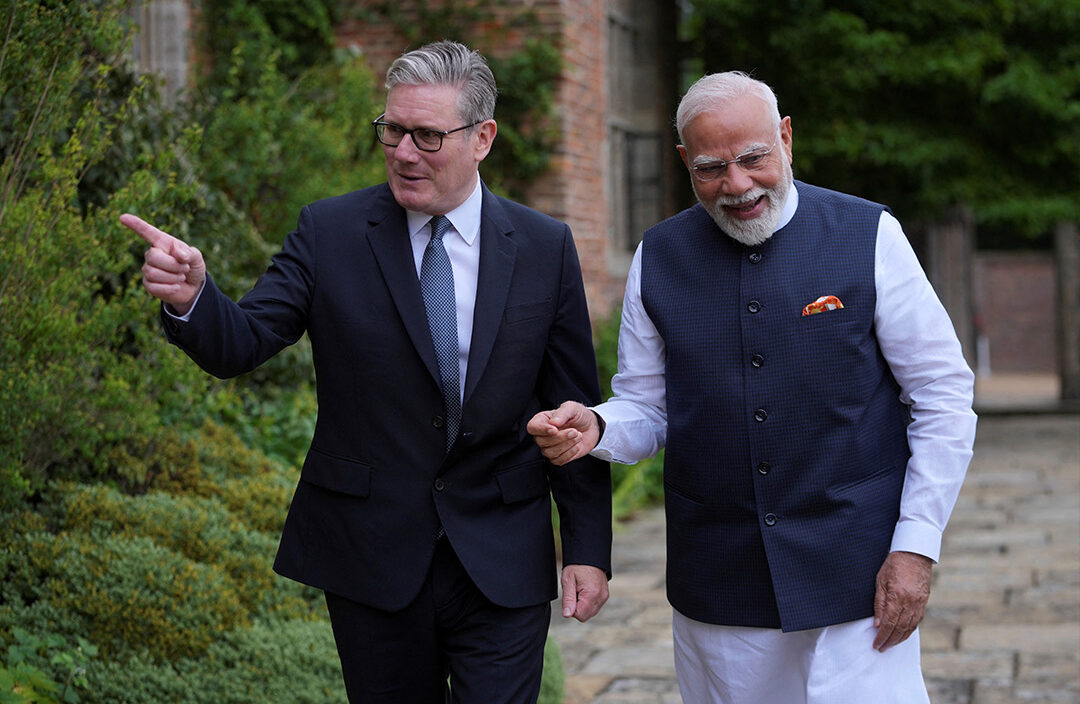
    After years of deadlocked talks under three Conservative Prime Ministers, India chose not the familiar, but the functional. It was not based on shared heritage but shared goals. And so, it was under Keir Starmer and not Rishi Sunak that India finally signed one of it’s most ambitious Free Trade Agreements.

    Modi’s decision to bet on a recalibrated Labour speaks volumes. The question isn’t why India didn’t sign this deal earlier. The question is: why now, and why Starmer?

    Despite a decade-long Conservative rule, the FTA had remained elusive. The Boris Johnson government launched the 2030 roadmap in 2021, which promised deeper ties across trade, defence and innovation. But symbolic gestures often outpaced substance. The Conservative era stretching from Johnson to Liz Truss to Rishi Sunak, often celebrated It’s ‘special relationship’ with India but while language was warm, the outcomes remained lukewarm.

    Negotiations on the FTA began with high ambition, but soon encountered roadblocks. Key issues such as the movement of Indian professionals, mutual market access and labour mobility remained unresolved. The UK’s domestic debates on immigration, especially post Brexit created hesitations that made meaningful compromise politically complex.

    While Sunak’s Indian heritage was treated as an implicit bridge, policy progress remained cautious. The FTA talks continued, but no major agreements were concluded during his tenure. Despite his visit to India during the 2023 G20 Summit and a public willingness to deepen ties, a reciprocal state visit from the Indian side never really took place.

    Labour’s return to power in 2024 marked a turning point in how India perceived UK’s political climate. From 2021 onwards, Starmer’s leadership emphasised a more balanced and bilateral approach. He distanced Labour from diaspora-driven resolutions and refrained from commenting on India’s internal matters. A gesture New Delhi has welcomed. By the time Labour’s election manifesto was released, there was a clear shift in tone: no mention of contentious issues, and a strong focus on trade, investment and cooperation.

    This course correction wasn’t seen as diplomatic hygiene, but it truly changed the atmosphere. It allowed both sides to return to the table with clarity and mutual trust. Long-stuck issues like skilled migration, tech exchange, education linkages and defence co-production finally found room to breathe. The tone shifted from hesitation to possibility.

    This agreement also comes at a time when India is actively rebalancing it’s external partnerships. With Washington re-entering a cycle of unpredictability, India isn’t putting all it’s chips on old alliances. Instead, it’s expanding its bandwidth by seeking stable, policy-driven partners who offer long-term value without theatrics.

    India signed high-impact FTA’s with the UAE and Australia to clinching an economic agreement with the European Free Trade Association(EFTA). Each of these deals reflect not just commercial intent, but a future-facing alignment.

    The UK now enters this circle not as a sentimental choice, but as a re-evaluated partner that fits India’s calibrated worldview. At the same time, Modi’s parallel diplomatic choreography says even more. His visit to the Maldives reinforces India’s renewed focus on neighbourhood diplomacy, while his recent engagement with China- the first high-level visit since the Galwan clash signals a cautious but important attempt to manage regional tensions.

    Unlike the earlier chapters of India-UK engagement, which was often defined by grand cultural displays, diaspora pageantry, and speeches laced with heritage, this visit stripped away the sentimentality. What emerged was a relationship finally ready to stand on it’s own terms.

    Both sides seemed to quietly step past the weight of history. For decades, the relationship had often swung between romanticising the past and hesitating because of it, usually caught between post-colonial discomfort and nostalgia-driven diplomacy. However this time, there was not attempt to overplay identity, ancestry or symbolism.

    This FTA wasn’t born in a moment of goodwill, it came from years of careful watching, waiting and preparing for a window that felt right. India didn’t rush, it waited for a government that was aligned institutionally.

    Modi’s visit under Starmer is more than a mere handshake, it’s a reset. It reflected a larger truth that India and UK have finally outgrown their need to define the relationship by the past. The colonial chapter will always exist, but it no longer needs to dominate the page.

  • Skyfall: Turbulent skies in 2025

    Skyfall: Turbulent skies in 2025

    The year 2025 has shaken the aviation industry out of its illusion of invincibility. Despite decades of advancement, and rigorous safety protocols that flying remains the safest mode of travel, the skies have turned turbulent in more ways than one.

    The most devastating blow came on January 29, 2025 when American Airlines Flight 5342, a Bombardier CRJ700, collided mid-air with a US Army Sikorsky UH-6 Black Hawk helicopter near Ronald Reagan Washington National Airport. The crash claimed 67 lives reminding us that even in the most advanced aviation systems in the world, something can go terribly wrong. “This was not just a tragic mistake; it was a wake-up call,” said Jennifer Homendy, Chair of the US National Transportation Safety Board (NTSB), addressing the press after the preliminary findings were released.

    What followed through the rest of 2025 was not a scattered series of unrelated crashes, but a global pattern of technical failures, emergency landings, fires, near-misses and fatal accidents that shook public confidence and raised urgent questions.

    India’s aviation sector, which has long been praised for rapid growth, is facing a storm of technical snags, safety violations and operational failures. The most fatal moment came with the ill-fated Air India crash earlier this year in Ahmedabad. The Aircraft Accident Investigation Bureau (AAIB) report revealed a disturbing detail; just seconds after take-off, fuel to both engines was found in CUTOFF mode. The cockpit voice recording reportedly captured a tense exchange where one pilot asked, “Why did you cut off?” referring to the fuel supply to both engines, only to be met with confusion from the co-pilot.

    Now, aviation experts argue that such a fuel cutoff happens by accident. If that’s true, the incident hints at either a chilling human error or an even deeper systemic failure. Either way, this tragedy feels less like an anomaly and more like a red flag waving at a much larger problem. The urgency with which Directorate General of Civil Aviation (DGCA) is now reviewing safety protocols suggests that even regulators know something has been slipping through the cracks.

    Adding to this alarm, July 22 brought yet another unsettling event. Air India Flight AI 315, arriving from Hong Kong, caught fire after landing in Delhi. Thankfully, no injuries were reported, but the visuals of black smoke surfacing online were enough to rattle public confidence further. At this point, it feels less like isolated misfortunes and more like a pattern of operational neglect.

    An Air India spokesperson tried to downplay the incident, attributing the fire to “overheating of electrical components” and insisting that passenger safety was never at risk. But for the average flyer, this assurance rings hollow. Because even if lives weren’t lost, trust surely was.

    The problems don’t end here. Over the last few weeks alone, IndiGo, India’s largest airline, has reported multiple in-flight emergencies and technical glitches to viral videos showing malfunctioning ACs on packed flights. An IndiGo flight from Goa to Indore reported a snag right before landing. Another one bound for Imphal had to return to Delhi mid-air. A third flight from Chandigarh to Lucknow was cancelled after pilots detected faults during pre-flight checks. The list keeps growing. Passengers have voiced fear and frustration, with one traveller tweeting, “Flying used to be a routine, now it feels like a gamble.”

    The government can’t entirely downplay the growing concerns. In a written reply to the Parliament, the Civil Aviation Ministry admitted that Air India alone had received nine safety violation notices in recent months. Yet, the official line remains that there’s “no adverse trend” in overall safety reports. That reassurance feels increasingly hollow as fresh incidents continue to surface almost weekly.

    As the monsoon session of the Parliament begins, the timing couldn’t be more telling. On the opening day of the session, Civil Aviation Minister Ram Mohan Naidu assured the house that the probe into the crash remains “rule-based” and “unbiased.” He urged the Parliament to “respect the process” and trust the Aircraft Accident Investigation Bureau (AAIB), which successfully decoded black boxes.

    However, in a climate of rising fear, growing opacity and repeated technical failures, the public needs more than just procedural reassurances. What this moment truly demands is not just patience, but radical transparency, accountability and visible action.

    One is left wondering, how many more “technical snags” will it take before India’s aviation industry acknowledges that these aren’t mere bumps in the journey, but signs of a deeper credibility crisis that demands urgent attention?

    Well, zooming out there are several disturbing symmetries in other countries as well. Recently, Bangladesh suffered one of its darkest aviation moment, when a fighter jet crashed into a school, killing 27, mostly children. The aircraft was Chinese-made, a model long under scrutiny for mechanical issues. In Philadelphia, a Learjet crash caused a residential explosion, killing seven. While earlier, in South Korea, an Airbus A321 caught fire moments before take-off. In South Sudan as well, a Beechcraft 1900 crash killed 20. These are not isolated events; they are symptoms of a global industry pushed to its limits.

    The aviation crisis of 2025 is not rooted in a single cause, it’s a fallout of a deeply overstretched system struggling with layered, compounding pressures. Technical and mechanical failures, like engines shutdowns, faulty fuel control systems, have become disturbingly frequent. These are often linked to delayed maintenance, shortage of replacement parts and an industry willing to overlook “minor” defects to keep planes flying in the sky.

    Add to this the human element: pilot errors, often caused by crew fatigue, irregular schedules and chronic understaffing of cockpit and ground teams that remain the leading causes of aviation accidents worldwide. Then comes the cyber and systemic threats, from digital outages and GPS spoofing, which were meant to make flying safer, not riskier.

    On top of this, climate change is playing an invisible but deadly role, intensifying turbulence and creating hazardous flying conditions, particularly during take-off and landing. The geopolitical landscape, too, has become a factor, aircrafts flying over conflict zones face not only navigational uncertainty but also sabotage strikes.

    So where does one go from here? These waves of disasters demand something bigger, fixing this isn’t just about tweaking policies or releasing carefully worded investigation reports. Regulators like the ICAO, DGCA and EASA must step beyond audits and enforce real-time accountability, increased investment, publicly accessible safety records and stricter timelines for aircraft maintenance.

    Because at the end of the day, this isn’t just about planes but a common man boarding a flight with the expectation of arriving safely. The stakes are terrifyingly real. We cannot afford another “wake-up call.” This industry must act before confidence falls from 35,000 feet and take lives with it.

    The skies are not just turbulent; they are sending a warning. The only question now is “who’s listening?”