Tag: india

  • How India began owning its reform agenda

    How India began owning its reform agenda


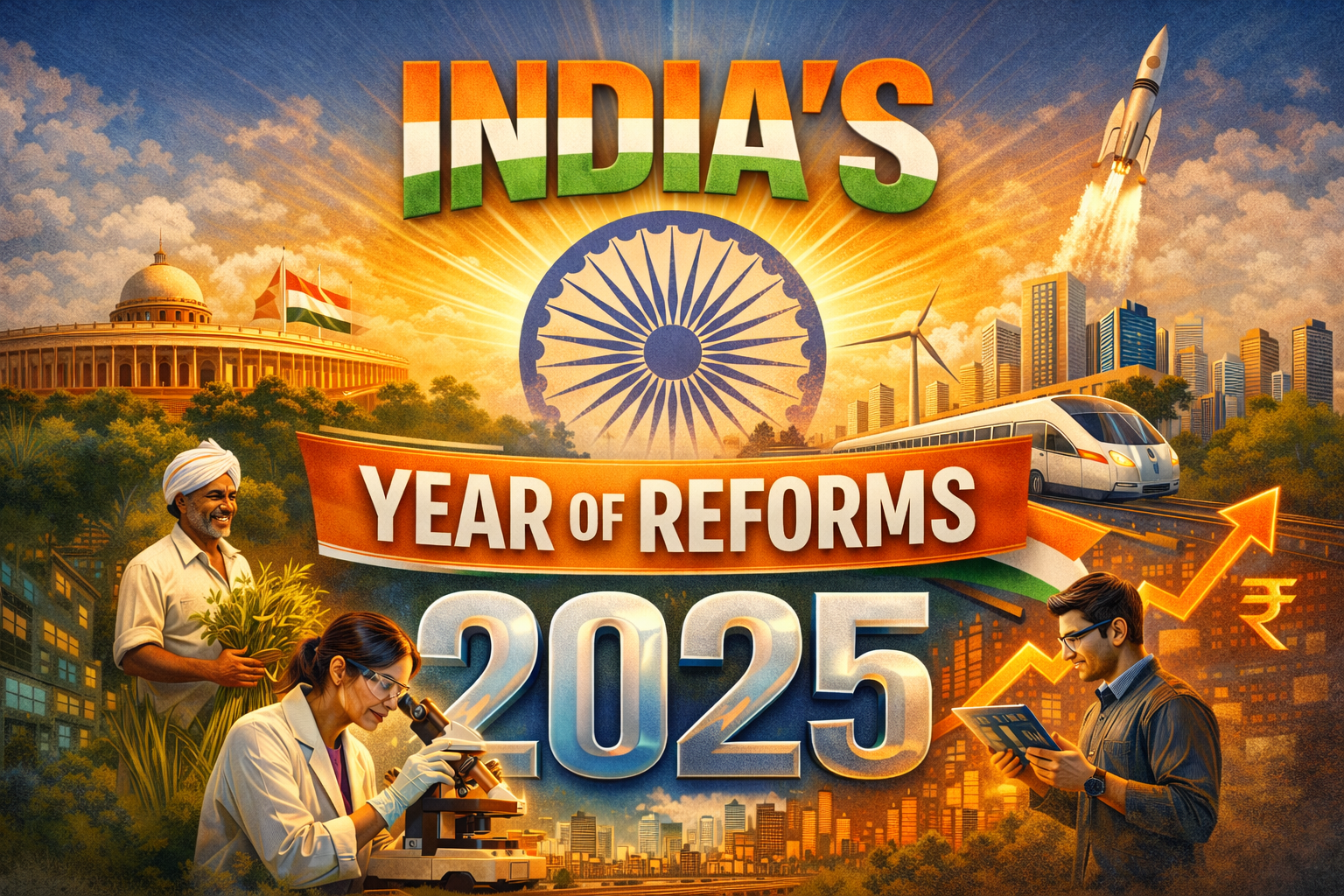
    This article has been published with:What made 2025 different was not one dramatic announcement, but the way a series of interconnected reforms reshaped everyday economic life. Taxation, labour, energy, investment, and digital governance were not treated as isolated silos but as part of one system that ultimately affected how Indians earn, save, spend, work and power their homes.

    What made 2025 different was not one dramatic announcement, but the way a series of interconnected reforms reshaped everyday economic life. Taxation, labour, energy, investment, and digital governance were not treated as isolated silos but as part of one system that ultimately affected how Indians earn, save, spend, work and power their homes.

    The most visible impact has been felt by the middle class.

    When Finance Minister Nirmala Sitharaman told a public gathering that the government would press ahead with deeper reforms, including a full overhaul of the customs duty structure, she wasn’t announcing just another policy tweak. She was signalling something more fundamental — that India’s reform strategy had moved from stealth to conviction.

    Prime Minister Modi described 2025 as a ‘defining phase’ in India’s reform journey and urged investors to ‘keep trusting India and investing in our people.’ The phrase matters. This was not the language of crisis management or emergency repair. It was the language of long-term restructuring of a government increasingly willing to own its reform agenda openly rather than disguise it as technical housekeeping.

    The new income tax framework delivered tangible relief, with salaried individuals effectively seeing breathing room of up to ₹12.75 lakh in annual income through exemptions and slabs. This was not symbolic; it showed up directly on salary slips, in household budgets, and in consumption patterns. More disposable income meant better household savings, stronger demand for goods and services, and rising confidence.

    In economic terms, this was growth driven by confidence, not compulsion. The middle class was no longer treated merely as a tax base but repositioned as the engine of demand.

    GST 2.0 continued this simplification logic. Rationalised slabs and clearer structures reduced disputes, increased predictability, and made consumer goods more affordable. The shift was from complexity to clarity and from opacity to trust.

    Since 2014, around 25 crore Indians have moved out of poverty, forming what policymakers now call the “new middle class.” 2025 arguably marked the moment when policy finally began speaking directly to them.

    For decades, labour reform in India was the political equivalent of a live wire — everyone agreed it needed fixing, but no one wanted to touch it. Successive governments avoided it because the costs were immediate, visible and politically painful, while the benefits were long-term. That political logic quietly changed this year.

    Labour reform is where the government crossed its political Rubicon. Twenty-nine outdated labour laws were replaced with simplified codes. Gig and platform workers were formally recognised. Employers were offered a “one nation, one compliance” framework.

    This wasn’t merely about making life easier for businesses. It sent a signal that India wants growth, but not jobless growth.

    Manufacturing responded. Quarter after quarter, it grew steadily. Capacity utilisation rose. Logistics improved. Policy stability reduced risk. India began looking more like a manufacturing base, and the credit goes to structural conditions finally aligning.

    Perhaps the most underrated reform of 2025 was the recent nuclear energy liberalisation. The opening up of atomic energy, including through the SHANTI Bill, was not cosmetic. It was about future-proofing India’s energy security. India cannot industrialise, urbanise, and digitise while burning coal indefinitely. Clean, stable base-load power is not a climate luxury; it is an economic necessity.

    This reform recognised that energy security is national security.

    Beneath the headline reforms sits an equally important transformation — India’s digital public infrastructure. Jan Dhan, Aadhaar, and DBT linkages have quietly rewired the state’s delivery capacity. Welfare now flows directly. Leakages have reduced. Administrative friction has fallen.

    This is not ideological reform; it is an operational one, and arguably more powerful than any speech.

    For all its achievements, 2025 still cannot be considered a complete miracle year, as challenges still persist.

    The manufacturing sector has not translated into a larger share of overall GDP. Urban air quality remains dire. Smart cities still don’t feel very smart. Private  investment remains cautious. Real wages have not quite surged. Employment growth has lagged behind output growth.

    Most importantly, the government continues to avoid the most politically explosive reforms, such as land acquisition and agriculture. The farm laws collapse remains a reminder that structural reform still collides with social reality. Conviction exists, but it is selective.

    Now, the governing mantra has been pragmatic: deliver public goods, incentivise participation, reduce political friction, invite private players, and avoid direct confrontation. It has produced stability and steady growth, but perhaps at the cost of deeper transformation.

    So, has India pivoted from stealth to conviction? Yes, but within boundaries.

    The state now openly owns its reform agenda. It is less defensive about being pro-business. It is more confident about structural change. It is more willing to talk about productivity. However, it remains cautious about reforms that provoke social rupture.

    This is not necessarily a flaw. It may be India’s version of reform realism.

    Now the real question is whether India is ready to extend that conviction to the reforms it still fears, and whether political courage can eventually match economic ambition. That will decide whether this was a chapter — or the beginning of a longer story.
  • Iran’s reckoning, world’s calculations

    Iran’s reckoning, world’s calculations

    This article has been published with: Iran’s reckoning, world’s calculations

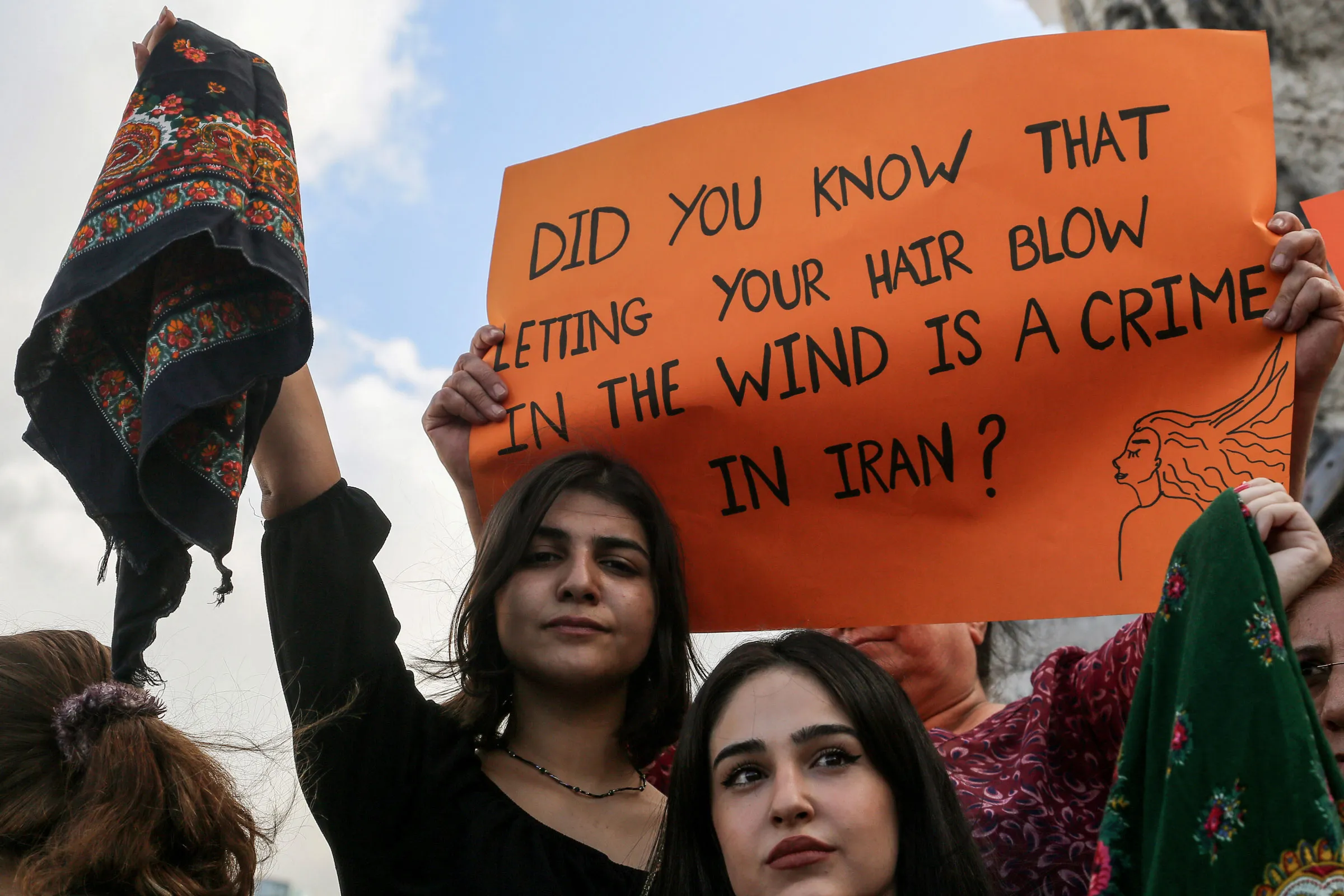
    Iran is in the middle of the most serious political unrest it has seen since 1979, and it is increasingly hard to pretend that this is just another wave of protest that the system can absorb. Across Tehran, Shiraz and dozens of other cities, crowds that once protested economics are now openly challenging the Supreme leader and the ideological foundations of the theocratic state.

    The Iranian government’s response has been brutal. Mass arrests, live ammunition, nationwide internet shutdowns and reports of death sentences are part of a crackdown that human rights groups say has killed thousands and detained tens of thousands more.

    It is repression that only highlights a deeper fracture, between a sovereign that fears dissent and a society that feels unheard.

    But Iran’s crisis is no longer contained within its borders. The world is watching and calculating.

    The United States and Israel are watching Iran’s instability as a strategic opening. President Donald Trump’s talk of ‘regime change’ and warnings of military intervention may play well domestically, but they are reckless in this context. They risk turning a domestic political reckoning into an international confrontation and handing Iranian hardliners the narrative they depend on: the nation is under siege and dissent equals betrayal.

    This does not protect protesters, it exposes them.

    Trump slapping a 25 per cent tariff on countries trading with Iran signals pressure not just on Tehran but on the global partners that sustain its economy. That move drew swift criticism from China, which threatened retaliatory measures, picturing how Iran’s fate is entangled with broader Sino-American rivalry.

    Within the US itself, calls for harsher action are emerging from influential quarters. Some US lawmakers have urged expansive military and cyber responses, framing Tehran’s crackdown as a threat to world order.

    Israeli officials have spoken in support of the protests, calling them a fight for freedom. But their interest is also strategic. For Israel, unrest in Iran weakens a major regional rival. Comments from Israeli intelligence officials about activity inside Iran suggest the protests are being seen as an opportunity, not just a moral cause.

    But Iran’s warnings to the US and Israel reflect this fear. Tehran knows that foreign involvement would change the nature of the crisis. A domestic protest movement would quickly turn into an international conflict. That shift would serve outside powers far more than it would help the people protesting on the streets.

    Other global players are no less invested, even if they are quieter.

    Both Russia and China have little interest in regime change and particularly in stability that weakens Western influence. For them, Iran is a strategic partner in energy, arms and diplomacy and also a useful counterweight to US power. They are likely to back the regime diplomatically, even as it bleeds legitimacy at home.

    Europe has denounced Iran’s violent crackdown. The United Kingdom has pledged expanded sanctions on Tehran’s financial, energy and transport sectors in response to killings and arrests. Yet, for European leaders, disruption in Iran could exacerbate migration pressures, threaten energy supply dynamics and deepen geopolitical rivalry with Russia.

    India’s stance has been quite cautious. The Ministry of External Affairs has urged Indian nationals to avoid travel to Iran and has informed that New Delhi is monitoring developments closely, but it has stopped short of overt criticism or strong support. That reflects India’s position as an energy partner and user of Iranian trade routes, particularly through Chabahar port.

    Delhi’s priority is stability that secures energy and connectivity, not instability that threatens supply chains or regional security.

    Iran’s unrest is not happening in a vacuum. Every major external actor is making moves shaped by strategic interests, not solidarity. What emerges is a familiar pattern. Iran’s internal crisis is being absorbed into the calculations of others.

    Even the memory of “Woman, Life, Freedom” protests remains fresh. That movement exposed both the depth of public anger and the limits of repression. The current unrest builds on that unfinished crisis. It is broader, more openly political and less willing to accept symbolic concessions.

    Iran now faces choices with lasting consequences. A violent crackdown may impose surface order but will deepen isolation and resentment. A collapse of authority risks instability and fragmentation. Foreign intervention would almost certainly escalate the crisis beyond Iran’s borders.

    None of these outcomes are desirable. All of them are plausible. What is no longer plausible is a return to the old normal.

    A society that no longer believes it is represented cannot be governed indefinitely through fear. A state that no longer listens eventually loses control over the story it tells about itself.

    Iran’s future is being shaped in this moment, not only by what happens on its streets, but by how its rulers respond and how external powers choose to use this moment, especially Trump.

  • Act east, deliver east

    Act east, deliver east

    This article has been published with: Act east, deliver east


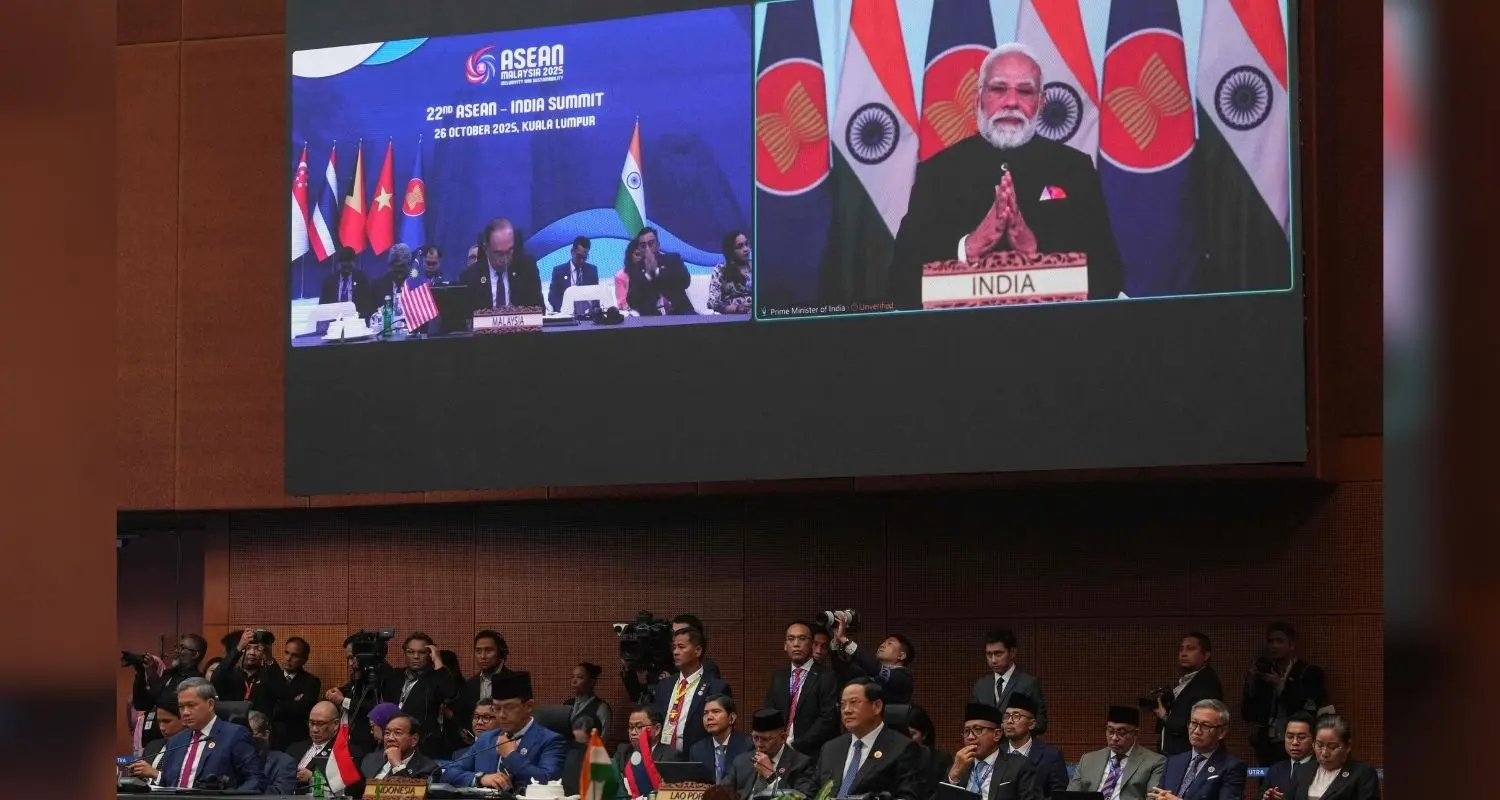
    In the soft-lit hills of Kuala Lumpur, Southeast Asia’s leaders gathered this October to take stock of an unsettled world. The 47th ASEAN Summit hosted by Malaysian Prime Minister Anwar Ibrahim, carried both promise and paradox of Asia’s regional diplomacy.

    Under the theme of “inclusivity and sustainability,” the three-day deliberation sought to reimagine Asia’s regional order, one that must now adapt to the slow erosion of multilateral trust.

    Among the summit’s tangible outcomes, something became historic: Timor-Leste’s induction as ASEAN’s 11th member. The move was symbolic of ASEAN’s expanding horizons and the bloc’s continued relevance as a bridge across the Indo-pacific. Yet, amid the handshakes and declarations, the conversation in diplomatic circles revolved around the chair left empty by India’s Prime Minister Narendra Modi.

    Modi’s virtual participation at the summit sparked more speculation than his speech. His absence was read not as neglect but as a strategic signal, one that left many wondering whether India, which once championed the ‘Act East’ slogan is now content to act virtually.

    To his credit, Modi’s address did not lack substance. He described ASEAN as the ‘cultural capital of India,’ reiterating, during civilisational links that anchor India’s eastern outreach. He stressed that even in this “era of uncertainties,” the ASEAN-India Comprehensive Strategic Partnership continues to serve as a foundation for global stability.

    The declaration of 2026 as the ASEAN-India Year of Maritime Cooperation underlined Delhi’s growing investment in maritime security, counter-piracy operations, and cyber-resilience across shared waters. These are vital for India, given that nearly 80 per cent of its energy imports flow through ASEAN-controlled routes such as the Malacca Strait.

    There were other signs of progress, too. Both sides agreed to expediate the modernisation of the ASEAN-India Trade in Goods Agreement (AITIGA), a critical move as India’s trade deficit with ASEAN has widened alarmingly, from $9.6 billion in 2016-17 to $43.5 billion in 2022-23. The India-Myanmar-Thailand trilateral highway and Kaladan multi-modal transport project, long symbolic of India’s sluggish project diplomacy, reappeared in joint statements, this time with promises of renewed speed.

    Meanwhile, digital cooperation has emerged as a new frontier. India’s Unified Payments Interface (UPI) has drawn admiration across ASEAN for its accessibility and reliability. The first ASEAN-India Track 1 Cyber Policy Dialogue was also welcomed, setting up structured channels for tackling cyber threats, a sign that the partnership is finally venturing into 21st century domains rather than lingering on the 20th century rhetoric.

    Officially, the Ministry of External Affairs attributed PM Modi’s absence to scheduling conflicts, the Diwali season and Bihar elections.

    According to Professor Rajan Kumar of Jawaharlal Nehru University, the absence might reflect unease over stalled trade negotiations with the US, especially after President Trump’s 50 per cent tariff hike on Indian imports and Washington’s sanctions on Russian firms integral to India’s energy supply. In that context, a face-to face encounter might have been diplomatically uncomfortable.

    Still, India was far from absent. External Affairs Minister S. Jaishankar represented the country, holding substantive bilateral meetings with his Malaysian, Singaporean and Thai counterparts. Yet, the “empty chair” had its own symbolism.

    In the lexicon of geopolitics, “diplomacy of presence” matters, the sheer act of being there can shape discussions, perceptions, and hierarchies. An unoccupied seat can be louder than a statement.

    Well, India’s engagement with ASEAN remains one of the more consistent threads of its foreign policy. It aligns neatly with Delhi’s Act East Policy, seeking to turn India from a South Asian power into a broader Indo-Pacific actor. For ASEAN too, India offers something unique: a democratic counterweight in a region often defined by US-China contestation.

    Unlike Beijing or Washington, Delhi doesn’t seek to dominate ASEAN’s decision making. Its policy supports ASEAN centrality the idea that Southeast Asia, not external partners, should lead its regional agenda. That humility has given India quiet but durable credibility within ASEAN capitals.

    Yet, substance must keep peace with sentiment as well. India has been slow to deliver on infrastructure promises and trade facilitation. While projects like the Trilateral Highway remains unfinished, China’s belt and road initiative continues to reshape the region’s connectivity map.

    If India wants to be seen as a reliable partner rather than a distant admirer, execution must replace declarations.

    Economically, ASEAN represents India’s fourth-largest trading partner and a key pillar in its effort to diversify supply chains away from China. But to move from potential to power, India needs sustained investment, private sector push and trade predictability, not just rhetoric of friendship.

    The Kuala Lumpur summit reaffirmed that ASEAN-India relations are not faltering, they are evolving sometimes unevenly, but there does exist a strategic purpose.

    The shared agenda on digital finance, cybersecurity and maritime governance shows that cooperation is moving into newer, more pragmatic spaces.

    However, India’s challenge is one of consistency and presence. The Indo-Pacific is not shaped only in war rooms or treaties but through the quiet choreography of constant engagement.

    If India wants the 21st century to truly be the “India-ASEAN Century,” as PM Modi declared. The region is watching not just for India’s words, but for its willingness to show up consistently, credibly and confidently.

  • India’s role in the new Gaza peace

    India’s role in the new Gaza peace

    The article has been published with: As the first phase of US president Donald Trump’s 20-point peace plan for Gaza gains traction, with both Hamas and Israel cautiously signing onto its initial framework, a new moment of reckoning arises not just for the region but for India, whose interests and ideals converge at the heart of Gaza’s fragile peace.


    As the first phase of US president Donald Trump’s 20-point peace plan for Gaza gains traction, with both Hamas and Israel cautiously signing onto its initial framework, a new moment of reckoning arises not just for the region but for India, whose interests and ideals converge at the heart of Gaza’s fragile peace.

    The plan, which emphasises large-scale international investment in water, energy, health, and infrastructure, has drawn careful support from the European Union and several Arab states, including Egypt, Qatar, Saudi Arabia, and the UAE.

    While many remain concerned over the absence of a clear timeline for Israel’s withdrawal, the momentum itself is significant. Prime Minister Modi welcomed the plan as “decisive progress” and a “significant step forward,” signaling India’s willingness to see stability return to Gaza after years of destruction and despair.

    For India, peace in Gaza is not an abstract moral issue but a question deeply linked to its historical diplomacy, energy security, and regional aspirations. New Delhi’s engagement with the Palestinian question predates its own independence.

    In 1947, Jawaharlal Nehru ensured India’s participation in the UN Special Committee on Palestine, where India defied the Western bloc to support a single federal state with Arab and Jewish provinces, a stance consistent with its postcolonial belief in coexistence and self-determination.

    In the following decades, India extended sustained financial support to the United Nations Relief and Works Agency for Palestine Refugees (UNRWA) and contributed troops to successive UN peacekeeping missions, including the UN Emergency Force in the Suez and Sinai, where Indian soldiers even lost their lives during the 1967 Arab-Israeli conflict.

    India’s solidarity with the Palestinian cause has never been merely symbolic. In 1988, it became one of the first non-Arab nations to recognise the State of Palestine, a step that many Western democracies only began contemplating decades later. Yet, the early 1990s marked a recalibration. When India established full diplomatic relations with Israel in 1992, it was not a repudiation of its commitment to Palestine but a response to the changing geopolitical order.

    The Madrid Peace Conference has brought new players to the table, and India, wary of being excluded from the evolving peace process, adjusted its strategy to engage with both sides. Since then, India has attended donor conferences, participated in UN committees on Palestinian rights, and provided development assistance and technical training to the Palestinian Authority (PA), while simultaneously building robust defence, agricultural, and technology partnerships with Israel.

    This dual approach, combining principled support for Palestinian sovereignty with pragmatic engagement with Israel, has been the defining feature of India’s Middle East policy for over three decades.

    India has repeatedly condemned terrorism in all its forms, including attacks on Israeli civilians, while also expressing concern when Israel’s military operations inflict civilian suffering in Gaza. Its response to the recent conflict, particularly after the airstrikes near Doha, was carefully worded but deliberate, reiterating the need to respect international humanitarian law and resume dialogue toward a two-state solution.

    At the heart of India’s interest in the new Gaza plan lies not just diplomacy but economics as well. With the Abraham Accords reshaping West Asia, India finds itself part of a new cooperative architecture that bridges both Israel and the Gulf.

    The India–Middle East–Europe Economic Corridor (IMEC), announced in 2023, exemplifies this shift, a project linking India’s ports to the Gulf, Israel, and onward to Europe through rail and maritime routes. Its success depends on regional stability.

    A peaceful Gaza, integrated into a broader framework of reconstruction and trade, directly serves India’s interests in securing energy supplies, ensuring uninterrupted trade flows, and maintaining safe conditions for over eight million Indians living and working in the Gulf region, whose remittances exceed $40 billion annually.

    Israel’s ambassador to India recently suggested that New Delhi should take an active role in Gaza’s reconstruction, citing India’s expertise in infrastructure, water management, and digital governance. Indian companies such as Larsen & Toubro and Tata Projects have already demonstrated their capacity to execute large-scale civil works across the Middle East.

    India’s engagement in the region would not only consolidate the nation’s image as a development partner but also reinforce its credentials as a responsible power capable of constructive mediation.

    Beyond economic calculations, India’s participation would resonate with its broader foreign policy doctrine, one that blends strategic autonomy with normative leadership. As a founding member of the Non-Aligned Movement, India has historically positioned itself as a bridge between the Global North and South.

    Today, that legacy continues through new minilateral groupings such as the I2U2 (India, Israel, UAE, United States), which promote cooperation in food, energy, and innovation. By constructively engaging in Gaza’s recovery while upholding Palestinian sovereignty, India can project itself as a moderating force that values peace without partisanship.

    However, the path ahead demands caution. Aligning too closely with the Israeli or American approach could alienate traditional Arab partners, especially those sensitive to Palestinian sovereignty.

    The challenge for India, therefore, is to sustain a credible middle course one that upholds humanitarian principles while remaining anchored in realpolitik.

    In Gaza’s fragile future, India’s role could go beyond financial assistance. Its record in peacekeeping, institution building, and capacity training makes it uniquely positioned to help restore basic governance, healthcare, and education systems.

    Indian NGOs and development agencies, working alongside UN bodies, could contribute to skill-building programmes that empower Palestinian youth and reduce dependence on aid.

    From Nehru’s moral idealism to Modi’s pragmatic outreach, India’s policy on Palestine and Israel has been marked by adaptation without abandonment. The new Gaza peace plan presents yet another test of that balance.

    Whether India chooses to remain a cautious observer or an active participant in reconstruction will reveal how it defines power in the twenty-first century.

  • Rethinking free speech through Sahyog

    Rethinking free speech through Sahyog

    This article has been published with: Rethinking free speech through Sahyog

    Sahyog can serve public good but only if backed by transparency, statutory clarity and judicial review. Otherwise, it will remain a contested experiment seen by some as shield against cybercrime and by others as a step toward state overreach.


    From the very beginning, India’s free speech story has been a push and pull between expansive liberty and cautious regulation. When the framers of India’s Constitution enshrined freedom of speech and expression in Article 19(1)(a), they understood that democracy thrives on debate, disagreement and dissent. Yet they built in caveats; Article 19(2) that permits the State to impose “reasonable restrictions” in the interests of sovereignty, public order, morality and security.

    In this regard, the Supreme Court has often stepped in. In Romesh Thappar v. State of Madras (1950), it struck down a ban on a political journal, declaring that freedom of speech lay “at the foundation of all democratic organisation.” In Shreya Singhal v. Union of India (2015), it famously scrapped Section 66A of the IT Act, holding that vague powers to police online speech violated constitutional guarantees.

    Time and again, the judiciary has stressed: restrictions must be narrowly tailored, reasoned and subject to oversight. Which brings us today to the Sahyog portal. Launched by the Union IT Ministry last year, it is a centralised digital platform through which government agencies and police can issue takedown requests to social media intermediaries. Officially designed to combat cybercrime and harmful online content, it allows authorities to flag and demand removal of posts directly.

    The controversy arises because critics argue that the portal bypasses the safeguards of Section 69A, operates in secrecy and risks enabling censorship.

    Yet, in a recent ruling, the Karnataka High Court took a different view: it upheld the government’s use of this digital tool, dismissing X Corporation’s plea that labelled the system “extra-legal censorship”, and instead described the portal as “an instrument of public good” and a “beacon of cooperation” against online harms, and that it is a cooperative mechanism to tackle cybercrime.

    Soon after, Elon Musk’s company declared it was “deeply concerned,” warning that Sahyog allows millions of officers to demand removals in secrecy, bypassing safeguards of Section 69A, infringing on constitutional rights.

    So, is this really censorship?

    Supporters say this is not an arbitrary censorship but enforcement. The internet is flooded with deepfakes, child exploitation material, hate campaigns and frauds. Harm spreads at the speed of a click, while legal blocking orders often take weeks. A centralised portal, they argue, makes cooperation efficient, protects victims swiftly and reflects the State’s duty to maintain public order.

    Seen in this light, Sahyog is a policing tool against criminal misuse not a muzzle on political dissent.

    The high court’s view fits this reasoning: challenging the portal is, in its words to ‘misunderstand its very purpose.’

    Yet critics, civil society, legal scholars and X see danger in how Sahyog operates. Unlike Section 69A, which requires reasoned, reviewable orders, Sahyog enables opaque takedown requests. No public record, no notice to users, no guaranteed oversight. This, they argue is ‘arbitrary censorship,’ not in its declared intent, but in its unchecked potential.

    The real threat is that an officer in one corner of the country could order content down in another, with the citizen left unaware of the grounds. Genuine dissent or inconvenient reporting may vanish under the same framework meant to remove harmful content. When removals happen without transparency, it often seems as silencing even if done unintentionally.

    Well, censorship is not always about intent, but also about a process. A system that removes content without reasoned orders, without notice, and without accountability resembles censorship in practice, even if born of noble objectives. Sahyog, as currently designed, can risks blurring that line.

    The government insists that “the Constitution wins.” Musk insists that free expression is under threat. The truth lies in neither extreme. Sahyog can serve public good but only if backed by transparency, statutory clarity and judicial review. Otherwise, it will remain a contested experiment seen by some as shield against cybercrime and by others as a step toward state overreach.

    India’s constitutional journey has always been about negotiating liberty and restraint. Whether Sahyog becomes a cooperative safeguard or a creeping censor will depend less on its technology, and more on how faithfully it is made to follow the spirit of Article 19.

  • London’s identity in question, are Indians at risk?                                                                      

    London’s identity in question, are Indians at risk?                                                                      

    This article has been published with: London’s identity in question, are Indians at risk?

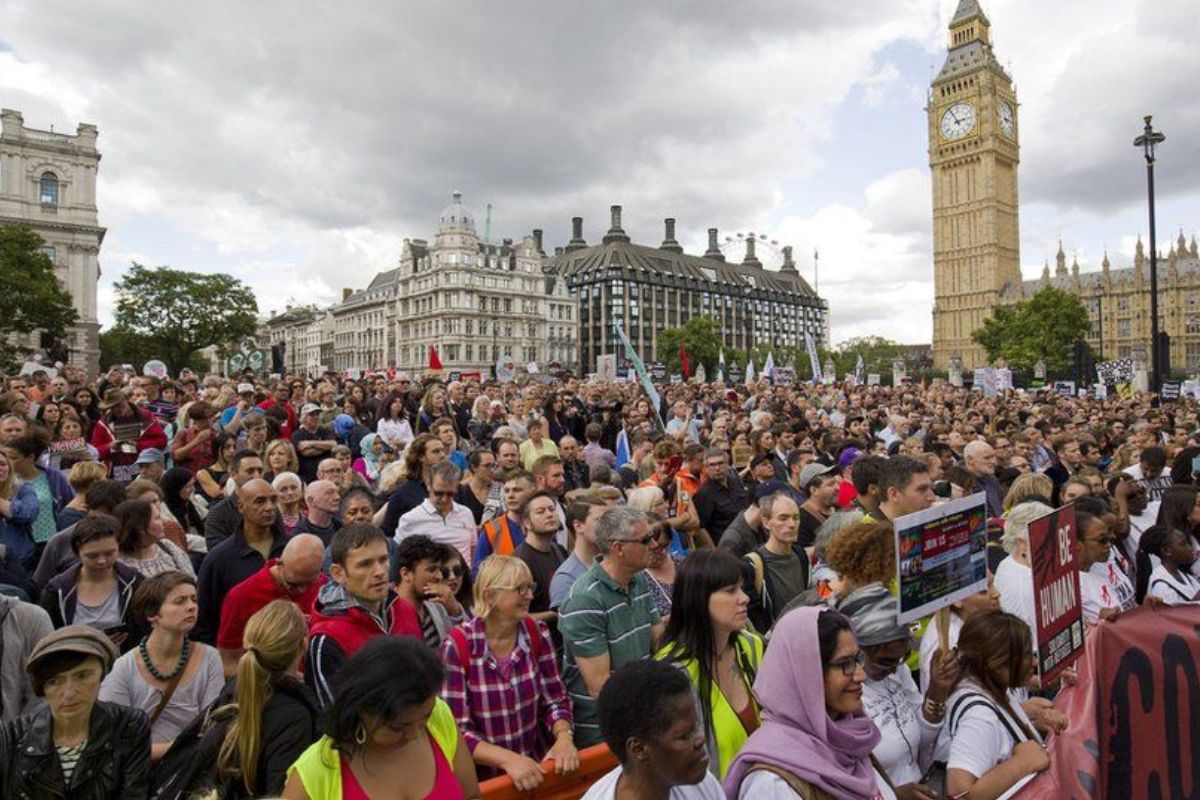
    On a September weekend, central London became a stage of tense spectacle. A tide of Union Jacks and St George’s crosses swept through the streets, led by far-right activist Tommy Robinson under the banner of “Unite the Kingdom.” More than 1,50,000 people reportedly participating, this was one of Britain’s largest anti-immigration demonstrations in recent years.

    What transpired was more than a protest. It was a reminder that immigration has become the flashpoint of our times, capable of mobilizing crowds, unsettling governments and shaping the future of millions including the large Indian diaspora. The question many are quietly asking now is: Should Indians be worried?

    Indians are the largest non-UK ethnic group in London, numbering over 6,50,000 in Greater London. British Indians own over 65,000 businesses in the UK, contributing to roughly £60 billion annually to tits economy. Almost 1 in 10 NHS doctors in the UK is of Indian origin. Whereas, Indian students make up one of the largest international student groups in the UK, with more than 1,40,000 Indian students enrolled in British universities in 2023-24, bringing billions in tuition and local spending.

    The rally was framed as a show of patriotism, but immigration was the central grievance. Placards blared “Send them home” and “Stop the boats.” The rhetoric was unmistakably hostile towards migrants, particularly Muslims, though the undertone extended to anyone perceived as an “outsider.” Violence erupted when protestors clashed with police, injuring 26 officers.

    London’s Muslim population is around 15%, heavily concentrated in boroughs like Newham, Tower Hamlets and Brent. Far-right activists portray this concentration as a “threat to British identity.”

    Debates around halal food in schools, mosque construction or visible symbols like the hijab are exploited by right-wing groups as evidence of cultural erosion. Wars in Afghanistan, Syria and more recently the Israel-Gaza conflict have fed into anti-Muslim sentiment with Muslims abroad often conflated with Muslims at home.

    Prime Minister Keir Starmer condemned the march as divisive, insisting Britain “will not surrender its flag to those who use it as a symbol of fear.” But the event’s scale, intensity and rapid spread across social media suggested something deeper: anti-immigration sentiment is no longer fringe. It is mainstreaming.

    Economic anxieties, housing shortages and stretched public services are easy scapegoats. Security concerns, often fuelled by sensationalist reporting, add another layer. But perhaps the most significant driver is political entrepreneurship, activists like Robinson know how to weaponise frustration into mobilisation. Online misinformation then turbocharges the anger, transforming digital discontent into street protests.

    London’s rally is part of a global pattern. Just last month, tens of thousands marched in Australia under the banner of “March for Australia,” while protests over asylum housing have surged in the United States. Across Europe, demonstration in Berlin, Warsaw, and Dublin echo similar themes. Migration politics is now transnational, and Britain’s far-right plugged into these global currents.

    For Indians, the implications are complicated. On the one hand, the Indian diaspora in the UK is one of the country’s most successful immigrant communities being economically stable, politically active and culturally visible. But success does not immunise against xenophobia.

    History has shown how quickly minorities can become collateral damage when anti-immigration rhetoric boils over.

    Indians may not be specific targets of Robinson’s campaign, but visibility itself is enough. Past attacks on Indian students in Australia and racist assaults on South Asian workers in the UK illustrates how quickly resentment can translate into violence.

    Beyond physical safety, social climate matters as well. Discrimination in jobs, housing, or even public spaces can intensify during such surges. For young students and workers without strong community support, this can be isolating.

    India has often had to step in when its nationals abroad face hostility. Advisories, consular interventions and public outcry in India can strain ties with the host nations.

    It is not alarmist to say that Indians should be cautious. But caution must not turn into a constant fear. After all, Britain is also a place where Indian-origin leaders hold office, where Bollywood films run in packed theatres and where Indian businesses thrive. Even its official national dish, chicken tikka masala, has Indian roots, a reminder of how deeply the community has shaped British life.

    The chants of “we want our country back” are not just about border control, they reflect an identity crisis in Western democracies struggling to balance globalisation with local anxieties. For Britain, this identity debate is especially charged post-Brexit. The promise of taking back control of borders was a defining feature of the Leave campaign, yet migration numbers remain high due to labour shortages.

    Far-right figures are now exploiting this perceived “failure” to whip up anger.

    Well, Indian in the UK and elsewhere should respond with awareness rather than fear by staying alert to their surroundings, keeping close to community networks and recognising when immigration becomes a political flashpoint. For students and young professionals, this means being prepared for shifts in visa rules or public mood that can arise during election seasons.

    At the same time, India’s diplomatic role will grow in importance. Protecting its citizens abroad must remain central to its foreign policy.

    Anti-immigration marches may chant “send them home,” but the truth is Indians have already made Britain their home. From students to entrepreneurs, they contribute to the economy, culture and public life. As long as they remain as asset, not a threat, to the society they live in they should not be worried, though they must remain watchful of shifting political winds.

  • Nepal’s double uprising: Revolt and exodus

    Nepal’s double uprising: Revolt and exodus

    This article has been published with Nepal’s double uprising: Revolt and exodus

    Nepal is today at an inflection point. The Himalayan republic, long accustomed to political instability has rarely faced a moment this stark: the biggest youth revolt in its history colliding with the largest exodus of its people abroad. The first is noisy, combustible and impossible to ignore. The second is quieter, but no less devastating. Both are rebellions, different in form but identical in essence, against a state that has failed to deliver.

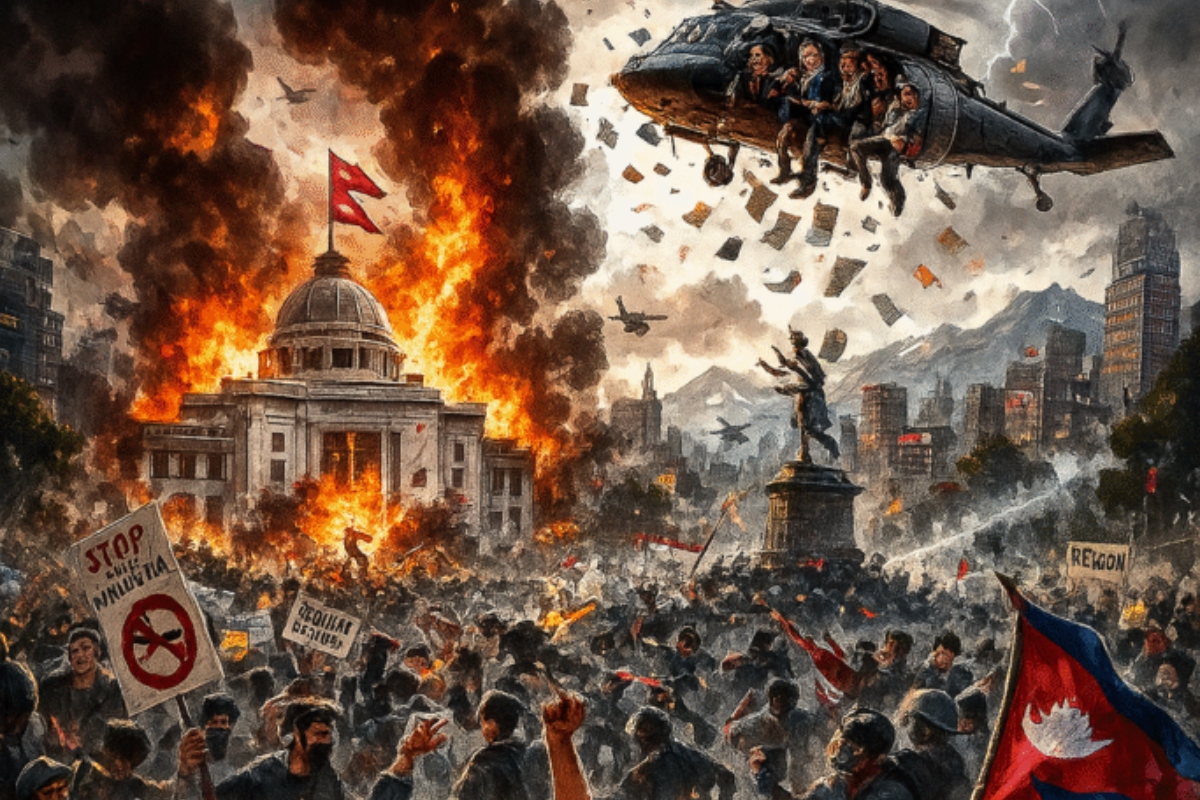
    The eruption of protests last month, triggered by a government ban on 26 social media platforms, was unlike anything Nepal has seen in decades. What began as an outrage over digital censorship spiralled into a generational uprising. Demonstrations spread across all 77 district capitals, claiming at least 19 lives in Kathmandu alone.

    Parliament and power centres burned, five former Prime Minister’s residences were vandalised, and Rajyalaxmi Chitrakar, wife of former PM Jhala Nath Khanal, died from severe burns after her house was torched. While Finance Minister Dhakal was stripped and paraded in public; Foreign Minister Deuba sustained injuries.

    This was not the palace intrigue of the past, nor the elite factional battles Nepalis have grown weary of. This was something more, a mass demand for accountable governance, credible constitutional reform and institutions that inspire trust. For Nepal’s Gen Z, the ban on TikTok or WhatsApp was merely the spark. The fire has been smouldering for years, fuelled by corruption, inequality and the absence of dignified work opportunities.

    A day after police opened fire on young demonstrators, Kathmandu was engulfed in flames. Prime Minister KP Sharma Oli resigned, and President Ram Chandra Paudel went into hiding under army protection.

    The ban on social media was hastily lifted, but the damage was already done. The youth of Nepal had issued their verdict: The system is broken and patience has run out.

    Yet, if the protest is a loud rebellion, migration is the quite one, perhaps even more telling. More than 4,00,000 Nepalis leave each year, an average of 10,000 departures a day. They hollow out the very demographic that should be building Nepal’s future, sustaining their families and the economy through remittances while abandoning the political order they no longer believe in.

    The absent, in effect, are financing a system they refuge to inhabit. World Bank report underlines this paradox—82 per cent of Nepal’s workforce remains trapped in informal employment, far above global and regional averages. For many, leaving is less of a choice than an act of survival.

    Nepal’s politics have long been a theatre of instability. Fourteen governments since 2008; none completing a full term. The Maoist insurgency of 1996 claimed 17,000 lives in its attempt to overthrow the monarchy. The 2008 abolition of the royal order was supposed to herald a people’s republic. The 2015 constitution was hailed as a landmark. And yet, KP Sharma Oli, a nationalist, populist, survivor, cycled in and out of office four times between 2015 and 2024 only to fall once again in 2025.

    The pattern is depressingly familiar, tactical manoeuvring among three dominant parties, the Nepali Congress, CPN-UML and the Maoist Centre at the expense of structural reform.

    Pushpa Kamal Dahal (Prachanda) continues his balancing act. Sher Bahadur Deuba struggles for relevance. Meanwhile, power circulates among the same aging elites, their children flaunting privilege on social media while ordinary citizens struggle with unemployment, rising costs, and climate vulnerability. The gap between rulers and ruled has become unbridgeable.

    For Gen Z, who have grown up on promises of democracy but experiences little of its substance, this political theatre has lost all legitimacy. “Nepobabies” trend online as shorthand for the dynastic impunity of Nepal’s political class. What matters to them is not ideology but the lived reality of jobs, dignity and opportunity, all of which are in short supply.

    This convergence of revolt and exodus is existential. A country that loses its youth either to martyrdom in the streets or to migration risks eroding its national security.

    The government’s use of excessive force did not just provoke fury; it confirmed suspicions that the system is corrupt, stagnant and unwilling to listen. The resignation of Oli only deepens the vacuum, inviting shifting alliances that promise more of the same paralysis.

    And here lies the danger, rebellion without reform hardens despair. If the protests fizzle into yet another cycle of unstable governments, while the exodus continues unabated, Nepal risks hollowing itself out.

    For India, Nepal’s turbulence is not a distant spectacle but a pressing concern. The movement of people and ideas across the border are too close to break. Instability in Nepal inevitably spills into Bihar, Uttar Pradesh, Sikkim and Uttarakhand. A large-scale exodus would intensify pressure that India is already struggling with, such as employment shortages, social friction and migration management.

    The fall of Oli bears uncomfortable parallels with Bangladesh last year, where the collapse of the Sheikh Hasina government left spaces for anti-India narratives to flourish. If New Delhi mishandles its engagement with Kathmandu, it risks a similar backlash. The stakes are stark, a neighbour either renewed or unravelled.

    India cannot dictate Nepal’s fate. But it can choose to engage wisely. That means listening not just to Kathmandu’s elites but to Nepal’s youth, who are demanding accountability, opportunity and dignity. It means demonstrating through aid, trade and people-to-people ties, that India hears Nepal’s young voices rather than ignoring them. And it means resisting the temptation to back shifting political alliances without regard for their democratic legitimacy.

    For Nepal, the way forward requires more than cosmetic changes. The constitution of 2015 must be reinvigorated with credible reforms that strengthen institutions and protect rights. Parties must rise above tactical rivalry and commit to structural transformation such as education reform, job creation, curbing corruption and making government transparent.

    For India, the imperative is to support Nepal’s democratic renewal, not its decay. This is not merely about geopolitics or China’s growing footprint in South Asia. It is about the recognition that when a Neighbour’s youth cry out in the streets or by leaving, it is a cry that reverberates across borders.

    Nepal today stands at a crossroads. If its leaders keep fighting among themselves while the youth either protest on the streets or leave the country, Nepal risks becoming a republic without a future. But if both the loud revolt and the quiet rebellion are taken seriously, the country still has a chance to rebuild itself.

    For India, the choice is just as clear, it can either watch a neighbour fall apart or engage in a way that gives Nepal’s youth a hope.

    The stakes are bigger than Nepal alone. Its repercussions will affect the neighbours too and they must act very carefully.

  • Saving the nation’s breadbasket

    Saving the nation’s breadbasket

    Securing Punjab means more than repairing breaches. It requires urgent investment in reinforced embankments, modern flood control systems, and groundwater recharge.


    Under relentless skies, Punjab fell once again, this time into despair with its fields submerged. Over 40 lives have been lost, many remain missing and more than 1,300 villages lie underwater. Crops across lakhs of acres have been destroyed, families displaced and the very land that feeds the nation has been drowned overnight.

    Many farmers voiced the same grief: “First, we fed the nation, and today our homes are drowning. Will anyone come to save us?”

    These are not mere statistics, but human voices that remind us why “securing Punjab” matters, it is about preserving the breadbasket of the nation.

    The tragedy came with terrifying speed. More than 20,000 acres of land under the “white gold” cultivation is adversely impacted by waterlogging. The Ravi, Sutlej, Beas, and Ghaggar swelled, and the 19t century Madhopar Barrage crumbled under the ferocity of floodwaters. The Ranjit Sagar and Pong dams crossed danger levels, and the Bhakra Dam remains perilously close to spilling over.

    Yet the tragedy wasn’t entirely unforeseen. According to IMD, in August the rainfall measured 253.7 mm, 74 per cent above normal and the highest in 25 years. Heavy monsoons combined with reservoir mismanagement and delayed preparations turned predictable risk into catastrophe.

    The flood preparedness meeting in Punjab was held quite late on June 5, only 17 days before the monsoon arrived on June 22.

    Chief Minister Bhagwant Mann’s message was unambiguous. In letters to the Prime Minister and public appeals, he emphasised that three lakh acres of paddy fields, ripe for harvest, lay submerged while compensation under SDRF—Rs 6,800 per acre—was woefully inadequate. He demanded at least Rs 50,000 per acre and pressed for Rs 60,000 crore in “stuck” Central funds to be released immediately.

    At the same time, Union Agriculture Minister Shivraj Singh Chouhan toured flood-ravaged districts and called it a “Jal Pralay.”

    “Loss is visible, the crop is completely damaged. Fields are inundated. In this hour of crisis, we are with farmers and will make every effort to bail them out,” he said. He singled out illegal sand mining as a critical weakness that eroded embankments, making Punjab more vulnerable to deluge, an issue environmentalist have long flagged.

    The Union Minister urged coordinated planning across short, medium and long-term strategies to rebuild, de-silt and safeguard future crops.

    Well, these statements make an alignment of concern. However, words alone won’t suffice for such a catastrophe. Relief without real reform is like pouring water into a sinking boat.

    Beyond immediate relief, however, lies the larger question of water security. The Indus Water Treaty, often praised as a model of transboundary cooperation, was designed in another era. It allocated 80 per cent of Indus basin waters to Pakistan, leaving India’s control over the eastern rivers—Sutlej, Beas and Ravi. While both banks of the Sutlej and Beas lie within India’s sovereignty, the Ravi presents a strategic vulnerability, only one bank lies in India, while the other runs through Pakistan.

    Pakistan has increasingly treated the Ravi as a matter of national security, reinforcing it with embankments, spurs and studs often executed by its military. This is not without precedent—the 1988 floods saw a similar scenario where Pakistan’s concrete structures diverted flows with devastating effect on the Indian side. While Pakistan’s economy may be dwarfed by India’s, its military-led flood control initiatives indicate a calculated effort to wield water as leverage. India cannot afford to ignore this.

    Securing Punjab, therefore, means more than repairing breaches. It requires urgent investment in reinforced embankments, modern flood control systems, and groundwater recharge. Former Punjab finance and planning minister Manpreet Singh Badal has long warned that Punjab’s over-dependence on groundwater is unsustainable; securing the state means replenishing aquifers alongside surface water management.

    At the same time, farmers who have lost their livelihoods, need support that goes well beyond symbolic relief. Those whose fields were submerged should receive free seeds and fertilisers, while others are provided with targeted subsidies. An additional installment under PM-Kisan could be directly transferred via Direct Benefit Transfer (DBT), ensuring faster assistance.

    Similarly, direct transfers aimed at repairing pumps, desilting fields, and strengthening social security would not only speed up recovery but also minimise bureaucratic delays. Housing losses should be carefully mapped and geotagged under PM Awas Yojana, and damaged schools must be made a priority under the National Education Mission.

    Schemes such as Flood Management and Border Areas Programme (FMBAP), the Dam Rehabilitation and Improvement Project (DRIP) and crop insurance under PM Fasal Bima Yojana exist, but their gaps are evident in Punjab’s villages. Too often, compensation arrives late, insurance claims are at times mired in red tape and embankments remain weak until the next breach.

    Punjab contributes over 35 per cent of rice and 60 per cent of wheat to India’s central pool. Its security is inseparable from the nation’s food security. Relief packages may rebuild homes, but resilience-building through infrastructure upgrades, treaty reforms, environmental regulation and farmer-first policies will determine whether Punjab continues to be India’s food bowl or slips into recurrent vulnerability.

    Simply put, securing farmers means securing Punjab, and securing the state means securing the food and future of India. The floods of 2025 must be a wake-up call to move beyond temporary relief and build a system where disasters do not translate into devastation.

  • Sudarshan Chakra: Can India build its own Iron Dome?

    Sudarshan Chakra: Can India build its own Iron Dome?

    This article has been published with: Sudarshan Chakra: Can India build its own Iron Dome?

    There is symbolism and morale factor—for a country positioning itself as a rising power, demonstrating capability in futuristic defence technology is as much about deterrence as it is about actual use.


    National security is no longer defined only by troop strength or nuclear deterrence. In the age of drones and cyber-enabled strikes, air defence has become the first line of survival. Recognising this, Prime Minister Narendra Modi has launched Mission Sudarshan Chakra, an ambitious plan to develop an indigenous Iron Dome-like system by 2035.

    This decision reflects both the lessons of global conflicts and the pressing need to shield India from asymmetric threats.

    PM Modi said the project draws inspiration from Lord Krishna’s Sudarshan Chakra, a weapon that symbolised divine protection and precision strike in India’s civilisational history.

    The recent India-Pakistan escalation was just the latest reminder that our neighbour continues to probe and provoke. Moreover, China’s growing military assertiveness and its expanding missile arsenal have sharpened the prospect of India confronting a real two-front challenge.

    Both adversaries have invested in drones, rocket systems and increasingly sophisticated precision strikes. Meanwhile, non-state actors have shown that they do not need billion-dollar arsenals to unleash chaos; low cost UAVs can achieve devastating effects as well.

    Wars raging elsewhere should erase complacency. Ukraine’s blackouts, caused by Russian drones and missile strikes, show how civilian life collapses when skies are left unguarded.

    India’s air defence architecture today is a patchwork of imported systems and indigenous efforts. The country relies on Russian S-400s, indigenous Akash missiles, Israeli Barak systems, and the DRDO’s Advanced Air Defence (AAD) programme. Yet, as recent conflicts have shown, even the most sophisticated militaries struggle against the new face of warfare which is cheap, fast and swarming drones combined with precision missiles.

    The Iron Dome’s effectiveness in Israel, intercepting thousands of rockets, has become the gold standard in layered air defence. But replicating that success in India, a subcontinent with vast borders, diverse terrain and different threat perceptions, poses immense challenges as well.

    The government has set an ambitious timeline, reportedly aiming for full deployment till 2035. However, defence projects in India have not been quite linear. The Light Combat Aircraft (Tejas) took decades to reach induction. Even the Agni and Prithvi missile systems, though ultimately successful, faced long delays.

    Critics may wonder: Is Mission Sudarshan Chakra another lofty promise or a realistic possibility?

    Why this pursuit matters goes beyond immediate timelines. Developing Sudarshan Chakra carries weight for three key reasons. First, it strengthens strategic autonomy, reducing India’s reliance on Russia and Israel for crucial defence technology while allowing the creation of a system tailored to its own geography and threats.

    Second, it reflects the changing nature of warfare, recent conflicts from Ukraine to the Middle East have shown how drone swarms and rocket barrages can overwhelm traditional defences, a reality India cannot afford to overlook.

    Finally, there is symbolism and morale factor—for a country positioning itself as a rising power, demonstrating capability in futuristic defence technology is as much about deterrence as it is about actual use.

    However, caution is very much warranted. India must avoid the trap of turning this mission into a political slogan. National security requires continuity across governments, not announcements tied to electoral cycles.

    So, what can be expected in the near term?

    Realistically, India may roll out a limited shield for major metros or strategic assets within the next decade, rather than a nationwide system.

    A hybrid model where Israeli and Russian systems plug gaps until DRDO’s version matures seems more plausible. Collaboration with private Indian firms and foreign partners may accelerate progress, but success hinges on sustained funding, rigorous testing and political patience.

    In that sense, Sudarshan Chakra is less an Iron Dome in the making and more a signal of intent. It shows that India recognises the shifting character of modern warfare and does not want to be caught unprepared.

    PM Modi’s invocation of Lord Krishna’s Sudarshan Chakra was designed to stir pride and imagination. Yet, the true challenge lies in science, timelines and strategic clarity.

    Will India actually field a working Iron Dome-like system within years, or will this remain a vision on the drawing board?

    For now, this mission is both a promise of protection and a reminder that India’s quest for security is still a work in progress.

  • The hidden cost of India’s urban boom

    The hidden cost of India’s urban boom

    This article has been published with: The hidden cost of India’s urban boom

    India’s flood crisis is no longer a surprise, it is the consequence of decades of poor planning, weakened regulations and a dangerous habit of responding only after disaster strikes.


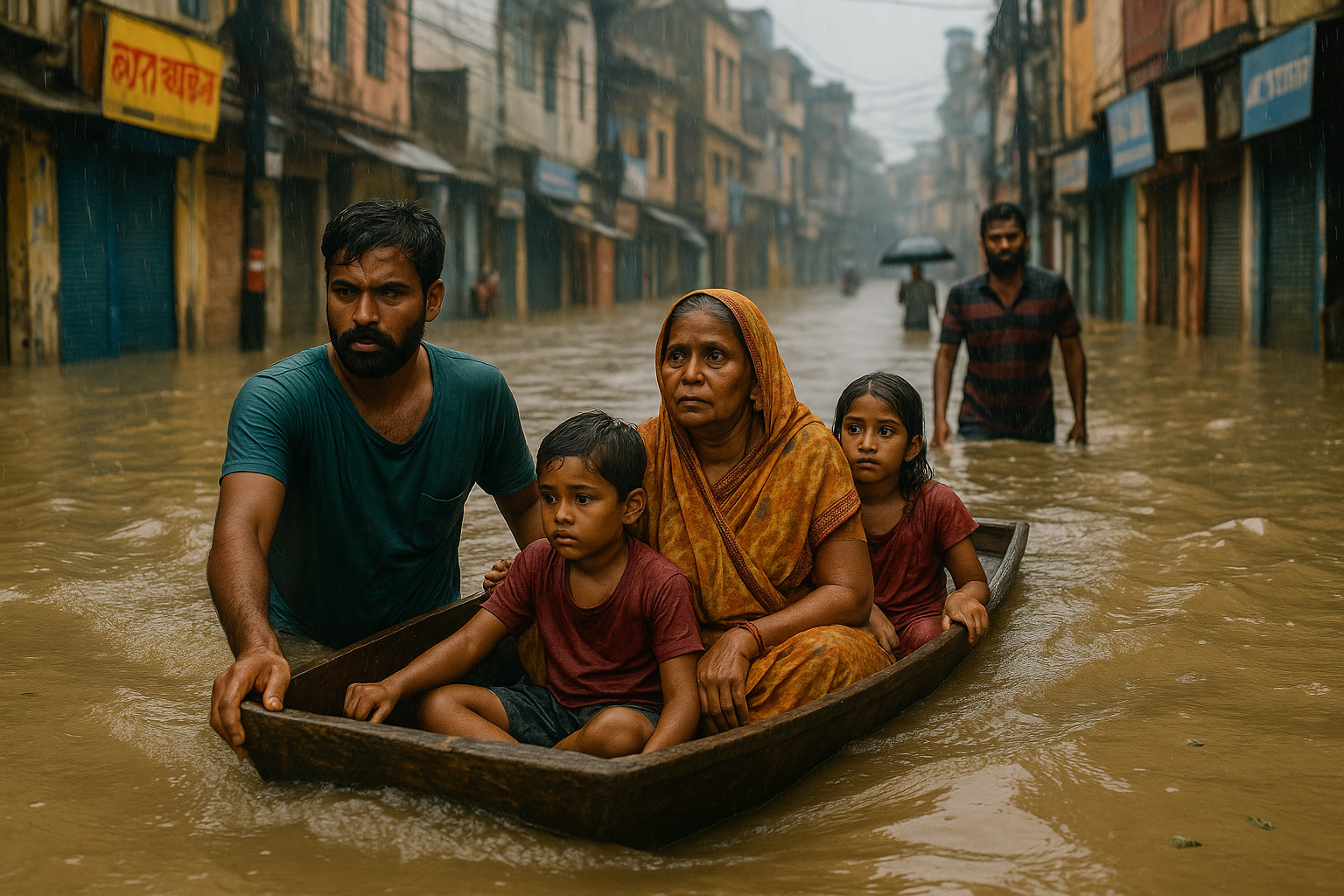
    India is dealing with a flood crisis that is no longer seasonal, it’s systemic and accelerating. Flash floods are no longer rare episodes; they are becoming a lived reality across regions. Once considered localised, floods have now turned into a national emergency, fed by climate change, governance failures and unchecked urban expansion.

    India has reported an alarming average of over 5,000 flood-related deaths annually. According to the Union Jal Shakti Ministry, global temperature anomalies have jumped from 132 in 2020 to 184 in 2022, highlighting the growing influence of climate change on extreme weather events. But climate alone is not to blame. In fact, government data shows that only about 25 per cent of recent floods were directly caused by precipitation. The remaining majority stem from avoidable, human-induced vulnerabilities such as poor dam management, delayed flood-control measures, encroachment on wetlands, and unscientific urban planning.

    Climate change may be the trigger, but it’s colliding with systems already weakened by years of mismanagement.

    The Himalayan region, western coast, and central India are now seen as emerging flood hotspots, vulnerable not just due to geography but due to aggressive human activity as well.

    Himachal Pradesh is continuously witnessed catastrophic landslides and flash floods. According to the State Emergency Operations Centre (SEOC), since June 20, 170 people have died, 301 roads are blocked, and damage to homes, agriculture and livestock continues to rise. A combination of cloudbursts, electrocutions, and flooding has left parts of the state paralysed.

    The recent Supreme Court’s remarks couldn’t have come at a more urgent time. Warning that Himachal Pradesh could soon “vanish into thin air”, Justice JB Pardiwala didn’t speak in abstractions, he pointed directly at what many chose to ignore: unscientific construction, short-sighted planning and unchecked pursuit of profit. In a petition filed against the notification declaring Tara Mata Hill a green area, the court warned that development driven solely by revenue has come at the expense of long-term ecological safety.

    Meanwhile, Gurugram often celebrated as a model for urban success finds itself underwater after each heavy rain and has been nicknamed “Sink City” by its own residents. What is meant to be a symbol of global aspiration, floods every time it rains. It has become routine enough for locals to joke: Who needs a resort with a swimming pool when your parking lot floods for free?

    But behind this sarcasm is frustration. Overflowing garbage, clogged drains, and poor civic response are daily reminders of how little thought went into the basics. Add to the criticism from foreign visitors and consultants like Suhel Seth who quipped: “Every year, without government help, we create a Venice for people to enjoy.”

    Well, this rot is collective. Citizens dumping waste into drains, builders eating into wetlands, and planners approving projects without even a glance at flood maps, are all part of this civic chaos.

    On the west corner, Rajasthan has a painful irony. A water-scarce state now drowning in rainwater. Schools have been shut in 11 districts, rivers are overflowing and a recent audit has revealed 2,699 weak buildings in 224 urban bodies, each one a disaster waiting for a trigger.

    It’s not just flooding that’s the problem, it’s the crumbling foundations that have been ignored for decades.

    Even Kerela, often admired for its planning, couldn’t escape the grip of extreme flooding. Last year, in Wayanad, landslides swept away homes, transport routes collapsed, and families were displaced overnight. The combination of urban sprawl, deforestation, and unpredictable rainfall has made even this well-governed state vulnerable.

    The previous year, Ladakh saw cloudburst severing remote valleys. Sikkim faced floods that tore through infrastructure and crops. This isn’t regional problem anymore, it is national, and growing louder each year.

    In Bengaluru, the signs are depressingly predictable. IT parks and global HQs sit beside choked stormwater drains, cracked roads, and sewage-filled floodwaters.

    It’s a brutal mismatch, a world-class economy built on a city where even an hour’s rain can paralyse life. The problem isn’t just about bad planning; it’s about misplaced priorities and growth without grounding.

    India’s flood crisis is no longer a surprise, it is the consequence of decades of poor planning, weakened regulations and a dangerous habit of responding only after disaster strikes. Climate change may be the accelerant, but the fuel has been laid by human hands as well.

    Addressing this crisis demands more than relief packages and post-disaster assessments. It calls for a shift, strengthening early warning systems and modernising dam and drainage infrastructure are essential, but they must be matched with political will and community awareness.

    Urban planning needs to return to first principles; respecting natural water channels, protecting wetlands, and building with climate resilience in mind.

    States must enforce construction strictly, not dilute them to appease private interests. Equally, the public needs to stop treating civic rules as optional.

    A culture of accountability must be shared between citizens, corporations and the state.

    Floods will always be a part of India’s monsoon story. The real question is whether they continue to drown our cities or whether we begin to rise above them, together.