Tag: Trump

  • Inside Trump’s Board of power                                                     

    Inside Trump’s Board of power                                                     

    This article has been published with : Inside Trump’s ‘board of power’

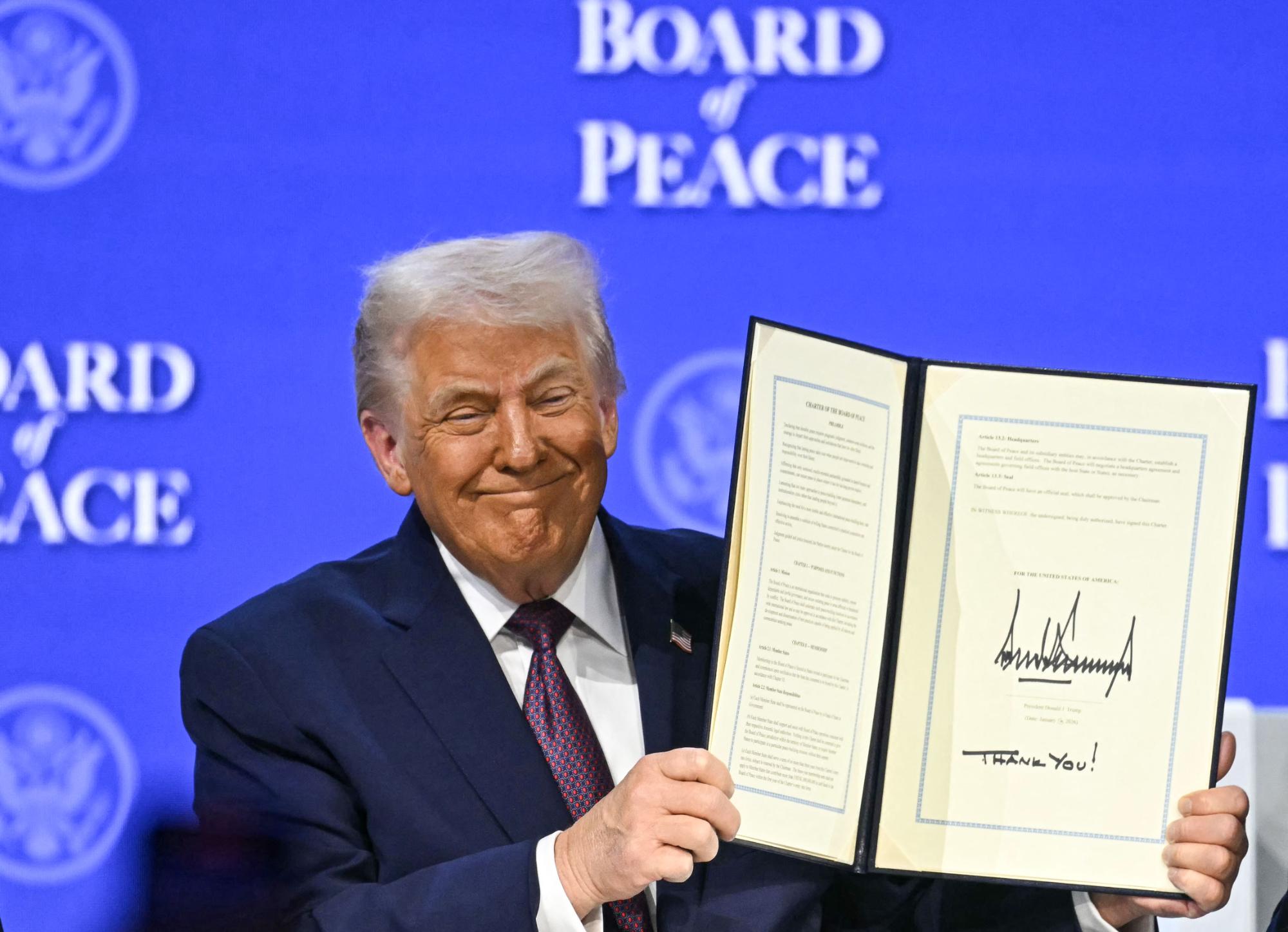
    The Board of Peace (BoP) is best understood not as a genuine multilateral initiative, but as a quasi-international body personally engineered by Donald Trump. While the United States initially sought UN backing for post-war plans in Gaza, the BoP’s final structure was unilaterally altered, hollowing out any claim to collective legitimacy.

    Crucially, the Board does not even explicitly mention Gaza, the very crisis it claims to address.

    This is not a small omission. Gaza was the moral and political justification for the initiative. Removing it from the formal mandate points toward a shift from humanitarian responsibility.

    Organisationally, the BoP departs sharply from accepted international norms. Trump has appointed himself chairman, while the executive board reportedly includes family members and close associates. More troubling is who is not represented: there is no Palestinian political leadership on the Board. 

    At best, a handful of Palestinian “technical experts” are included without any democratic mandate, and without recognition of the Palestinian people’s right to decide their own future.

    Perhaps the most disturbing inclusion is that of Benjamin Netanyahu, even as he faces serious allegations of committing acts of genocide.

    A peace forum that sidelines the victims while offering a seat at the table to those accused of grave crimes sends a clear message that ‘power speaks louder than justice’.

    Trump has defended the Board of Peace as an alternative to the United Nations, arguing that the UN is fractured, slow and ineffective. Many would agree that the UN has its flaws, but frustration with multilateralism does not justify abandoning it altogether.

    Creating a parallel international structure based on personal authority is not reform, it is replacement by force of influence.

    This move also fits a broader pattern. The US withdrawal from the World Health Organisation weakened global public health coordination. His great ‘MAGA’ ambitions now seem to undermine public health as well.

    Additionally, his disregard for the Paris agreement which jeopardises collective climate action. In each case, institutions were dismissed as unfair or inconvenient.

    Well, the Board of Peace follows the same logic; when global rules limit power, build a new table and decide who gets a seat.

    For Palestine, this is more than bad diplomacy, it is a betrayal of the very principles meant to protect stateless and occupied people. Decisions about governance, security and reconstruction are being shifted away from international law into a US-controlled forum where accountability at its helm remains absolutely vague.

    This brings us to India now. As India was among the 22 countries invited to join the Board of Peace, yet New Delhi chose not to attend the launch. That hesitation was not diplomatic indifference it was prudence.

    One immediate red flag is that Pakistan has already joined the Board, complicating India’s strategic position in a forum shaped largely by US preferences.

    India, with its diplomatic tradition rooted in strategic autonomy, non-alignment and respect for international law, has little to gain from joining such an ad-hoc and personalised initiative.

    A board tied so closely to one political figure’s authority and preferences lacks durability and credibility. It could easily lose relevance once Trump exist the political stage.

    Importantly, staying out does not mean disengagement. India has consistently supported Palestine through humanitarian aid, medical assistance, engagement with UNRWA, and quiet diplomacy via its office in Ramallah.

    India has previously resisted U.S.-led unilateral ventures. In 2003, the Vajpayee government declined Washington’s request to send Indian troops to Iraq, reaffirming that peacekeeping must be conducted only under the UN framework.

    Supporting Trump’s Board of Peace, would weaken India’s moral standing. Rather than endorsing it, New Delhi should press for its integration into the UN Department of Peace Operations ensuring a multilateral oversight, and accountability, in which Gaza is included.
  • Iran’s reckoning, world’s calculations

    Iran’s reckoning, world’s calculations

    This article has been published with: Iran’s reckoning, world’s calculations

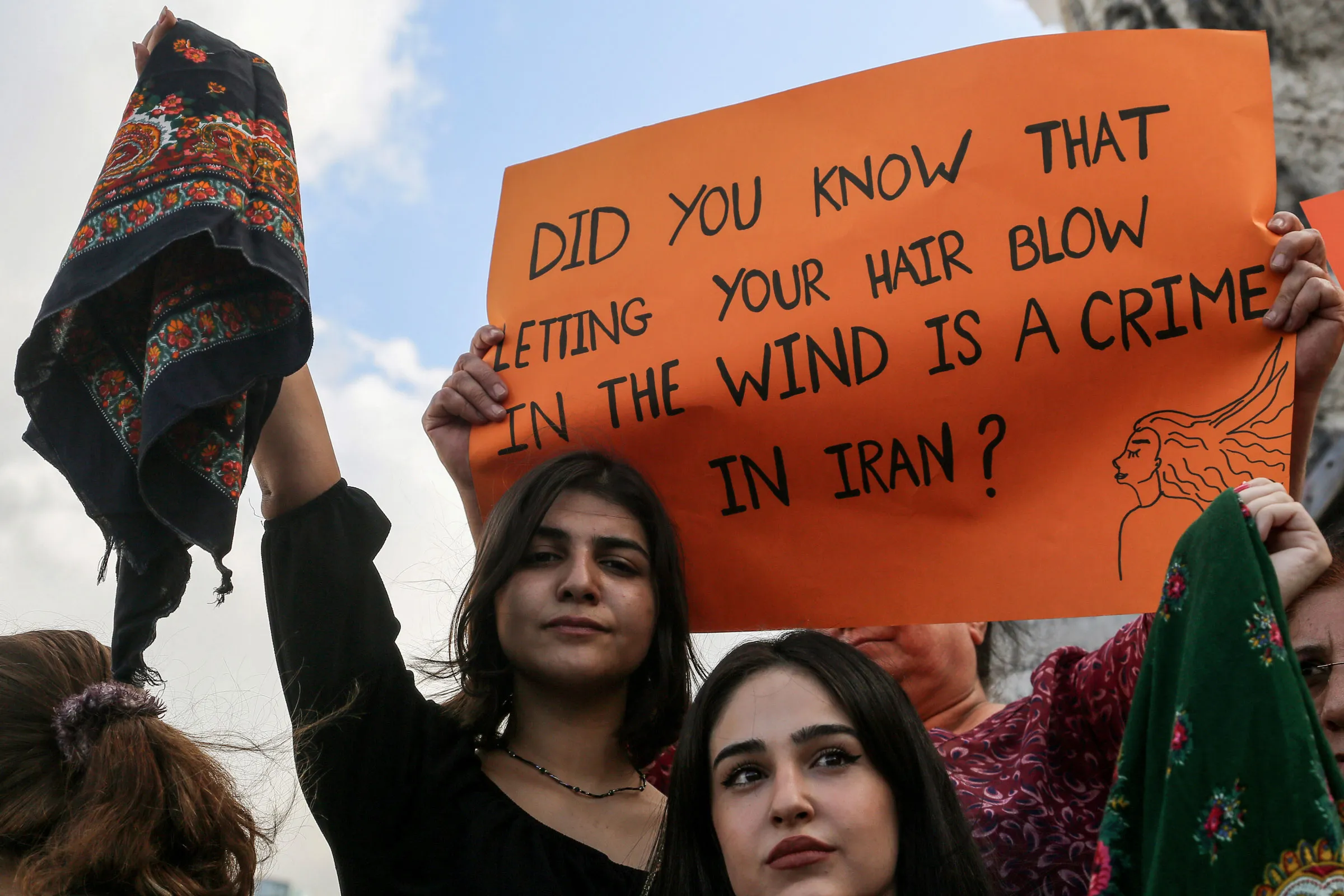
    Iran is in the middle of the most serious political unrest it has seen since 1979, and it is increasingly hard to pretend that this is just another wave of protest that the system can absorb. Across Tehran, Shiraz and dozens of other cities, crowds that once protested economics are now openly challenging the Supreme leader and the ideological foundations of the theocratic state.

    The Iranian government’s response has been brutal. Mass arrests, live ammunition, nationwide internet shutdowns and reports of death sentences are part of a crackdown that human rights groups say has killed thousands and detained tens of thousands more.

    It is repression that only highlights a deeper fracture, between a sovereign that fears dissent and a society that feels unheard.

    But Iran’s crisis is no longer contained within its borders. The world is watching and calculating.

    The United States and Israel are watching Iran’s instability as a strategic opening. President Donald Trump’s talk of ‘regime change’ and warnings of military intervention may play well domestically, but they are reckless in this context. They risk turning a domestic political reckoning into an international confrontation and handing Iranian hardliners the narrative they depend on: the nation is under siege and dissent equals betrayal.

    This does not protect protesters, it exposes them.

    Trump slapping a 25 per cent tariff on countries trading with Iran signals pressure not just on Tehran but on the global partners that sustain its economy. That move drew swift criticism from China, which threatened retaliatory measures, picturing how Iran’s fate is entangled with broader Sino-American rivalry.

    Within the US itself, calls for harsher action are emerging from influential quarters. Some US lawmakers have urged expansive military and cyber responses, framing Tehran’s crackdown as a threat to world order.

    Israeli officials have spoken in support of the protests, calling them a fight for freedom. But their interest is also strategic. For Israel, unrest in Iran weakens a major regional rival. Comments from Israeli intelligence officials about activity inside Iran suggest the protests are being seen as an opportunity, not just a moral cause.

    But Iran’s warnings to the US and Israel reflect this fear. Tehran knows that foreign involvement would change the nature of the crisis. A domestic protest movement would quickly turn into an international conflict. That shift would serve outside powers far more than it would help the people protesting on the streets.

    Other global players are no less invested, even if they are quieter.

    Both Russia and China have little interest in regime change and particularly in stability that weakens Western influence. For them, Iran is a strategic partner in energy, arms and diplomacy and also a useful counterweight to US power. They are likely to back the regime diplomatically, even as it bleeds legitimacy at home.

    Europe has denounced Iran’s violent crackdown. The United Kingdom has pledged expanded sanctions on Tehran’s financial, energy and transport sectors in response to killings and arrests. Yet, for European leaders, disruption in Iran could exacerbate migration pressures, threaten energy supply dynamics and deepen geopolitical rivalry with Russia.

    India’s stance has been quite cautious. The Ministry of External Affairs has urged Indian nationals to avoid travel to Iran and has informed that New Delhi is monitoring developments closely, but it has stopped short of overt criticism or strong support. That reflects India’s position as an energy partner and user of Iranian trade routes, particularly through Chabahar port.

    Delhi’s priority is stability that secures energy and connectivity, not instability that threatens supply chains or regional security.

    Iran’s unrest is not happening in a vacuum. Every major external actor is making moves shaped by strategic interests, not solidarity. What emerges is a familiar pattern. Iran’s internal crisis is being absorbed into the calculations of others.

    Even the memory of “Woman, Life, Freedom” protests remains fresh. That movement exposed both the depth of public anger and the limits of repression. The current unrest builds on that unfinished crisis. It is broader, more openly political and less willing to accept symbolic concessions.

    Iran now faces choices with lasting consequences. A violent crackdown may impose surface order but will deepen isolation and resentment. A collapse of authority risks instability and fragmentation. Foreign intervention would almost certainly escalate the crisis beyond Iran’s borders.

    None of these outcomes are desirable. All of them are plausible. What is no longer plausible is a return to the old normal.

    A society that no longer believes it is represented cannot be governed indefinitely through fear. A state that no longer listens eventually loses control over the story it tells about itself.

    Iran’s future is being shaped in this moment, not only by what happens on its streets, but by how its rulers respond and how external powers choose to use this moment, especially Trump.

  • The populist America needs today

    The populist America needs today

    This article has been published with: The populist America needs today


    It’s not every day that a Muslim of Indian origin becomes the mayor of the world’s richest city—New York. But today, Zohran Mamdani, born in Uganda to Indian parents, raised in Queens and long seen as an outsider in American politics, pulled off what many called impossible.

    In a city built by immigrants but ruled by elites, a man who once rapped about inequality and later worked as a tenant organiser fighting evictions now holds keys to the city hall.

    Mamdani’s victory isn’t just his own. It’s a mirror held up to America, a country still wrestling with what it means to be “American.”

    In a political landscape fractured by polarisation between the populist right and an exhausted liberal establishment, Mamdani has found resonance by talking about something both sides often forget, the cost of living. His promises of free bus rides, rent freezes, public grocery stores, and universal childcare sound almost utopian to his critics, but to many ordinary New Yorkers burdened by rent hikes and long commutes, they ring as necessary, even overdue.

    For nearly a decade, political populism in the United States has worn a single face that of Donald Trump. His “America first” rhetoric, nationalist nostalgia, and resentment-driven movement have defined one half of the nation’s mood. But Mamdani’s win represents a very different kind of populism—one built not on fear and exclusion, but on empathy and inclusion.

    Mamdani’s campaign wasn’t about identity politics, though identity was impossible to ignore. His very presence challenged the unspoken hierarchies of American powers. Yet, what propelled him wasn’t his biography, but his politics; one of survival.

    One tells his followers that they have been robbed by outsiders, the other tells his voters that they have been forgotten by insiders. It is a subtle but radical difference, the shift from populism as protectionism to populism as participation.

    That Mamdani openly identifies himself as a Democratic Socialist would have seemed unthinkable in the America of even a decade ago. Yet it reflects the slow transformation of political imagination among young voters who came at age through crisis like 9/11, 2008 financial crash and the pandemic each, chipping away at the myth that capitalism alone guarantees freedom.

    Mamdani has revived socialism not as an imported ideology, but as an American inheritance rooted in the labour struggles, anti-war movements, and civil rights campaigns that have long coexisted with capitalism’s glare.

    Still, his rise has unsettled many in the party. Centrists fear that his identity and socialist economics will be used by Trumpist to stoke old cultural divides ahead of the 2026 midterms. Yet the left within the party sees Mamdani what the Democrats have long lacked; moral clarity.

    He talks not about “unity” as a slogan but about justice as a material condition. His message of affordability and inclusion gives populism back its original democratic meaning.

    In that sense, Mamdani’s victory is less a footnote in New York’s political history than a window into America’s ideological future. It suggests that populism need not always carry the smell of nationalism. It can instead, be the language of a new social contract, one that redefines “the people” not by who they exclude, but by what they endure together.

    The MAGA movement made anger the grammar of American politics. Mamdani’s populism makes solidarity it’s syntax. Both claim to speak for “the forgotten,” but only one seeks to ensure that no one is forgotten again.

  • India’s role in the new Gaza peace

    India’s role in the new Gaza peace

    The article has been published with: As the first phase of US president Donald Trump’s 20-point peace plan for Gaza gains traction, with both Hamas and Israel cautiously signing onto its initial framework, a new moment of reckoning arises not just for the region but for India, whose interests and ideals converge at the heart of Gaza’s fragile peace.


    As the first phase of US president Donald Trump’s 20-point peace plan for Gaza gains traction, with both Hamas and Israel cautiously signing onto its initial framework, a new moment of reckoning arises not just for the region but for India, whose interests and ideals converge at the heart of Gaza’s fragile peace.

    The plan, which emphasises large-scale international investment in water, energy, health, and infrastructure, has drawn careful support from the European Union and several Arab states, including Egypt, Qatar, Saudi Arabia, and the UAE.

    While many remain concerned over the absence of a clear timeline for Israel’s withdrawal, the momentum itself is significant. Prime Minister Modi welcomed the plan as “decisive progress” and a “significant step forward,” signaling India’s willingness to see stability return to Gaza after years of destruction and despair.

    For India, peace in Gaza is not an abstract moral issue but a question deeply linked to its historical diplomacy, energy security, and regional aspirations. New Delhi’s engagement with the Palestinian question predates its own independence.

    In 1947, Jawaharlal Nehru ensured India’s participation in the UN Special Committee on Palestine, where India defied the Western bloc to support a single federal state with Arab and Jewish provinces, a stance consistent with its postcolonial belief in coexistence and self-determination.

    In the following decades, India extended sustained financial support to the United Nations Relief and Works Agency for Palestine Refugees (UNRWA) and contributed troops to successive UN peacekeeping missions, including the UN Emergency Force in the Suez and Sinai, where Indian soldiers even lost their lives during the 1967 Arab-Israeli conflict.

    India’s solidarity with the Palestinian cause has never been merely symbolic. In 1988, it became one of the first non-Arab nations to recognise the State of Palestine, a step that many Western democracies only began contemplating decades later. Yet, the early 1990s marked a recalibration. When India established full diplomatic relations with Israel in 1992, it was not a repudiation of its commitment to Palestine but a response to the changing geopolitical order.

    The Madrid Peace Conference has brought new players to the table, and India, wary of being excluded from the evolving peace process, adjusted its strategy to engage with both sides. Since then, India has attended donor conferences, participated in UN committees on Palestinian rights, and provided development assistance and technical training to the Palestinian Authority (PA), while simultaneously building robust defence, agricultural, and technology partnerships with Israel.

    This dual approach, combining principled support for Palestinian sovereignty with pragmatic engagement with Israel, has been the defining feature of India’s Middle East policy for over three decades.

    India has repeatedly condemned terrorism in all its forms, including attacks on Israeli civilians, while also expressing concern when Israel’s military operations inflict civilian suffering in Gaza. Its response to the recent conflict, particularly after the airstrikes near Doha, was carefully worded but deliberate, reiterating the need to respect international humanitarian law and resume dialogue toward a two-state solution.

    At the heart of India’s interest in the new Gaza plan lies not just diplomacy but economics as well. With the Abraham Accords reshaping West Asia, India finds itself part of a new cooperative architecture that bridges both Israel and the Gulf.

    The India–Middle East–Europe Economic Corridor (IMEC), announced in 2023, exemplifies this shift, a project linking India’s ports to the Gulf, Israel, and onward to Europe through rail and maritime routes. Its success depends on regional stability.

    A peaceful Gaza, integrated into a broader framework of reconstruction and trade, directly serves India’s interests in securing energy supplies, ensuring uninterrupted trade flows, and maintaining safe conditions for over eight million Indians living and working in the Gulf region, whose remittances exceed $40 billion annually.

    Israel’s ambassador to India recently suggested that New Delhi should take an active role in Gaza’s reconstruction, citing India’s expertise in infrastructure, water management, and digital governance. Indian companies such as Larsen & Toubro and Tata Projects have already demonstrated their capacity to execute large-scale civil works across the Middle East.

    India’s engagement in the region would not only consolidate the nation’s image as a development partner but also reinforce its credentials as a responsible power capable of constructive mediation.

    Beyond economic calculations, India’s participation would resonate with its broader foreign policy doctrine, one that blends strategic autonomy with normative leadership. As a founding member of the Non-Aligned Movement, India has historically positioned itself as a bridge between the Global North and South.

    Today, that legacy continues through new minilateral groupings such as the I2U2 (India, Israel, UAE, United States), which promote cooperation in food, energy, and innovation. By constructively engaging in Gaza’s recovery while upholding Palestinian sovereignty, India can project itself as a moderating force that values peace without partisanship.

    However, the path ahead demands caution. Aligning too closely with the Israeli or American approach could alienate traditional Arab partners, especially those sensitive to Palestinian sovereignty.

    The challenge for India, therefore, is to sustain a credible middle course one that upholds humanitarian principles while remaining anchored in realpolitik.

    In Gaza’s fragile future, India’s role could go beyond financial assistance. Its record in peacekeeping, institution building, and capacity training makes it uniquely positioned to help restore basic governance, healthcare, and education systems.

    Indian NGOs and development agencies, working alongside UN bodies, could contribute to skill-building programmes that empower Palestinian youth and reduce dependence on aid.

    From Nehru’s moral idealism to Modi’s pragmatic outreach, India’s policy on Palestine and Israel has been marked by adaptation without abandonment. The new Gaza peace plan presents yet another test of that balance.

    Whether India chooses to remain a cautious observer or an active participant in reconstruction will reveal how it defines power in the twenty-first century.

  • The American dream crumbles

    The American dream crumbles

    This article has been published with: The American dream crumbles

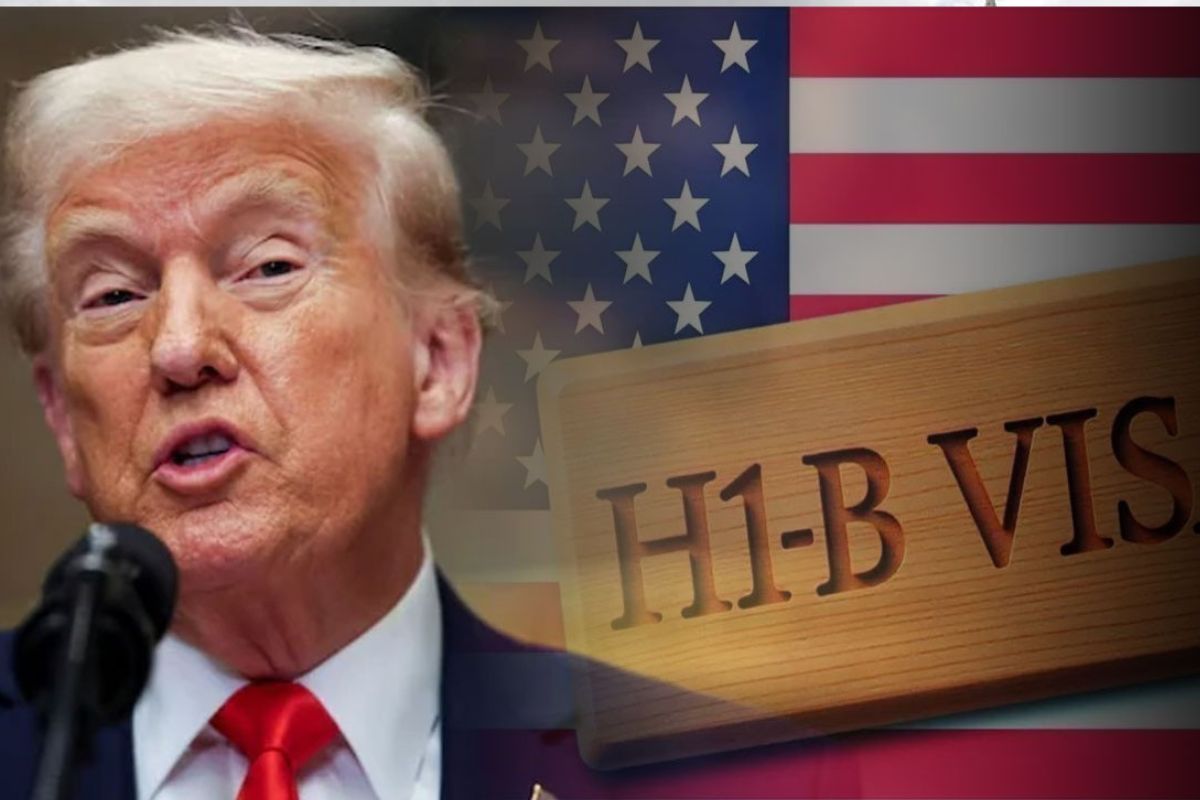
    In quintessential Trump fashion, the US president has yet again upended millions of Indian aspirations with a single stroke of the pen. His latest executive order, hiking the H-1B visa fee to a staggering $1,00,000 has sent shockwaves through India’s tech corridors and diaspora communities.

    This move will impact countless Indians, many of whom may be forced to return to India only to face unemployment and frustration, feeing both berefit and disillusioned. For countless engineers, scientists, and innovators, the “American dream” long considered a gateway to global opportunity now seems painfully out of reach.

    The H-1B program, which issues 65,000 visas annually for specialised foreign workers and another 20,000 for advanced-degree holders, has traditionally been dominated by Indians, who account for 70% of all approved beneficiaries. Previously, the visa fee was roughly $965; Trump’s new proclamation has pushed it to $1,00,000, or over ₹88 lakh an astronomical increase that makes working in the US a near-impossible proposition for most.

    The fallout is immediate and multifaceted. Industry leaders warn of disruptions for major IT companies such as Infosys, TCS and Wipro, particularly for onshore projects in the US that rely heavily on Indian talent. Bikram Chabhal, president of the Association of Visa and IELTS Centres, cautioned that Indians will bear the brunt of this policy shift. Social media is awash with panic, resignation and debate.

    One X user lamented, “Trump just killed the H-1B. The American dream of Indian techies is over.” Another warned of cascading effects on India’s domestic job market, as returning professionals confront limited opportunities.

    Yet, amid the panic, there is a silver lining one that India must seize with strategic clarity. Former NITI Ayog CEO Amitabh Kant has suggested that this disruption could become a catalyst for India’s innovation ecosystem. With top-tier engineers, scientists, and innovators potentially redirected back home, India now has a rare opportunity to leverage global talent for domestic development.

    Tech hubs like Bangalore, Hyderabad, Pune and Gurgaon could witness an influx of highly skilled professionals, enhancing research and development capabilities, fostering startups and strengthen country’s position in the global technology market. What the US loses, India could gain.

    However, to truly capitalise on this opportunity, India must address both the push factors driving talent abroad and the pull factors that have historically drawn them to the U.S. Push factors include stagnant wages, limited research infrastructure and bureaucratic hurdles within India. Pull factors of the US encompass higher salaries, access to cutting-edge technology, global exposure and a sense of meritocratic mobility. While the US has historically offered these pull factors, India can begin to create its own ecosystem that mitigates the push factors.

    By improving wages in the tech sector, streamlining regulations, and creating incentives for innovation-driven startups, India can offer an alternative to its professionals.

    Diplomacy is equally critical. Trump’s impulsive actions which have unsettled even countries with longstanding agreements highlight the unpredictable nature of US policy, India must engage strategically, treating the H-1B fee hike as a temporary shock rather than a permanent rupture.

    Experts suggest leveraging high-level dialogues, such as the US-India strategic and commercial dialogue, to highlight mutual benefits : Indian talent strengthens US companies while promoting cross-border innovation.

    India can engage industry and trade bodies like NASSCOM, CII and FICCI to present data-backed concerns about the impact on ongoing projects. Constructive proposals such as tiered visa fees linked to salary levels, project-specific exemptions or skill-sharing commitments can align with US priorities while protecting Indian interests.

    Social reactions capture the spectrum  of emotions: panic, disappointment, cautious optimism and pragmatic reflection. Some express relief at the prospect of focusing on domestic opportunities rather than navigating US immigration whims, while others warn of potential job market pressure if professionals return en masse.

    The key lies in foresight, that is, transforming disruption into opportunity.

    Trump may have shattered millions of Indian dreams, but India now faces a historic opportunity. Because, Trump has been famously described as a ‘transactional leader’, extreme policies like the H-1B fee hike and his MAGA-driven moves are part of his broader playbook.

    Rather than trying to change what Trump will do, India must focus on strengthening its own factors.

    The question remains; will India rise to the occasion, or will it allow a foreign policy shock to dictate its technological destiny?