Tag: unemployment

  • Iran’s reckoning, world’s calculations

    Iran’s reckoning, world’s calculations

    This article has been published with: Iran’s reckoning, world’s calculations

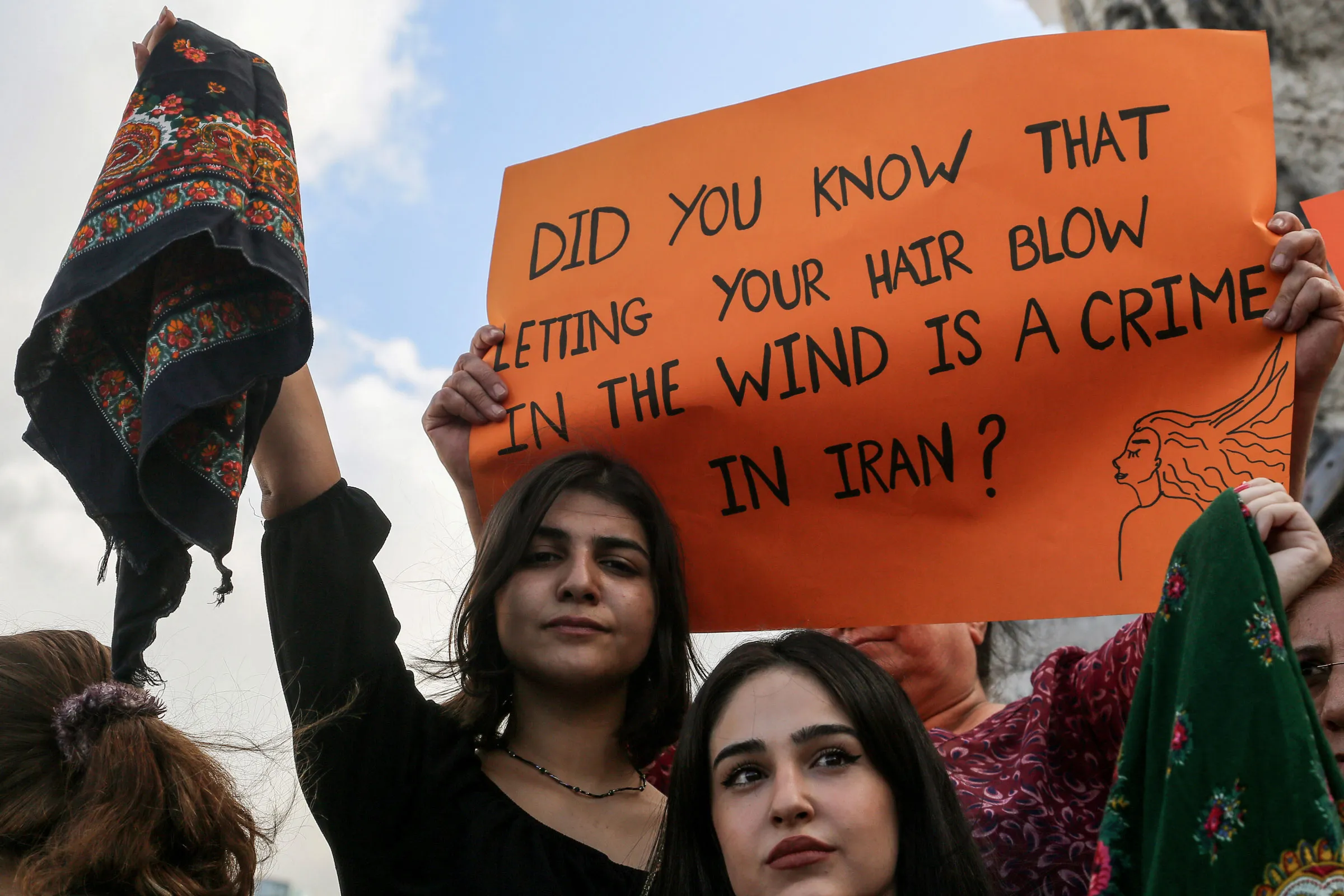
    Iran is in the middle of the most serious political unrest it has seen since 1979, and it is increasingly hard to pretend that this is just another wave of protest that the system can absorb. Across Tehran, Shiraz and dozens of other cities, crowds that once protested economics are now openly challenging the Supreme leader and the ideological foundations of the theocratic state.

    The Iranian government’s response has been brutal. Mass arrests, live ammunition, nationwide internet shutdowns and reports of death sentences are part of a crackdown that human rights groups say has killed thousands and detained tens of thousands more.

    It is repression that only highlights a deeper fracture, between a sovereign that fears dissent and a society that feels unheard.

    But Iran’s crisis is no longer contained within its borders. The world is watching and calculating.

    The United States and Israel are watching Iran’s instability as a strategic opening. President Donald Trump’s talk of ‘regime change’ and warnings of military intervention may play well domestically, but they are reckless in this context. They risk turning a domestic political reckoning into an international confrontation and handing Iranian hardliners the narrative they depend on: the nation is under siege and dissent equals betrayal.

    This does not protect protesters, it exposes them.

    Trump slapping a 25 per cent tariff on countries trading with Iran signals pressure not just on Tehran but on the global partners that sustain its economy. That move drew swift criticism from China, which threatened retaliatory measures, picturing how Iran’s fate is entangled with broader Sino-American rivalry.

    Within the US itself, calls for harsher action are emerging from influential quarters. Some US lawmakers have urged expansive military and cyber responses, framing Tehran’s crackdown as a threat to world order.

    Israeli officials have spoken in support of the protests, calling them a fight for freedom. But their interest is also strategic. For Israel, unrest in Iran weakens a major regional rival. Comments from Israeli intelligence officials about activity inside Iran suggest the protests are being seen as an opportunity, not just a moral cause.

    But Iran’s warnings to the US and Israel reflect this fear. Tehran knows that foreign involvement would change the nature of the crisis. A domestic protest movement would quickly turn into an international conflict. That shift would serve outside powers far more than it would help the people protesting on the streets.

    Other global players are no less invested, even if they are quieter.

    Both Russia and China have little interest in regime change and particularly in stability that weakens Western influence. For them, Iran is a strategic partner in energy, arms and diplomacy and also a useful counterweight to US power. They are likely to back the regime diplomatically, even as it bleeds legitimacy at home.

    Europe has denounced Iran’s violent crackdown. The United Kingdom has pledged expanded sanctions on Tehran’s financial, energy and transport sectors in response to killings and arrests. Yet, for European leaders, disruption in Iran could exacerbate migration pressures, threaten energy supply dynamics and deepen geopolitical rivalry with Russia.

    India’s stance has been quite cautious. The Ministry of External Affairs has urged Indian nationals to avoid travel to Iran and has informed that New Delhi is monitoring developments closely, but it has stopped short of overt criticism or strong support. That reflects India’s position as an energy partner and user of Iranian trade routes, particularly through Chabahar port.

    Delhi’s priority is stability that secures energy and connectivity, not instability that threatens supply chains or regional security.

    Iran’s unrest is not happening in a vacuum. Every major external actor is making moves shaped by strategic interests, not solidarity. What emerges is a familiar pattern. Iran’s internal crisis is being absorbed into the calculations of others.

    Even the memory of “Woman, Life, Freedom” protests remains fresh. That movement exposed both the depth of public anger and the limits of repression. The current unrest builds on that unfinished crisis. It is broader, more openly political and less willing to accept symbolic concessions.

    Iran now faces choices with lasting consequences. A violent crackdown may impose surface order but will deepen isolation and resentment. A collapse of authority risks instability and fragmentation. Foreign intervention would almost certainly escalate the crisis beyond Iran’s borders.

    None of these outcomes are desirable. All of them are plausible. What is no longer plausible is a return to the old normal.

    A society that no longer believes it is represented cannot be governed indefinitely through fear. A state that no longer listens eventually loses control over the story it tells about itself.

    Iran’s future is being shaped in this moment, not only by what happens on its streets, but by how its rulers respond and how external powers choose to use this moment, especially Trump.
  • Replacing MGNREGA: Was it necessary?

    Replacing MGNREGA: Was it necessary?

    If reform was genuinely the objective, the government could have introduced a MGNREGA 2.0 or strengthened the existing framework. Choosing instead to discard Gandhi’s name altogether points less to administrative necessity and more to a deliberate political statement, one that alters the scheme’s identity.

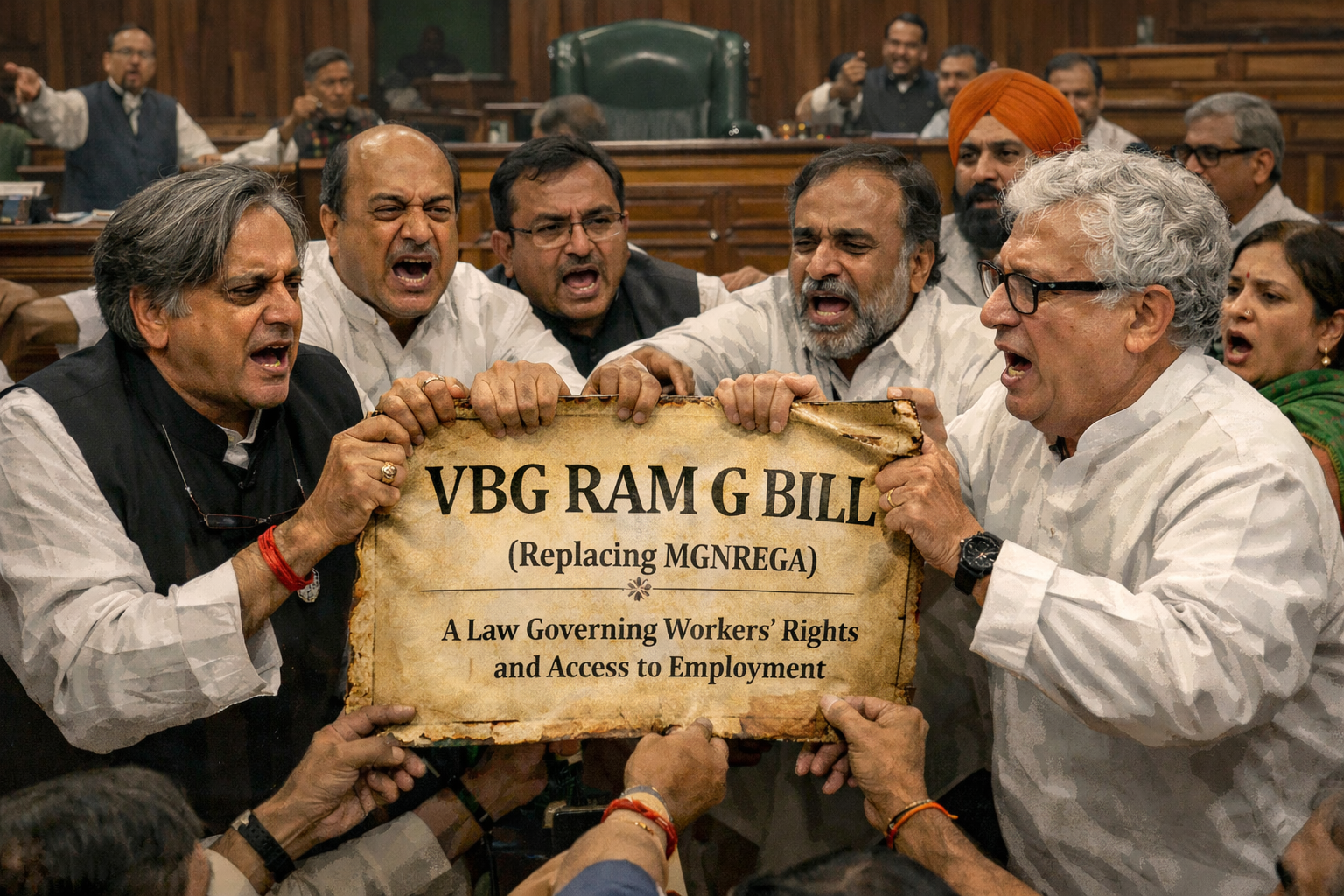
    On December 18, barely three days after it was circulated, Parliament passed the Viksit Bharat Guarantee For Rozgar and Ajeevika Mission (Gramin) or VB-G RAM G Bill, replacing the Mahatma Gandhi National Rural Employment Guarantee Act, 2005. The speed of the passage triggered protests from the Opposition and civil society, both of which accused the government of bypassing consultations on a law that affects millions of rural workers. But procedure aside, the larger issue is more basic: why did MGNREGA need to be replaced at all?

    Minister of Rural Development, Shivraj Singh Chouhan defended the Bill as a “more effective, corruption-free, development-oriented” employment guarantee. The government argues that rural India has changed dramatically since 2005. Poverty has declined, infrastructure has expanded, and digital governance has changed welfare- delivery. In this telling, MGNREGA’s demand-driven design belongs to another era.

    Some changes do sound reasonable. The Bill increases guaranteed workdays from 100 to 125, potentially raising household income by roughly 25 per cent. It introduced a sharper focus on building long-term assets in four sectors: water security, core rural infrastructure, livelihoods and climate-resilient projects. Farmers are expected to benefit from smoother labour availability, as states can pause public works for up to 60 days during sowing and harvest periods.

    The Bill also promises predictable employment through Viksit Gram Panchayat plans, secure electronic wage payments with Aadhaar verification and unemployment allowance if work is not provided. These changes are clearly designed to improve planning and asset creation.

    Between 2013-14 and 2025-26, women’s participation rose from 48 per cent to 56.7 per cent, Aadhaar-seeded workers increased from 7.6 million to 12.1 million, and e-payments rose from 37 per cent to near-universal coverage. Geo-tagged assets grew from zero to 64.4 million and individual assets tracked from 17.6 per cent to 62.9 per cent. Yet, serious issues persisted. Investigations in 19 districts of West Bengal found fake and misused funds; monitoring across 23 states uncovered missing or substandard work, machine substitutions for labour, and bypassed attendance.

    In 2024-25 alone, misappropriation reached nearly Rs 194 crore and only 7.6 per cent of households completed 100 days of work after the pandemic. Despite these challenges, MGNREGA’s demand-driven design remains its defining strength. It made employment a right rather than a favour. By guaranteeing wages and offering work on demand, it strengthened labour bargaining power and set a floor beneath rural wages. Its flexibility allowed it to act as a stabiliser during COVID-19, when it sustained rural consumption and prevented widespread distress. Fixing these operational gaps was possible without dismantling the programme’s core logic.

    But the Opposition’s criticism goes much deeper than this process.

    Shashi Tharoor and several other MPs argue that the Bill violates Article 348 of the Constitution by pushing a Hindi-dominant title for a law meant to apply uniformly across India. The sharper controversy, however, centred on the renaming itself. Opposition leaders pointed out that while Mahatma Gandhi used Ram Rajya to talk about value and good governance, but invoking “RAM” now brings ideology and religion into the picture.

    Well, if reform was genuinely the objective, the government could have introduced a MGNREGA 2.0 or strengthened the existing framework. Choosing instead to discard Gandhi’s name altogether points less to administrative necessity and more to a deliberate political statement, one that alters the scheme’s identity.

    There are also serious federal concerns. The revised funding model shifts part of the financial burden to states, which the Opposition describes as unfair and fiscally irresponsible. At a time when states are already stretched, this change weakens their ability to respond to genuine demand for employment.

    Central assurances of 60:40 cost-sharing (90:10 for North-eastern and Himalayan states, and 100 per cent funding for UTs without legislatures) do little to assuage worries about reduced flexibility or local planning authority.

    The Bill’s labour provisions are perhaps a departure from MGNREGA’s philosophy. The 60-day no-work provision is framed as a practical measure to ensure labour availability during peak agricultural seasons. But it is also a retreat from the principle of the state as an employer of last resort. Under MGNREGA, workers could demand work as a right. VB-G RAM G makes work conditional, planned and partially capped. While it promises higher workdays and better asset creation, it quietly treats worker’s bargaining power as a problem to be managed rather than a feature to be preserved.

    The broader question then is not about reform; rural employment policy can and should evolve. The question is why dismantle a programme that functioned effectively as a safety net for millions for rural households. MGNREGA’s flaws were real, but they could have been addressed through better monitoring, planning and digital tools. The government’s own statistics show improvements over the past decade.

    What VB G-RAM G introduces is more controlled. Until the government answers all questions clearly—why a replacement was necessary, why the open-ended demand-driven design could not be retained, and why Gandhi’s name was removed—these uneasy question around VB-G RAM G will persist. Not because reform is unwelcome, but because replacing a proven, rights-based safety net demands far stronger justification than what Parliament has received.

  • Why Gen Z protests are shaking the world

    Why Gen Z protests are shaking the world

    This article has been published with: Why Gen Z protests are shaking the world

    Unlike their predecessors, Gen Z is not content with gradual change. They have grown up in a digital world where progress is instantaneous and transparency is expected. Their protests are organised online, powered by memes, videos and digital solidarity. The internet is not just their stage; it is their weapon.


    For years, the world watched the protests erupted from Hong Kong to Cairo marking 2019 as the so-called “year of protest.” But in 2025, a different kind of uprising has taken shape. This time, it is much younger, sharper, and more connected.

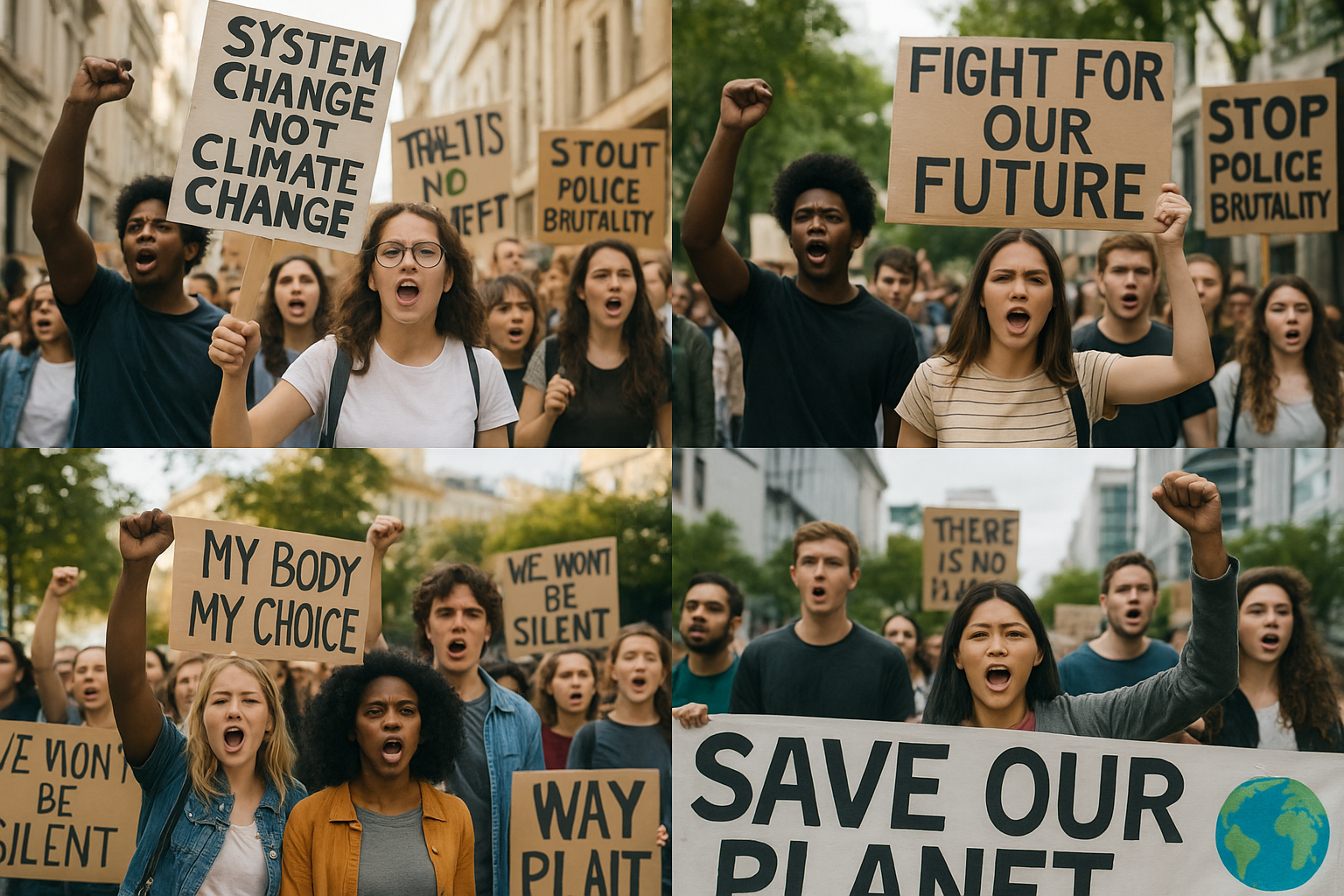
    From Nepal to Indonesia, the Philippines to Morocco and Madagascar, a restless generation has taken to the streets, transforming frustration into defiance. Experts are calling it the wave of ‘Gen Z protests,’ and it may redefine how dissent looks in the modern age.

    The sparks that ignite these protests differ from one country to another, yet the underlying fire is the same: anger over poor governance, inequality, corruption and a future that feels increasingly out of reach. In Nepal, the outrage began with a government-imposed social media ban that was quickly reversed, but not before triggering a nationwide reckoning. For a generation raised online, the ban was not just an attack on communication but a silencing of identity and expression.

    It became the final straw in a long history of corruption, nepotism, and political failure. Prime Minister Oli’s resignation soon followed, exposing a deep disillusionment among young Nepalis who feel their democracy has been hijacked by the elite.

    In Indonesia and the Philippines, the frustration runs parallel over widening inequality, soaring youth unemployment, and an economy that no longer guarantees dignity. Many young people are working multiple low-paying jobs, watching the promise of education dissolve into a market that no longer rewards effort.

    A recent World Bank update highlights that one in seven people in China and Indonesia is unemployed, and that much of the region’s job creation has shifted from factories to unstable service work. The ladder that once lifted millions into the middle class has started to crack.

    In Morocco, protests have flared up around social justice reforms and the state of public services. The country’s youth are furious that billions of dollars are being pushed into hosting the 2030 FIFA World Cup while healthcare, education, and transport systems remain broken. To them, it is not just about sports, it is about misplaced priorities.

    The glittering stadiums are being built on the back of neglect. The government’s vision of progress feels hollow when water shortages, unemployment and social inequality persist.

    Across the Indian ocean, in Madagascar, young protesters are demanding something even more basic: electricity and clean water. The island nation faces an ironic dilemma, while political elites make grand promises of development, ordinary families continue to suffer from erratic power cuts and unreliable water supplies, often left in darkness and neglect.

    What unites these different uprisings is not just ideology, but exhaustion, a generation that feels cheated by those who claim to lead them.

    Well, it’s quite clear that this generation does not want symbolic reforms or slow-moving promises. They want results they are visible.

    Unlike their predecessors, Gen Z is not content with gradual change. They have grown up in a digital world where progress is instantaneous and transparency is expected. Their protests are organised online, powered by memes, videos and digital solidarity. The internet is not just their stage; it is their weapon.

    Every government scandal, every instance of elite privilege, every broken promise becomes public within seconds.

    Older generations often dismiss this as performative outrage, but it is much deeper than that. For Gen Z, activism is survival. They are fighting for jobs, dignity and relevance in systems that continue to exclude them. Their rebellion is not simply about demanding reforms; it is about reclaiming agency in societies that ignore them.

    In many ways Gen Z protests of 2025 are not just reactions to crisis; they are reflections of a larger global fatigue. The world has been living through years of economic uncertainty, climate anxiety and political stagnation. For young people who have inherited these challenges, protest is not a choice it has become a necessity.

    What is happening in these parts of the world is not chaos, it is clarity. These protests reveal a generation that refuses to wait, one that demands accountability now, not later.

    Governments can either listen or continue to pretend that stability is the same as peace. But the truth is clear: this generation is no longer asking for permission to change the world, it is already doing it.